AI cybersecurity risks are threats that arise when artificial intelligence is used to attack, manipulate, or bypass digital security systems. As AI becomes more advanced, cybercriminals can leverage it to automate attacks, create smarter malware, and generate compelling fake content, making threats faster, more targeted, and harder to detect.
What are ai cybersecurity risks
AI cybersecurity risks are divided into three main topics:
1-Risks to AI Models and Systems:
These are attacks specially targeting the machine learning components of an AI system to compromise its integrity, confidentiality, or availability.
- Data Poisoning: Attackers introduce corrupt or malicious data into the training dataset.
- Adversarial Examples/Attacks: Malicious actors introduce subtle, often imperceptible, modifications to the input data to trick a trained model into making an incorrect classification or prediction.
- Model Stealing (Extraction): An adversary repeatedly queries an AI model to analyze its behavior and outputs, then uses this data to build an identical or highly similar replica of the proprietary model.
Read More : AI Cybersecurity Threats in 2026
2- AI as a Weapon for Cyberattacks:
AI tools, huge language models (LLMs), and generative AI are being leveraged by malicious actors to amplify and automate traditional attacks.
- Automated and Enhanced Phishing/Social Engineering: AI can generate highly convincing and personalized phishing emails, texts, or deepfake audio/video (social engineering) at a massive scale. This makes attacks harder to spot and bypasses simple security filters.
- Faster Vulnerability and Exploit Development: AI can be used to rapidly scan for vulnerabilities in target systems, generate sophisticated malware that can evade traditional, signature-based defenses (evasion attacks), and write exploit code much faster than a human hacker.
- Autonomous Attacks Bots: AI can power attack bots that can run complex, multi-stage cyberattacks on autopilot, adapting in real-time without instant human intervention, significantly increasing the speed and scope of a breach.
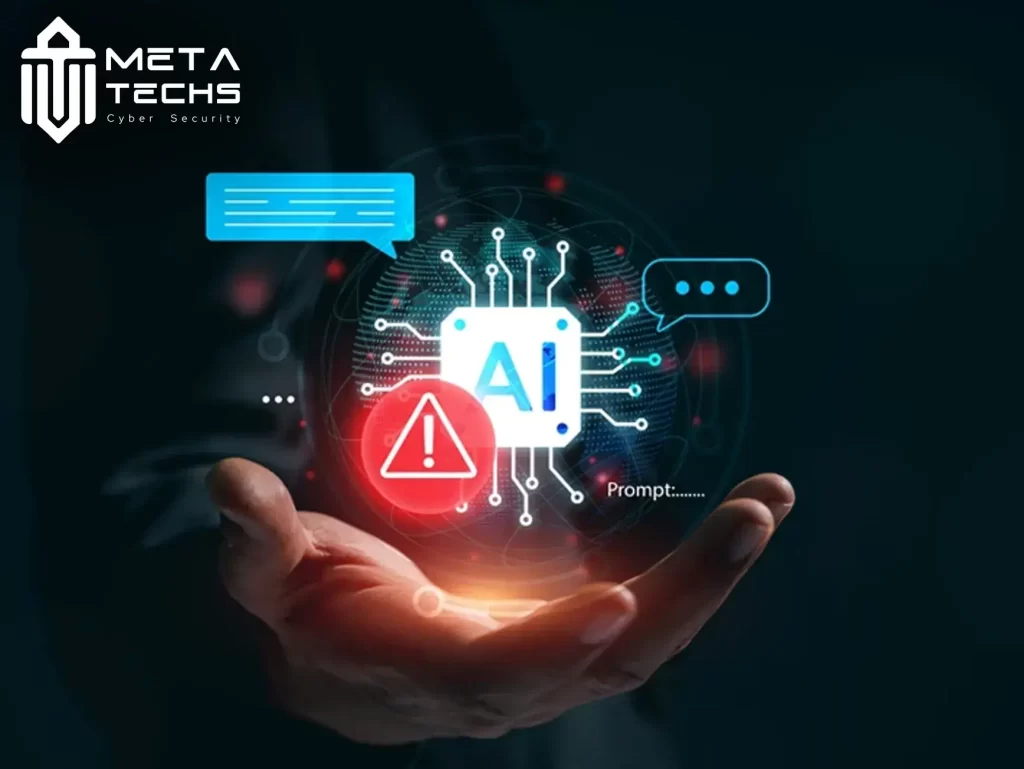
- Code Injection and Prompt Injection: In generative AI systems, attackers can embed harmful instructions into their input prompts to manipulate the model into generating malicious output (e.g., generating offensive content or revealing internal system information) or to trigger unintended actions in the linked system.
3- General Security and Operational Risks:
- Privacy leakage: Because AI models are trained on vast amounts of data, they can inadvertently memorize and later leak sensitive information from the training set during their output generation.
- Bias and Discrimination: If the training data is biased, the resulting AI system will perpetuate and even amplify those biases. In a security context, this could lead to discriminatory outcomes, such as flagging individuals from certain demographics as high-risk or incorrectly classifying legitimate activity as malicious.
- Lack of Explainability (Black Box Risk): Many complex AI models, like deep learning networks, are considered “black boxes” and make a particular decision (e.g., why a threat was or was not flagged).
This lack of transparency and explainability hinders effective auditing, debugging, and incident response.
You may also like : AI in Cybersecurity How to use
How to protect yourself from the Ai cybersecurity risks
Here are the key actions to take:
1- Strengthen your digital security
- Use strong passwords and MFA: Implement strong, unique passwords for all accounts and enable Multi-Factor Authentication (MFA), particularly for critical services like email and banking.
- Keep Software Updated: Regularly update your operating systems, applications, and security software (antivirus/anti-malware).
- Back Up and Encrypt Data: Regularly back up your important data to a secure, external location to protect against ransomware. Use encryption for sensitive files.
2- Be Skeptical of AI-Powered Deception
- Verify Unexpected Requests: Treat any urgent or unusual request for money or sensitive information with extreme caution, even if it appears to come from a known person (like your boss, family member, or friend). Never trust, always verify.
- Call Back: Verbally confirm the request using a known, pre-verified phone number, not the one provided in a suspicious message or call.
- Establish a “secret word.”: Consider establishing a secret code word or phrase with close family members to verify their identity.
- Identity Deepfakes: Be vigilant for subtle inconsistencies in videos and audio, such as: Unusual facial movements, Odd lighting, skin tone, Lack of emotions or monotone voice, or Contextual clues.
3- Minimize Your Digital Footprint
- Limit social sharing: Reduce the amount of personal information (photo, voice, recordings, location, job history) you share in social media. This data is the raw material AI uses to create convincing deepfakes and personalized phishing attacks.
- Be Cautious with Generative AI Tools: Be mindful of the data you input into public generative AI tools (like free chatbots).
4- Maintain General Awareness
- Stay Informed: Keep up-to-date with emerging AI-driven threats and the security practices recommended by trusted sources.
- Think Before You Click: Do not click on suspicious links or open unexpected attachments in emails or messages. If a website looks legitimate but you are suspicious, navigate to it by typing the address directly into your browser.
How to Mitigate the AI Security Risks?
To mitigate AI Cybersecurity risks, secure your AI models and data with strong access controls, encryption, and continuous monitoring. Also, train staff, validate AI outputs, and regularly test systems to detect adversarial attacks, data poisoning, or AI-powered phishing.
Conclusion
AI is transforming cybersecurity, but it’s also giving cybercriminals powerful new tools to launch faster, smarter, and more targeted attacks. From data poisoning and model manipulation to deepfakes and AI-powered phishing, the risks are real and growing. That’s why protecting yourself and your business from AI cybersecurity risks is no longer optional, it’s essential.
Staying safe requires a mix of strong digital security practices, careful online behavior, and constant awareness of emerging AI threats. Organizations should also protect their AI models, secure their data, and train employees to recognize AI-generated deception.
As AI technology continues to evolve, the best defense is staying educated, prepared, and proactive. By building security habits now, individuals and businesses can benefit from AI’s advancements, without falling victim to its risks.
FAQ:
What are The Risks of AI Privacy and Security?
AI privacy risks: It can collect, store, or expose sensitive personal data, and companies may misuse or leak this information.
AI Security risks: Hackers can use AI for smarter attacks, and AI systems themselves can be hacked, manipulated, or fed false data.
What are the security risks of generative AI?
Generative AI security risks: It can be used to create deepfakes, automate phishing, help generate malware, spread misinformation, and leak or reveal sensitive data.
Related posts:
 Website hack repair service with meta techs
 Fawry comments on cyber attacks and data leaking
 Effective Policy for data retention policy best practices
 the Latest fortinet vulnerability 2024
 What Is ISO 27001?, Core Principles, Benefits, and Requirements
 Cylance Protect Antivirus for Your Digital Assets