Every second companies generate a huge amount of data. Hidden within this data could be signs of cyber threats, system errors, or compliance issues. Detecting these signals on time is critical to keeping a business safe.
This is where Security Information and Event Management (SIEM) comes in. SIEM acts as a central hub that collects and analyzes security data across the entire organization. It helps security teams quickly spot unusual activity, investigate incidents, and respond to threats, keeping business operations secure and compliant.
What is security information event management?
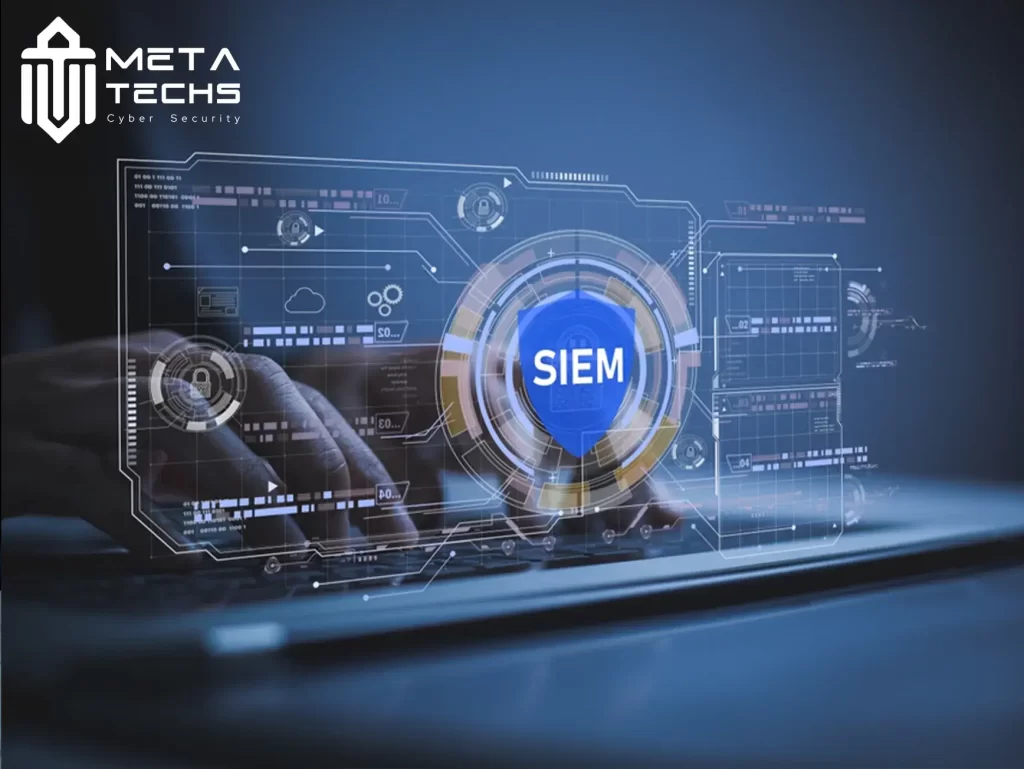
Security Information and Event Management (SIEM) is a cybersecurity solution that helps organizations detect and respond to threats by collecting and analyzing security data.
It works by:
- Collecting logs and events from systems, servers, networks, and applications.
- Analyzing the data to find unusual or suspicious activity.
- Alerting security teams when potential threats are detected.
- Helping with investigations and compliance by providing detailed reports.
SIEM is like a central security dashboard that gives businesses visibility into everything happening across their IT environment, making it easier to spot and stop cyberattacks.
Check our Network Security Services
Key Functions and Benefits of SIEM
Security Information and Event Management (SIEM) is a cybersecurity system that helps organizations monitor, detect, and respond to threats by collecting and analyzing security data from across their IT environment.
Key Function:
- Collecting data from security log and events from across servers, applications, networks, and cloud systems.
- Detects and identifies any suspicious activity that may be a signal of cyber attack.
- Notifies security teams instantly when potential risks are detected.
- Provides detailed records and timelines to analyze security events.
- Helps organizations meet regulations by generating audit-ready reports.
Although SIEM gives business a lot of benefits from tools and insights they need to detect threats early, respond quickly, and stay compliant.
The main 5 benefits of security information and event management system are:
1- Centralized Visibility: A single dashboard to monitor all security activity.
2- Faster Threat Response: Detects and reacts to threats in real time.
3- Improved Efficiency: Reduces manual work by automating monitoring and analysis.
4- Regulatory Compliance: Simplifies meeting requirements like GDPR, HIPAA, and ISO.
5- Enhanced Security Posture: Strengthens overall protection against cyber threats.
Why is security information event management important?
Security Information and Event Management (SIEM) is important because it gives organizations real-time visibility into their IT environments, helping them spot and respond to cyber threats before they cause serious harm.
By collecting and analyzing data from servers, applications, networks, and cloud systems, SIEM allows security teams to detect unusual activity that could signal an attack. This early detection means incidents can be contained quickly, reducing downtime, financial loss, and reputational damage.
Read More : Cyber Security Awareness Definition and Importance
Challenges and Limitations of SIEM
While SIEM is a powerful tool, it does come with challenges. Deploying and managing SIEM can be complex and costly, especially for smaller businesses, and it often requires skilled analysts to interpret the data effectively. Many organizations also face alert overload, where too many false positives slow down response efforts. In addition, as data volumes grow, SIEM can become harder to scale and maintain.
To overcome these limitations, many companies turn to Managed SIEM or SOC as a Service, where trusted providers like Meta Techs handle monitoring, tuning, and response.
FAQs
What would you use a Security Information Event Manager for?
A SIEM is used to collect, analyze, and monitor security data in real time to detect and respond to threats quickly.
What is the role of a SIEM tool in a SOC?
In a Security Operations Center (SOC), SIEM provides centralized visibility, alerts, and insights to help analysts investigate and respond to incidents efficiently.
What are the three types of security management?
The three types are:
- physical security
- information security
- network/cybersecurity management.
Related posts:
 Website hack repair service with meta techs
 Fawry comments on cyber attacks and data leaking
 Effective Policy for data retention policy best practices
 the Latest fortinet vulnerability 2024
 What Is ISO 27001?, Core Principles, Benefits, and Requirements
 Cylance Protect Antivirus for Your Digital Assets