Vulnerability assessment and penetration (VAPT) helps organizations to understand vulnerabilities and how it can be exploited, it also combines automated scanning with real-world attack simulation to provide a clear picture of an organization’s security posture.
In this article we will delve deep to the meaning of VAPT Methodology and its key frameworks.
What is VAPT Methodology?
VAPT Methodology is a structured approach used to identify, evaluate, and mitigate security weaknesses in IT systems, applications, and networks. It combines two essential processes:
- Vulnerability Assessment: Detecting and classifying potential flaws through automated scans and manual reviews.
- Penetration Testing: Simulating real-world cyberattacks to test how those vulnerabilities can actually be exploited.
By following a step-by-step methodology, planning, assessment, exploitation, reporting, and remediation, VAPT provides organizations with both a comprehensive list of vulnerabilities and a practical understanding of their risks.
If you’re new to this, check out our guide on What is Penetration Testing?
Key VAPT Frameworks and Methodologies
To ensure consistency and effectiveness, VAPT engagements often follow globally recognized frameworks and methodologies. These provide structured guidelines for identifying, testing, and reporting vulnerabilities. Some of the most common include:
- OWASP Testing Guide
- Focuses on web application security.
- Provides detailed checklists for testing common vulnerabilities like SQL injection, XSS, and authentication flaws.
- OSSTMM (Open Source Security Testing Methodology Manual)
- A peer-reviewed methodology for network and system security testing.
- Covers areas such as information security, wireless, telecommunications, and human factors.
- NIST Cybersecurity Framework
- Developed by the U.S. National Institute of Standards and Technology.
- Provides a structured approach to identify, protect, detect, respond, and recover from cyber threats.
- PTES (Penetration Testing Execution Standard)
- Offers a detailed process for penetration testing.
- Includes pre-engagement interactions, intelligence gathering, exploitation, and post-exploitation.
- ISSAF (Information Systems Security Assessment Framework)
- A framework for conducting security assessments and penetration tests.
- Emphasizes a structured approach to planning, testing, and reporting.
- MITRE ATT&CK Framework
- A knowledge base of adversary tactics and techniques.
- Used to simulate real-world attack scenarios and strengthen defense mechanisms.
You can also learn more about Network Security Best Practices.
Why Frameworks Matter
Using these frameworks ensures that VAPT is conducted in a consistent, repeatable, and comprehensive manner. They help security professionals align with industry standards, reduce oversight, and deliver actionable insights to organizations.
The Vulnerability Assessment and Penetration Testing (VAPT) methodology is a systematic process used to identify, analyze, and exploit security weaknesses in an organization’s IT environment. It combines two key approaches:
- Vulnerability Assessment (VA): Detecting and categorizing security flaws.
- Penetration Testing (PT): Actively simulating cyberattacks to validate risks.
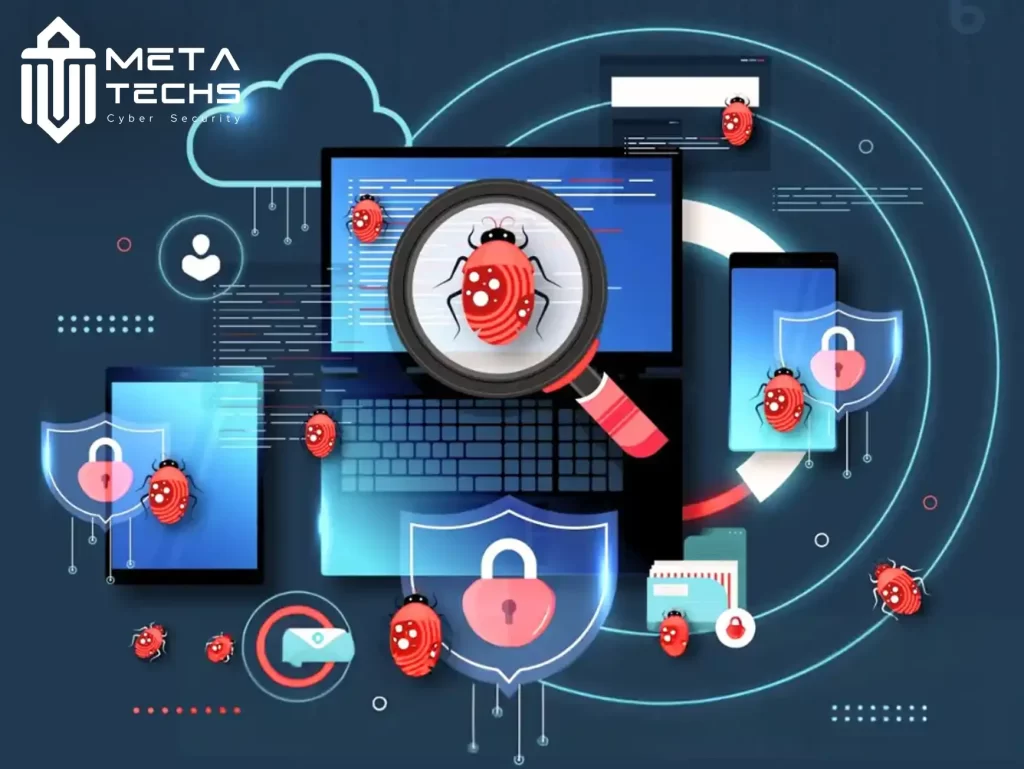
Step-by-Step Vulnerability Assessment Methodology
VAPT provides a comprehensive view of security posture, not only highlighting vulnerabilities but also demonstrating their potential impact.
Key Stages of VAPT Methodology
- Planning & Scoping
- Define goals, scope, systems, and rules of engagement.
- Establish testing timelines and compliance requirements.
- Information Gathering
- Collect data about the target environment (networks, applications, endpoints).
- Use passive and active reconnaissance techniques.
- Vulnerability Assessment
- Scan systems and applications for known weaknesses.
- Prioritize vulnerabilities based on severity and exploitability.
- Exploitation (Penetration Testing)
- Attempt to exploit identified vulnerabilities in a controlled manner.
- Demonstrate real-world attack scenarios such as privilege escalation, data breaches, or lateral movement.
- Post-Exploitation & Risk Analysis
- Assess the value of compromised data or systems.
- Measure the potential business impact of successful attacks.
- Reporting
- Provide a detailed report with findings, evidence, risk ratings, and remediation steps.
- Deliver executive summaries for management and technical details for IT teams.
- Remediation & Retesting
- Implement security fixes and patches.
- Conduct retesting to confirm that vulnerabilities have been resolved.
You can also learn more about What are the Types Of VAPT?
In Conclusion
VAPT Methodology is not just about finding weaknesses, it’s about turning insights into action to strengthen overall security. By following a structured methodology, organizations can reduce risks, ensure compliance, and stay ahead of evolving threats.
At Meta Techs, we specialize in delivering end-to-end VAPT (Vulnerability Assessment and Penetration Testing) services. Our experts combine advanced tools with proven methodologies to identify, validate, and remediate vulnerabilities effectively. With us as your trusted cybersecurity partner, you gain more than a report you gain a roadmap to stronger, smarter, and more resilient protection.
Strengthen your defenses today! Partner with Meta Techs for expert VAPT services and ensure your business stays secure against evolving threats.
FAQs
What is the methodology of vulnerability scanning?
It’s the process of scanning systems to identify, analyze, and prioritize security weaknesses.
What are the three types of pentesting methodologies?
Black box, white box, and grey box testing.
What is the difference between VAPT and SOC?
VAPT finds and tests vulnerabilities, while SOC (Security Operations Center) monitors and responds to threats in real time.
How many types of VAPT are there?
There are mainly two: Vulnerability Assessment (VA) and Penetration Testing (PT).
Related posts:
 Website hack repair service with meta techs
 Fawry comments on cyber attacks and data leaking
 Effective Policy for data retention policy best practices
 the Latest fortinet vulnerability 2024
 What Is ISO 27001?, Core Principles, Benefits, and Requirements
 Cylance Protect Antivirus for Your Digital Assets