Choosing the right VMware licensing options is essential for organizations that want to maximize performance, scalability, and return on investment from their virtualization environment. With evolving licensing models and product bundles, businesses must clearly understand their options to ensure compliance and cost efficiency.
At Meta Techs, we help organizations evaluate, design, and optimize VMware environments with the right licensing strategy aligned to business needs.
What Are the VMware Licensing Options?
VMware licensing options typically fall into two main categories: subscription-based licenses and perpetual licenses. These options apply across VMware’s virtualization, cloud, and infrastructure products.
Licensing may vary depending on:
- Product edition (Standard, Enterprise, etc.)
- CPU or core count
- Number of virtual machines
- Subscription term (annual or multi-year)
Selecting the correct option ensures flexibility, scalability, and compliance.
Read More : Benefits of VMware Partner Levels with Meta Techs
What Are the Main Types of VMware Licenses?
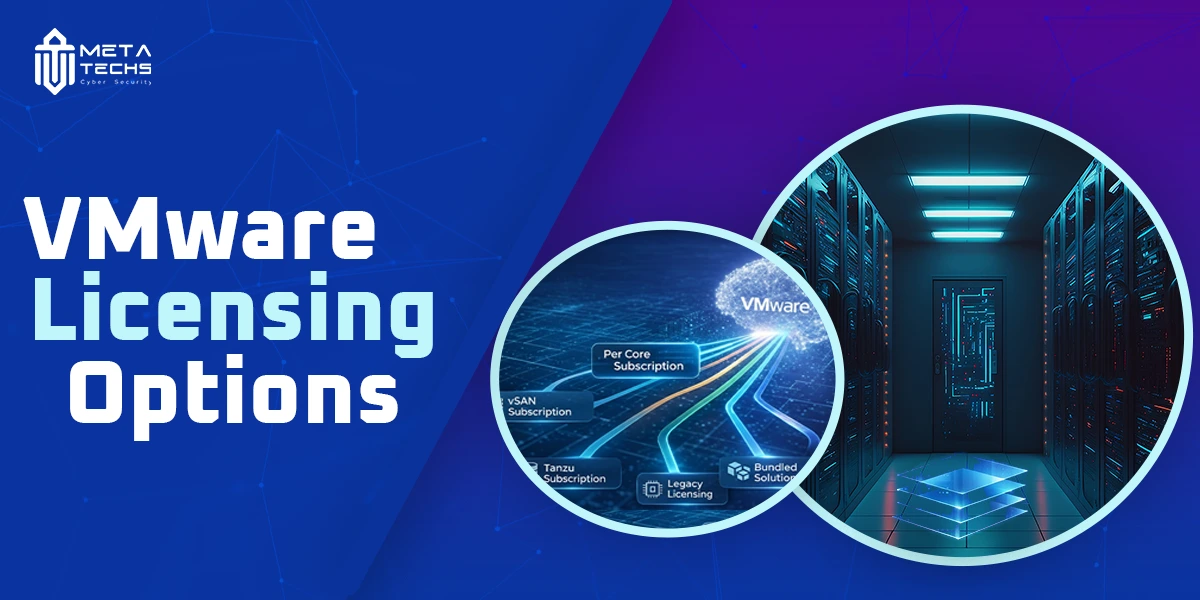
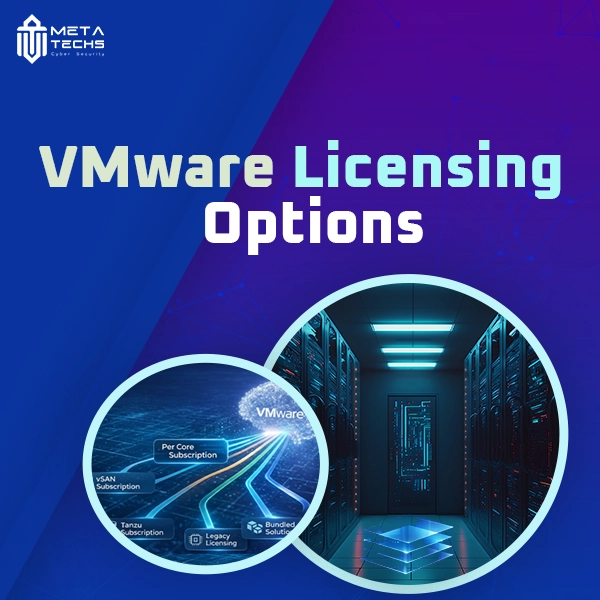
The main VMware license types include:
1. Subscription Licensing
A time-based model where organizations pay annually or for multi-year terms. It includes software updates, support, and access to new features.
2. Perpetual Licensing
A one-time purchase that allows indefinite use of the software version, typically with optional annual support and maintenance contracts.
3. Bundled Solutions
Some VMware products are offered as integrated suites combining compute, storage, networking, and management tools under a unified license.
How Does VMware’s Subscription Licensing Work?
Subscription licensing provides access to VMware software for a defined period. During the subscription term, organizations receive:
- Continuous updates and upgrades
- Technical support
- Access to new features
- Simplified budgeting through predictable costs
This model is popular among businesses adopting cloud and hybrid infrastructures because it supports scalability and operational flexibility.
SEE : VMware distributors in Dubai , UAE | vmware partner
What Are the Benefits of VMware’s Perpetual Licensing?
Perpetual licensing offers:
- One-time capital investment
- Long-term cost predictability
- No mandatory renewal for usage rights
- Greater control over upgrade timing
This option can be attractive for organizations with stable infrastructure environments and long-term IT planning.
How Does VMware Pricing Vary Across Different Products?
VMware pricing depends on several factors:
- Product type (vSphere, vSAN, NSX, etc.)
- Deployment size
- Core or CPU-based licensing requirements
- Support level and contract duration
- Cloud vs. on-premise implementation
Because pricing structures can vary significantly, working with an experienced partner ensures accurate sizing and cost optimization.
At Meta Techs, we help organizations right-size their VMware licensing strategy to avoid over-licensing, reduce risk, and align investment with business goals.
Understanding VMware licensing options is critical for ensuring compliance, performance, and cost efficiency. With expert guidance from Meta Techs, organizations can design the right virtualization strategy, reduce licensing complexity, and build a scalable infrastructure ready for future growth.
FAQs
What Are the Different Types of VMware Licenses?
VMware licenses generally include subscription licenses, perpetual licenses, and bundled solution licenses tailored to specific infrastructure needs.
What Is the VMware Licensing Policy?
VMware’s licensing policy is based on product editions, core or CPU allocation, and subscription terms. Organizations must ensure compliance by accurately matching licenses to deployed infrastructure and maintaining valid support agreements where required.
Related posts:
 Website hack repair service with meta techs
 Fawry comments on cyber attacks and data leaking
 Effective Policy for data retention policy best practices
 the Latest fortinet vulnerability 2024
 What Is ISO 27001?, Core Principles, Benefits, and Requirements
 The Importance of FortiClient to your Business