As artificial intelligence tools become more accessible, employees are increasingly using them to improve productivity and automate tasks. However, not all AI usage happens under official IT oversight. This growing trend has introduced a new challenge known as shadow AI, a hidden risk that organizations can no longer ignore.
What Is Shadow AI?
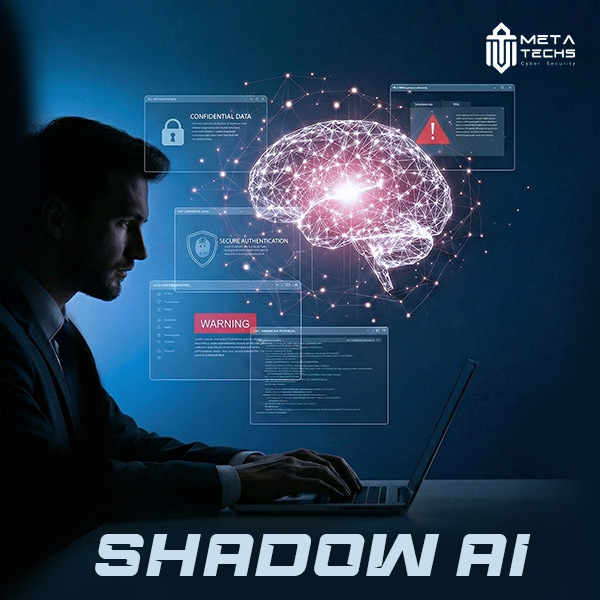
Shadow AI refers to the use of AI tools, platforms, or applications within an organization without approval, visibility, or governance from the IT or security teams.
This can include employees using public AI tools for:
- Content generation
- Code writing
- Data analysis
- Decision support
While often well-intentioned, shadow AI introduces significant security, compliance, and data privacy risks.
How Does Shadow AI Happen?
Shadow AI typically emerges due to gaps between business needs and IT controls. Common reasons include:
- Employees seeking faster ways to complete tasks
- Lack of approved AI tools
- Limited awareness of security risks
- Ease of access to public AI platforms
Because AI tools are easy to use and widely available, employees may adopt them without realizing the potential risks involved.
Read more : Top AI Cybersecurity Risks In 2026
What Are Some Examples of Shadow AI?
Real-world examples of shadow AI include:
- Employees uploading sensitive company data into public AI chat tools
- Developers using AI coding assistants without security validation
- Marketing teams using AI tools to generate content using internal data
- Teams integrating AI APIs without IT approval
These activities often happen outside official monitoring, creating blind spots for security teams.
Security Risks Associated With Shadow AI
Shadow AI can expose organizations to several critical risks:
- Data Leakage: Sensitive or confidential data may be shared with external AI platforms.
- Compliance Violations: Using unapproved tools can breach data protection regulations.
- Loss of Control: Organizations lack visibility into how data is processed or stored.
- Inaccurate Outputs: AI-generated content may introduce errors or misinformation.
- Expanded Attack Surface: Unauthorized tools increase potential entry points for attackers.
Challenges in Defending Against Shadow AI
Managing shadow AI is not straightforward. Organizations often face:
- Limited visibility into employee tool usage
- Difficulty balancing productivity and security
- Rapid growth of AI tools and platforms
- Lack of clear policies and governance frameworks
Traditional security approaches may not be enough to detect or control shadow AI effectively.
FAQs
What is the use of shadow AI?
Shadow AI is often used by employees to improve efficiency, automate tasks, and enhance productivity. However, it is typically used without official approval, which creates risks despite its benefits.
How can shadow AI be avoided?
Organizations can reduce shadow AI risks by:
- Providing approved and secure AI tools
- Establishing clear AI usage policies
- Educating employees about risks
- Monitoring and managing AI tool usage
- Implementing data protection controls
Conclusion
As AI adoption continues to grow, shadow AI is becoming a critical cybersecurity concern. Organizations must strike a balance between enabling innovation and maintaining control.
At Meta Techs, we help organizations implement secure AI strategies, improve visibility, and manage emerging risks like shadow AI.
Because in the age of AI, visibility and governance are key to staying secure.
Related posts:
 Website hack repair service with meta techs
 Fawry comments on cyber attacks and data leaking
 Effective Policy for data retention policy best practices
 the Latest fortinet vulnerability 2024
 What Is ISO 27001?, Core Principles, Benefits, and Requirements
 Cylance Protect Antivirus for Your Digital Assets