

As organizations expand their digital environments, the number of potential entry points for cyberattacks continues to grow. From cloud platforms and endpoints to third-party integrations, every connected asset increases exposure to risk.
Understanding the types of attack surfaces is essential for identifying vulnerabilities and building a stronger, more resilient security posture, especially when considering threats like social engineering attacks.
What is Attack Surface
An attack surface refers to the total number of points where an unauthorized user (attacker) can try to enter or extract data from a system.
These entry points can exist across networks, applications, devices, and even human interactions.
In simple terms:
The larger your attack surface, the more opportunities attackers have to exploit your environment.
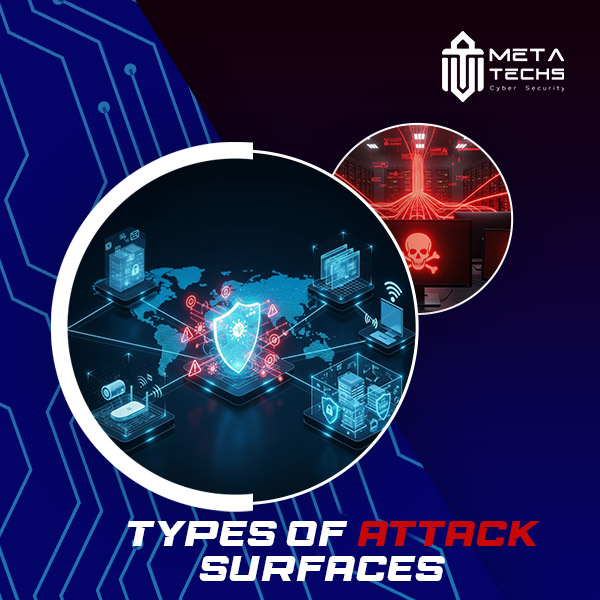
Types of Attack Surfaces
To effectively manage risk, organizations must understand the main types of attack surfaces:
1. Digital Attack Surface
This includes all internet-facing assets such as:
- Web applications
- APIs
- Cloud services
- Email systems
These are often the most targeted because they are directly exposed to the internet.
2. Physical Attack Surface
Refers to physical devices and infrastructure, including:
- Servers
- Workstations
- USB devices
- Data centers
Unauthorized physical access can lead to system compromise or data theft.
3. Human Attack Surface
One of the most critical and often overlooked areas:
- Employees
- Third-party users
- Contractors
This surface is commonly targeted through phishing, social engineering, and credential theft, which is why strong cybersecurity awareness for employees is essential.
4. External Attack Surface
Includes assets outside direct organizational control but still connected, such as:
- Third-party vendors
- SaaS platforms
- Supply chain systems
These can introduce hidden risks if not properly managed.
Real-World Attack Surfaces Examples
Understanding the types of attack surfaces becomes clearer through real-world scenarios:
- A misconfigured cloud storage bucket exposing sensitive data
- A phishing email tricking an employee into sharing credentials
- An outdated server with unpatched vulnerabilities
-
A third-party vendor system being compromised and used as an entry point, sometimes leading to ransomware attacks
These examples show how attackers exploit different surfaces to gain access and move within an environment.
How to Reduce and Secure Your Attack Surface?
Reducing your attack surface is a key step in strengthening cybersecurity. Organizations can take several proactive measures:
-
Asset Visibility
Maintain a complete inventory of all systems, devices, and applications.
-
Access Control
Apply least privilege principles and strong authentication (MFA).
-
Regular Patching
Keep systems and software updated to eliminate known vulnerabilities.
-
Employee Awareness
Train users to recognize phishing and social engineering attacks.
-
Third-Party Risk Management
Assess and monitor vendors and external integrations.
-
Continuous Monitoring
Use advanced tools to detect anomalies and potential threats in real time.
Strengthen Your Cyber Defense Strategy Now
Conclusion
Understanding the types of attack surfaces is critical for modern cybersecurity strategies. As environments grow more complex, organizations must take a proactive approach to identify, monitor, and reduce exposure across all layers.
At Meta Techs, we help organizations gain full visibility of their attack surface and implement security strategies that reduce risk and strengthen resilience.
Because in cybersecurity, you can’t protect what you don’t see.
Related posts:
 Types of Malware Attacks: A Complete Guide for Businesses
 What is Ransomware attack types?, how it works?
 What are the Types Of VAPT?
 Cyber Attacks Examples: Real Incidents and Lessons for Businesses
 Types of Cyber Attacks: Common Threats Every Business Should Know
 What is Attack Surface Management ?