Cyber threats are evolving faster than ever, becoming more sophisticated, automated, and difficult to detect using traditional security approaches. As attack surfaces expand across cloud, endpoints, and hybrid environments, organizations need faster, smarter, and more adaptive defense mechanisms.
This is where AIDR (AI Detection and Response) emerges as a critical capability. By combining artificial intelligence with detection and response processes, AIDR enables organizations to identify and respond to threats in real time with greater accuracy and efficiency.
What is AI Detection and Response (AIDR)?
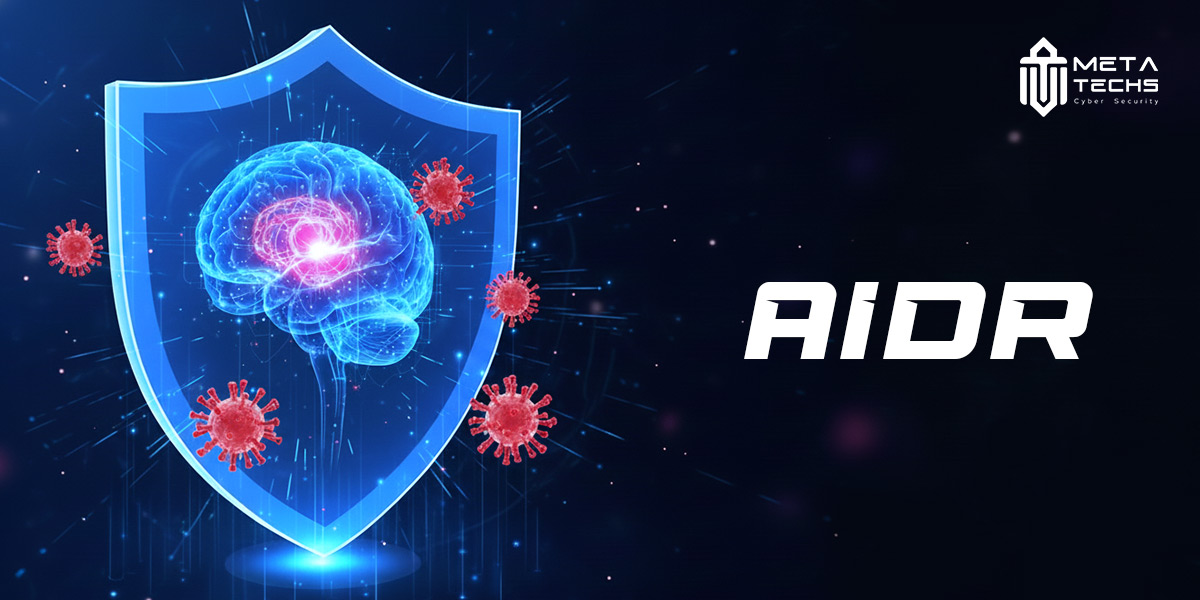
AIDR (AI Detection and Response) is an advanced cybersecurity approach that leverages artificial intelligence and machine learning to detect, analyze, and respond to cyber threats automatically.
Unlike traditional systems that rely heavily on predefined rules, AIDR uses behavioral analysis, pattern recognition, and real-time data processing to identify both known and unknown threats.
In simple terms:
AIDR transforms security operations from reactive monitoring into intelligent, proactive defense.
Read more : Agentic AI: The Next Evolution in Intelligent Systems
Why traditional detection and response needs an upgrade
Traditional detection and response methods, such as SIEM and rule-based monitoring, face several limitations:
- Alert fatigue due to high volumes of false positives
- Slow response times caused by manual analysis
- Limited ability to detect unknown threats
- Fragmented visibility across systems and environments
As attackers increasingly use automation and AI-driven techniques, traditional approaches struggle to keep up. Organizations require a more dynamic and adaptive solution which AIDR provides.
What is AIDR? Core capabilities and scope
AIDR delivers a wide range of capabilities that enhance modern security operations:
1. Real-Time Threat Detection
Uses AI to identify anomalies and suspicious behavior across networks, endpoints, and cloud environments.
2. Behavioral Analysis
Detects deviations from normal activity, enabling the discovery of advanced and previously unknown threats.
3. Automated Response
Triggers immediate actions such as isolating systems, blocking access, or containing threats without human delay.
4. Threat Correlation
Analyzes large volumes of data to connect related events and identify complex attack patterns.
5. Continuous Learning
Improves detection accuracy over time by learning from new threats and evolving attack techniques.
6. Unified Visibility
Provides centralized insights across multiple environments, supporting faster and more informed decision-making.
Why AI Detection and Response is the New Baseline for Survival
In today’s threat landscape, speed and accuracy define the difference between containment and compromise. AIDR is no longer an advanced option, it is becoming the new baseline for cybersecurity resilience.
Organizations adopting AIDR can:
- Detect threats earlier and reduce dwell time
- Respond faster with automated actions
- Minimize operational risk and business disruption
- Reduce dependency on manual processes
- Strengthen overall security posture
As cyberattacks become more automated and persistent, relying solely on traditional tools is no longer sufficient. AIDR enables organizations to stay ahead by turning data into actionable intelligence in real time.
Stay Ahead of AI-Driven Threats — Talk to Our Experts
Conclusion
AIDR represents a major shift in how organizations approach cybersecurity. By integrating artificial intelligence into detection and response, businesses can move from reactive defense to proactive, intelligent security operations.
At Meta Techs, we help organizations adopt advanced cybersecurity strategies, including AIDR, to enhance visibility, accelerate response, and build resilient, future-ready security environments.
Because in modern cybersecurity, intelligence is the ultimate advantage.
Related posts:
 Rapid7 MDR: A Smarter Defense for Your Business
 Agentic AI: The Next Evolution in Intelligent Systems
 Cloud Native Application Protection Platform: The Future of Cloud Security
 AI Driven SDLC: Redefining the Future of Software Development
 Prepare for the Future of Cybersecurity
 Why Passwordless Authentication is the Future of Cybersecurity?