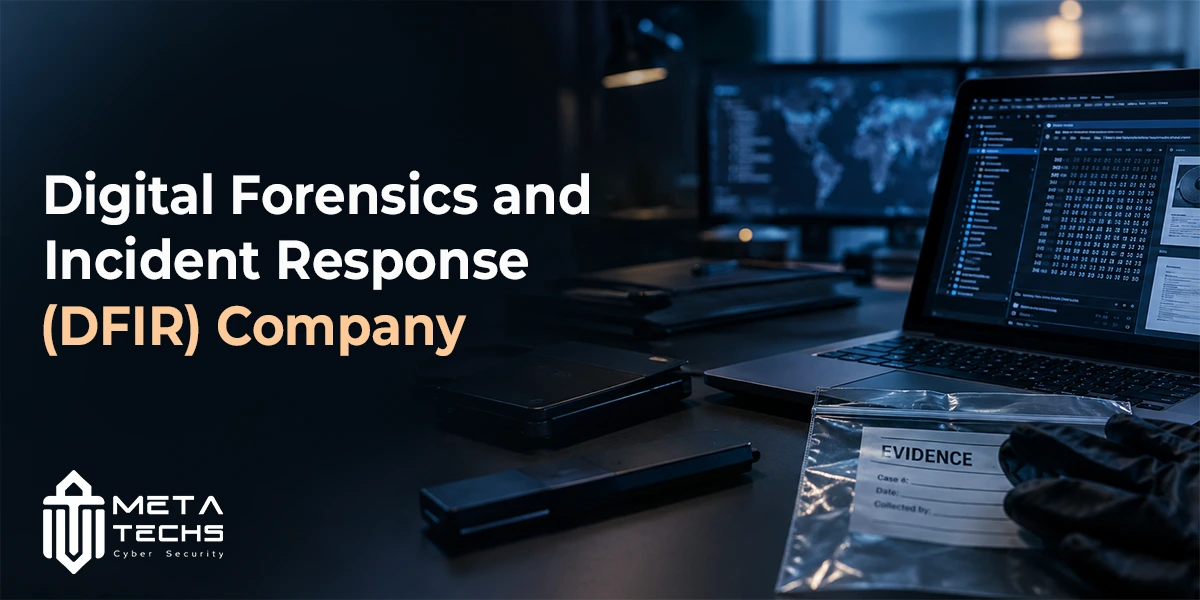
When a cyber incident affects business systems, containing the threat is only part of the work. Organizations also need to understand how the incident happened, which systems were affected, and whether the attacker accessed sensitive information. A Digital Forensics and Incident Response (DFIR) company helps investigate these questions while supporting the technical response.
DFIR combines two related disciplines. Incident response focuses on containing and resolving an incident, while digital forensics examines available evidence to establish what happened. Working together, they help organizations make informed decisions during an investigation and reduce the risk of overlooking important details.
For businesses considering DFIR services, understanding the engagement process is useful before an incident occurs. It helps clarify when external support may be needed, what a provider may investigate, and which factors can affect the cost and duration of the work.
Talk to a DFIR Expert at Meta Techs
What Is DFIR?
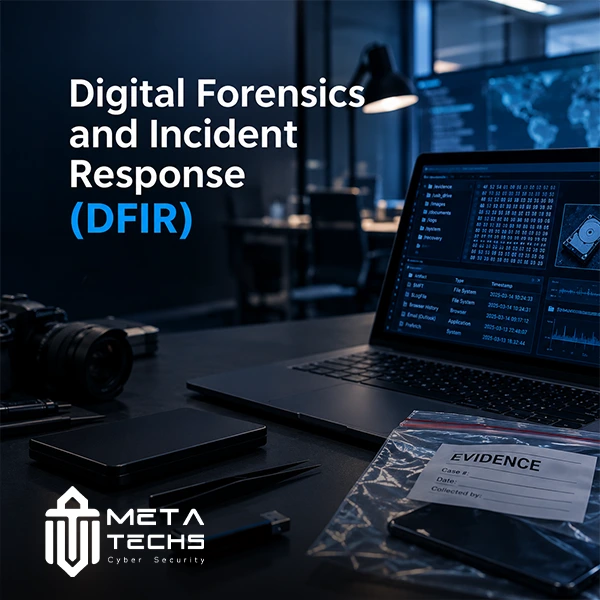
Digital Forensics and Incident Response (DFIR) is a cybersecurity service that combines incident handling with the collection and analysis of digital evidence. It helps organizations investigate security incidents, limit ongoing damage, and understand the events that led to a compromise.
Incident response deals with the immediate security problem. Depending on the situation, this may involve isolating affected systems, disabling compromised accounts, blocking malicious activity, and supporting recovery.
Digital forensics focuses on the evidence. Investigators may examine system logs, endpoint activity, network records, cloud audit logs, or other available data to reconstruct the incident and identify what the evidence can establish.
These activities often need to happen together. For example, during a ransomware incident, responders may need to isolate affected devices while investigators preserve relevant evidence. The exact actions depend on the threat and the organization’s operational requirements.
A DFIR provider can support this work when an incident is too complex for the internal team, requires specialist investigation, or demands additional response capacity.
How DFIR Combines Investigation and Response
Incident response and digital forensics have different priorities, but separating them completely can make an investigation harder.
Responders need to contain the threat and protect business operations. Investigators need to preserve and analyze evidence that may explain how the attacker gained access, what actions followed, and which systems were affected. Coordination helps the organization address the immediate risk without unnecessarily losing information that could be important later.
Consider a business that discovers ransomware on one of its servers. The response team may isolate the affected system to limit further activity. Meanwhile, investigators can review available endpoint and network records to look for signs of initial access, lateral movement, or possible data theft.
The investigation may also reveal that the affected server was not the only system involved. That information can help the response team adjust containment and recovery priorities.
The UAE Government’s Cyber Incident Response Plan describes a coordinated approach to significant cyber incidents, including preparation, detection, response, recovery, and continuous improvement. For individual businesses, the relevant response process will depend on their circumstances and applicable requirements.
When to Call a DFIR Company
Not every security alert requires an external investigation. An internal security team may be able to handle routine events using its existing procedures. External DFIR support becomes more relevant when the incident is complex, the potential impact is significant, or the organization lacks the expertise or capacity to investigate it.
A business may consider contacting a DFIR company when it suspects ransomware, unauthorized access, data theft, or a compromise involving privileged accounts. External support can also be useful when an organization cannot determine the full scope of an incident or needs a more detailed investigation after containing the immediate threat.
Some incidents also involve legal, regulatory, or insurance considerations. In these cases, organizations may need to preserve evidence and document investigative actions carefully. The need for formal forensic support depends on the circumstances and should be discussed with the appropriate legal and compliance advisers.
It is better to identify a potential provider before an incident than to begin searching while business systems are affected. Organizations can review their incident response arrangements, establish escalation contacts, and understand how external support would be activated.
Businesses preparing these procedures may also find Meta Techs’ guide to creating an incident response plan useful.
Review Meta Techs Incident Response & DFIR Services
What Does a DFIR Engagement Cost?
The cost of a DFIR engagement depends on the incident and the work required. A focused investigation involving one device is different from a complex breach affecting multiple servers, user accounts, cloud environments, and business units.
Several factors can affect the scope and cost:
Incident complexity: A case involving multiple systems or suspected attacker activity across an environment may require more investigation.
Evidence volume: The amount and type of data to collect and examine can affect the effort involved.
Urgency: An organization needing immediate support may have different requirements from one arranging a planned investigation.
Engagement scope: Containment, forensic analysis, malware examination, root-cause investigation, and reporting may involve different levels of work.
Required deliverables: A technical findings report may have a different scope from a formal investigation intended to support legal or insurance processes.
A provider generally needs to understand the known incident details and the organization’s requirements before giving a meaningful estimate. Businesses should clarify what the engagement includes, what evidence will be examined, and what reporting or follow-up support is expected.
There is no single price that applies to every DFIR engagement, so comparing providers only by their initial quotes may not give a complete picture of the work being offered.
What Happens During a DFIR Engagement?
A DFIR engagement usually begins with an initial assessment. The provider gathers the information available about the incident, identifies the affected systems, and discusses the organization’s immediate priorities. This helps establish the scope and determine which activities need to happen first.
The response team may then work to contain ongoing threats. Depending on the incident, this could involve isolating affected systems, restricting compromised accounts, or blocking suspicious activity. These decisions need to account for both business continuity and evidence preservation.
Investigators identify relevant evidence and collect it using appropriate procedures. Sources may include endpoint data, system and application logs, network records, and cloud audit information. The available evidence varies by environment, and some data may no longer exist if it was not retained or was overwritten.
Once collected, the evidence is examined and analyzed to develop an understanding of the incident. Investigators may build a timeline, look for signs of initial access, assess the activity of compromised accounts, and determine which systems or data may have been affected. Findings should distinguish confirmed facts from assumptions or questions that remain unresolved.
The engagement typically concludes with reporting and recommendations. A report may describe the investigation’s scope, the evidence examined, key findings, limitations, and suggested remediation. The organization can use these findings to address weaknesses and improve its response procedures.
The NIST guide to integrating forensic techniques into incident response describes a forensic process built around collection, examination, analysis, and reporting. The specific steps used in an engagement can vary according to the incident and the organization’s needs.
Meta Techs DFIR Services
Meta Techs provides Incident Response & DFIR as part of its cybersecurity services for enterprise security teams. Its published service scope includes incident containment, investigation, evidence handling, malware analysis, and reporting.
The company’s listed capabilities include ransomware investigation, breach investigation, root-cause analysis, threat containment, evidence collection, and post-incident reporting. These activities address different parts of an incident, from limiting ongoing risk to documenting investigative findings.
For organizations evaluating a DFIR provider, the important consideration is how the engagement will address their specific environment and incident. The scope, priorities, and reporting requirements should be discussed before work begins.
Businesses that need to discuss their incident response requirements can review Meta Techs Incident Response & DFIR services.
Contact Meta Techs for DFIR Support
Frequently Asked Questions
How is DFIR different from digital forensics alone?
Digital forensics focuses on collecting, preserving, examining, and analyzing digital evidence. Incident response focuses on containing and resolving a security incident. DFIR combines both activities so an organization can investigate what happened while addressing the immediate threat.
How quickly can a DFIR team respond to an incident?
Response time depends on the provider’s availability, the service agreement, the incident’s severity, and the support required. Organizations should confirm response arrangements and escalation procedures with a provider rather than assume that every service includes immediate or round-the-clock support.
What does a DFIR engagement cost?
The cost depends on factors such as incident complexity, affected systems, evidence volume, urgency, investigation scope, and reporting requirements. A provider will generally need details about the incident before estimating the work.
Is DFIR needed for compliance or legal reasons after a breach?
Not every breach requires an external DFIR engagement. However, a forensic investigation may help an organization document what happened, preserve relevant evidence, and support discussions with legal, regulatory, or insurance stakeholders. Whether formal forensic work is necessary depends on the incident and the organization’s applicable obligations.
Conclusion
A DFIR engagement brings investigation and incident response together. It can help an organization contain a threat, understand what happened, assess the available evidence, and identify actions to address the incident.
For businesses considering a DFIR company, the key is to understand the provider’s scope, response arrangements, evidence-handling approach, and reporting deliverables. These details help establish whether the engagement fits the incident and the organization’s needs.
Related posts:
 What Is Digital Forensics in Cybersecurity? A Beginner’s Guide
 How to Create an Incident Response Plan (With Template)
 Incident Response Services for businesses
 Dark Web Monitoring for Businesses: How It Works and Why It Matters
 Cyber Incident Response: A Strategic Approach to Managing Cyber Threats
 What to Do Immediately After a Ransomware Attack: A Step-by-Step Response Guide