A cybersecurity alert can tell a company that something unusual happened. It rarely tells the whole story.
How did an attacker get in? Which account or device was involved? What did they access? Was data taken? And is there anything else the security team has missed?
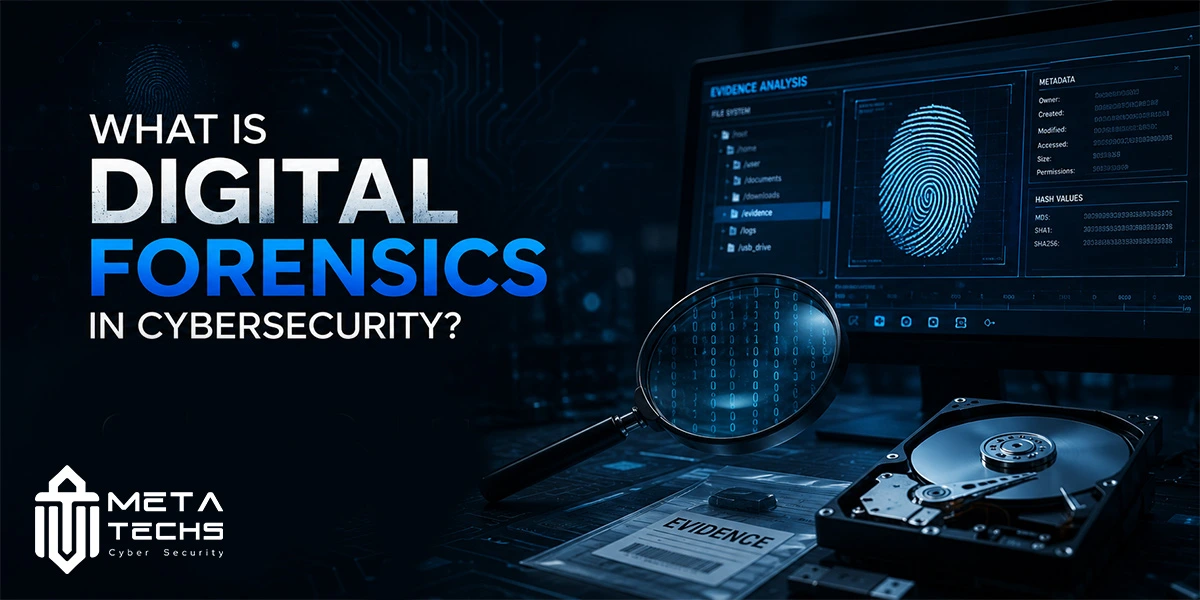
Digital forensics helps answer these questions by examining digital evidence and reconstructing what happened. The evidence can come from computers, networks, cloud platforms, mobile devices, applications, email systems, and other digital environments.
NIST defines digital forensics as the application of investigative and scientific procedures to digital evidence while maintaining integrity, chain of custody, appropriate tools, repeatability, and proper reporting.
What Is Digital Forensics?
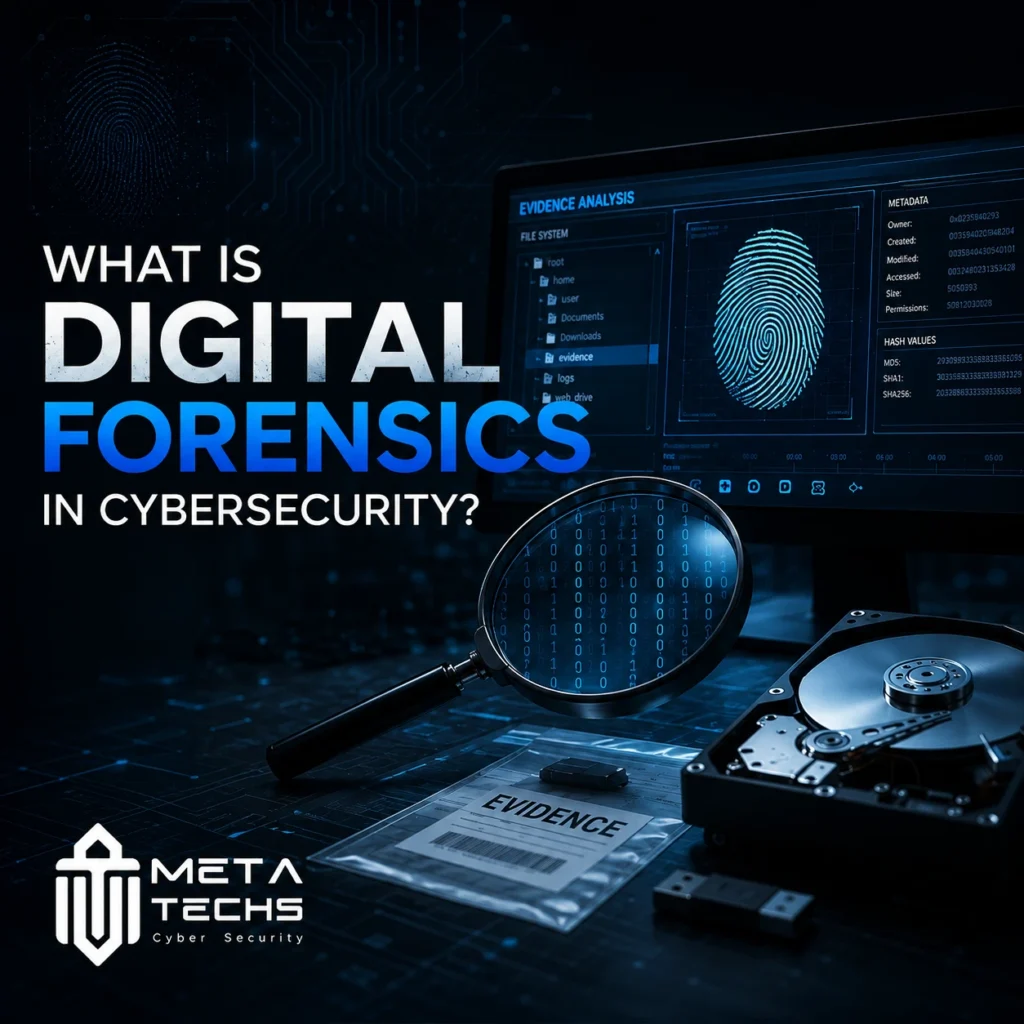
Digital forensics is the process of collecting, preserving, examining, and analyzing digital evidence to understand an incident or investigate suspicious activity.
In cybersecurity, that evidence may show when an account was accessed, what processes were running on a device, which files were opened, how systems communicated, or whether data was transferred outside the organization.
The important part is that investigators do not treat one suspicious event as the complete answer. A login from an unusual location, for example, does not automatically mean an account was compromised. Investigators need to compare it with other evidence and build a timeline that explains what actually happened.
Digital forensics is broader than computer forensics because evidence can exist across many types of digital systems, not just computers.
What Types of Digital Forensics Are Used in Cybersecurity?
The type of investigation depends on where the relevant evidence is stored. In a real incident, several areas are often investigated together.
| Type | What is examined | What it can reveal |
| Endpoint forensics | Computers, laptops and servers | User activity, malware, files and system changes |
| Network forensics | Traffic, DNS, firewall and VPN records | Connections, lateral movement and possible data transfer |
| Cloud forensics | Cloud and SaaS activity | Account access, API activity and data movement |
| Mobile forensics | Phones, apps and device data | Messages, application activity and other device evidence |
| Memory forensics | RAM from running systems | Processes, connections and potentially in-memory threats |
Endpoint evidence remains important, but modern investigations increasingly cross into cloud, identity, network and application environments.
For example, investigating a compromised Microsoft 365 account may require more than examining the employee’s laptop. Authentication records, mailbox activity, cloud audit logs and endpoint evidence may all contribute to the final timeline.
How Does a Digital Forensics Investigation Work?
A forensic investigation generally follows four core stages: collection, examination, analysis, and reporting. NIST uses this structure in its guidance for integrating forensic techniques into incident response.
Collection
The first task is to identify where useful evidence may exist and collect it without unnecessarily changing the original data.
Depending on the incident, this could involve forensic images, system logs, memory captures, cloud audit records, network information, mobile data, or application records.
Preservation matters from the beginning. Investigators need to know what was collected, where it came from, when it was obtained, and how it was handled.
Examination
Once the evidence has been collected, investigators examine it for relevant artifacts.
They may look at file activity, browser records, operating system events, application data, authentication activity, deleted information, or suspicious processes. The challenge is that modern systems generate enormous amounts of data, much of which has nothing to do with the incident.
Analysis
Analysis is where separate pieces of evidence begin to form a story.
Suppose an attacker obtains an employee’s credentials through phishing. Investigators might find an unusual authentication event, followed by access to cloud resources, mailbox activity, and downloads of sensitive files.
None of those events alone explains the entire incident. Together, they may establish a much clearer timeline.
Reporting
The final findings are documented in a forensic report. A good report explains what was examined, what the evidence showed, how the evidence was handled, and where uncertainty remains.
That last part is important. Digital forensics is not about forcing an explanation onto incomplete evidence. NIST notes that not all evidence may be discovered and that recovered deleted data can sometimes include irrelevant material.
Why Is Chain of Custody Important?
Digital evidence can be changed easily, sometimes without anyone realizing it.
Chain of custody provides a documented history of the evidence, from collection through storage and analysis. It helps establish who handled the evidence, what was done to it, and whether its integrity was maintained.
For a business investigation, this can become particularly important when the findings may later be used for litigation, regulatory review, insurance claims, or an internal disciplinary process.
The basic principle is simple: investigators should be able to explain where the evidence came from and demonstrate that it was handled properly. NIST specifically identifies chain of custody, validated tools, repeatability, and reporting as important elements of digital forensic work.
Digital Forensics vs Incident Response
Digital forensics and incident response work closely together, but they have different priorities.
| Digital Forensics | Incident Response |
| Investigates what happened | Works to contain and resolve the incident |
| Preserves and analyzes evidence | Focuses on reducing active risk |
| Reconstructs the attack timeline | Detects, contains, eradicates and recovers |
| Supports investigations and reporting | Prioritizes operational recovery |
Consider a ransomware incident. Incident responders may need to isolate affected machines quickly to stop the attack spreading. At the same time, forensic investigators may need to preserve evidence showing how the attacker entered and moved through the environment.
That combination is known as DFIR, or Digital Forensics and Incident Response. It brings investigation and response together so that evidence is not unnecessarily lost while the organization works to contain the threat.
When Does a Business Need Digital Forensics?
Not every security alert requires a full forensic investigation. The need usually becomes clearer when an organization needs to establish the facts behind a significant or disputed event.
This can include ransomware, suspected data breaches, insider activity, business email compromise, intellectual property theft, unauthorized access, fraud, or an incident that may lead to legal or regulatory action.
It can also be useful when the organization has already contained an attack but still does not understand its full scope.
For example, removing malware from one laptop does not necessarily answer whether the attacker accessed other systems. A forensic investigation can connect endpoint, identity, network and cloud evidence to determine whether the incident was isolated or part of something larger.
What Should a Company Do After a Cyber Incident?
The first response can affect what evidence is available later.
Companies should preserve relevant logs, document what they know, identify potentially affected systems, and involve the appropriate security and legal teams. They should also be careful about making unnecessary changes to systems that may contain important evidence.
There is no universal rule that every compromised machine should immediately be shut down. A running system may contain volatile evidence that disappears after power is removed. At the same time, leaving a compromised system connected may allow an attacker to continue operating.
The right decision depends on the incident, which is why forensic considerations should be part of the response process rather than something added after everything has been changed.
What Is Forensic Readiness?
Forensic readiness means preparing an organization to collect useful evidence before an incident occurs.
That starts with sensible logging and retention. It also includes synchronized system clocks, defined responsibilities, evidence-handling procedures, access to appropriate expertise, and an incident-response plan that considers preservation from the start.
The reason is straightforward: if important logs were never retained, or were overwritten before the investigation began, a forensic team cannot recreate information that no longer exists.
How Meta Techs Supports Digital Forensics and DFIR
When an incident requires specialist investigation, Meta Techs provides digital forensics and DFIR services as part of its cybersecurity offering.
Its incident response and DFIR capabilities cover areas such as breach investigation, ransomware investigation, malware analysis, root-cause analysis, evidence collection, and post-incident reporting.
The value of a forensic investigation is not simply the amount of technical data it produces. The real objective is to turn available evidence into a clear understanding of what happened, what was affected, and what the organization needs to do next.
Frequently Asked Questions
What’s the difference between digital forensics and incident response?
Digital forensics investigates and reconstructs an incident using digital evidence. Incident response focuses on detecting, containing, removing, and recovering from the threat. DFIR combines both disciplines so that an organization can respond while preserving evidence.
How long does a digital forensics investigation take?
There is no fixed timeframe. A small investigation involving one device may be relatively quick, while an enterprise incident involving multiple endpoints, cloud platforms, accounts, and large volumes of data can take much longer. The scope, evidence available, urgency, and legal requirements all affect the timeline.
Is digital forensic evidence admissible in court?
Digital evidence can support legal proceedings when it has been collected, preserved, documented, and analyzed using appropriate procedures. Whether specific evidence is admissible depends on the jurisdiction and circumstances of the case.
When should a business call a DFIR company?
Specialist support is worth considering when an organization is dealing with ransomware, suspected data theft, compromised accounts, insider activity, a serious breach, or an investigation where evidence may need to support legal, regulatory, or insurance requirements.
Final Takeaway
Digital forensics is not simply about recovering deleted files from a computer.
It is about reconstructing an event from digital evidence and determining what the available evidence can actually establish.
For a business facing a cyber incident, that can mean the difference between knowing that something went wrong and understanding how it happened, what was affected, and what needs to be fixed.
Related posts:
 What to Do Immediately After a Ransomware Attack: A Step-by-Step Response Guide
 OSINT Framework: A Complete Guide to Open-Source Intelligence
 How to Create an Incident Response Plan (With Template)
 Managed Detection and Response (MDR) Services: The Complete Guide
 Cloud Security Services in Dubai (AWS & Azure Guide)
 NESA Compliance UAE: A Practical Guide to Information Assurance Standards