Cyber threats are becoming more advanced every year. Ransomware, phishing attacks, insider threats, and zero-day exploits can bypass traditional security tools before organizations even realize they’ve been compromised. At the same time, many businesses struggle with limited cybersecurity resources and an overwhelming number of security alerts.
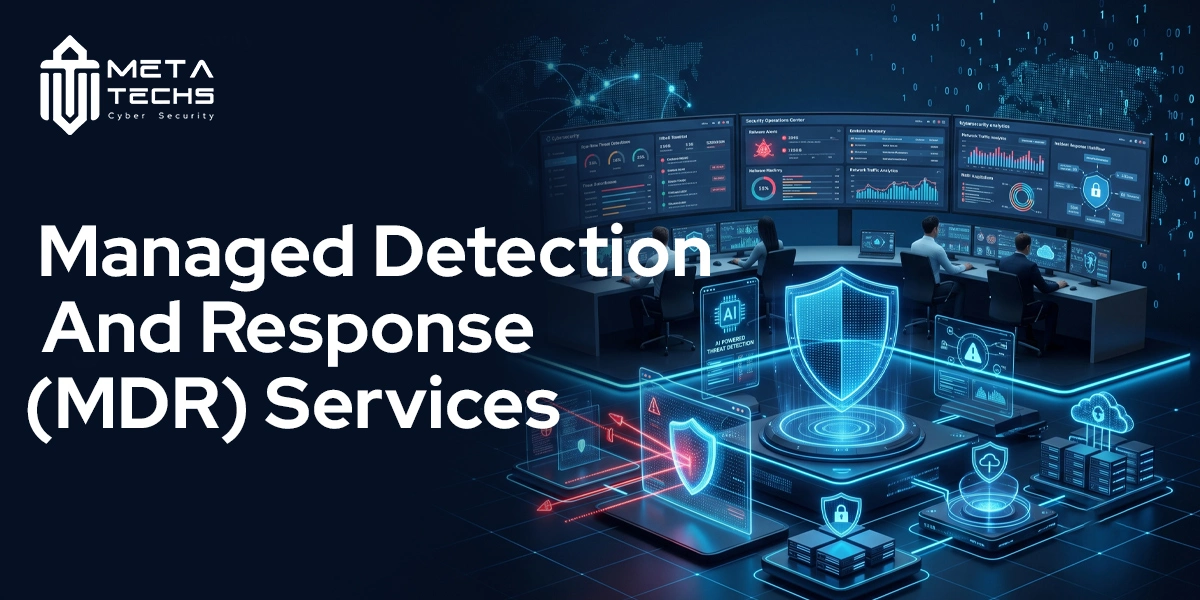
This is why Managed Detection and Response (MDR) Services have become an essential part of modern cybersecurity. Instead of relying only on software, MDR combines advanced detection technology with experienced security analysts who continuously monitor, investigate, and respond to threats before they impact your business.
In this guide, you’ll learn what MDR is, why businesses need it, how it works, and what to look for when choosing an MDR provider.
What Is Managed Detection and Response (MDR)?
Managed Detection and Response (MDR) is a managed cybersecurity service that continuously monitors an organization’s IT environment, detects suspicious activity, investigates potential threats, and responds to security incidents in real time.
Unlike traditional security solutions that only generate alerts, Managed Detection and Response (MDR) Services combine advanced technologies with experienced cybersecurity professionals to actively stop threats before they cause serious damage.
An MDR provider acts as an extension of your security team by protecting endpoints, networks, cloud environments, user identities, and business applications around the clock. This approach helps organizations improve visibility, reduce response time, and strengthen their overall security posture.
Most MDR services include:
- 24/7 cybersecurity monitoring
- Threat detection and analysis
- Proactive threat hunting
- Incident response and containment
- Root cause analysis
- Regular security reporting
Many MDR providers also operate through a Security Operations Center (SOC), where skilled analysts monitor security events, investigate suspicious activity, and coordinate rapid responses whenever a threat is confirmed.
Why Businesses Need Managed Detection and Response
Cybercriminals are constantly finding new ways to bypass traditional defenses. Today, attacks often begin with a phishing email, stolen credentials, or an unpatched vulnerability before spreading across the network. Without continuous monitoring, these threats can remain undetected for days or even weeks.
Many organizations also face challenges such as:
- Increasing ransomware attacks
- Sophisticated phishing campaigns
- Alert fatigue caused by thousands of daily security notifications
- Shortage of skilled cybersecurity professionals
- Growing cloud and hybrid IT environments
These challenges make it difficult for internal IT teams to detect and respond to threats quickly.
Managed Detection and Response (MDR) Services solve this problem by combining automated threat detection with expert human analysis. Instead of investigating every security alert, businesses receive support from specialists who identify genuine threats, contain attacks, and guide recovery efforts. This allows internal teams to focus on strategic business priorities while maintaining stronger cybersecurity protection. For a broader view of what threats businesses are currently facing, see our guide on the top cybersecurity threats today.
Struggling with alert fatigue or limited security resources? Explore MDR and SOC as a Service
How Managed Detection and Response Works
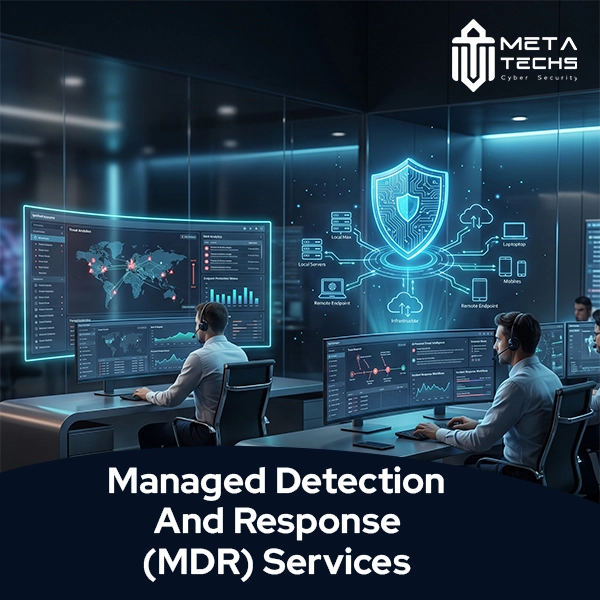
Although every MDR provider has its own approach, the overall process follows a similar workflow designed to detect and stop threats as quickly as possible.
1. Continuous Monitoring
Security data is collected from endpoints, networks, cloud platforms, user identities, and applications to identify unusual activity around the clock.
2. Threat Detection
Advanced analytics, AI, and threat intelligence identify suspicious behavior that may indicate a cyberattack.
3. Investigation
Security analysts review alerts, remove false positives, and determine whether the activity poses a genuine risk.
4. Threat Hunting and Response
Experts proactively search for hidden threats, contain compromised devices or accounts, and begin incident response before the attack spreads.
5. Recovery and Improvement
After the threat is removed, analysts investigate the root cause, recommend security improvements, and help prevent similar incidents in the future. This may include vulnerability scanning to close gaps that allowed the initial compromise.
By combining automation with human expertise, managed detection and response enables organizations to respond faster, reduce business risk, and build a stronger cybersecurity defense.
Related reading
→ Security Operations Center (SOC) Services
→ Incident Response Services for Businesses
Key Benefits of Managed Detection and Response for Enterprises
As cyber threats become more sophisticated, businesses need more than basic security tools. Managed Detection and Response (MDR) Services provide continuous protection by combining advanced technology with experienced security professionals. This helps organizations detect threats earlier, respond faster, and reduce the impact of cyberattacks.
Some of the key benefits include:
- 24/7 cybersecurity monitoring: Security experts monitor your environment around the clock, helping identify suspicious activity before it becomes a major incident. This is the same principle behind a dedicated Security Operations Center.
- Faster incident response: Threats are investigated and contained quickly, reducing downtime and limiting business disruption.
- Lower business risk: Continuous threat hunting and proactive monitoring help stop attacks before they spread across your network.
- Regulatory compliance support: Many organizations use MDR to strengthen security controls and support compliance with UAE data protection requirements, NESA, and ISO 27001.
- Cost savings: Building and maintaining an in-house Security Operations Center can be expensive. An MDR provider gives you access to experienced analysts and advanced tools without the cost of hiring a large internal team.
- Reduced IT workload: Internal IT teams spend less time investigating alerts and more time focusing on strategic business initiatives.
Rather than simply notifying your team about potential threats, Managed Detection and Response (MDR) Services actively investigate and respond to security incidents, giving businesses greater confidence in their cybersecurity posture.
MDR vs SOC vs MSSP
Many organizations compare MDR vs SOC before deciding which cybersecurity approach best fits their needs. Although these services have similar goals, they differ in how they detect, investigate, and respond to threats.
A traditional Security Operations Center (SOC) focuses on monitoring and analyzing security events. Some organizations build their own SOC, while others outsource these operations through SOC as a Service to a third-party provider.
An MSSP (Managed Security Service Provider) typically manages security infrastructure such as firewalls, VPNs, and antivirus solutions. While it helps maintain security tools, it may not always provide proactive threat hunting or hands-on incident response.
An MDR provider, on the other hand, goes beyond monitoring. It continuously investigates suspicious activity, validates alerts, hunts for hidden threats, and takes action to contain confirmed attacks. This proactive approach makes MDR a strong choice for organizations facing increasingly complex cyber threats. See our guide on the top cybersecurity threats to understand what MDR is designed to defend against.
Related reading
→ Security Operations Center (SOC) Services
→ SOC as a Service: How It Works
→ Top Cybersecurity Threats Businesses Face Today
MDR vs EDR vs XDR vs SIEM
Businesses often encounter several cybersecurity solutions and wonder which one they actually need. Each serves a different purpose, and understanding these differences can help you choose the right security strategy.
EDR (Endpoint Detection and Response) focuses on protecting endpoint devices such as laptops, desktops, and servers. It detects suspicious activity on those devices but usually requires an internal security team to investigate alerts.
XDR (Extended Detection and Response) expands protection beyond endpoints by combining data from networks, cloud environments, email, and user identities. This provides a broader view of potential attacks across the organization.
SIEM (Security Information and Event Management) collects and analyzes logs from multiple security systems. It helps organizations identify unusual activity, investigate incidents, and support compliance reporting. However, it does not actively respond to threats on its own.
Managed detection and response brings these technologies together with experienced security professionals who continuously monitor, investigate, and respond to cyber threats. For many businesses, this combination of technology and human expertise provides stronger protection than relying on individual security tools alone.
Not sure which solution fits your business? Talk to our cybersecurity experts
Related reading
→ Best EDR Software for Businesses
→ Best Endpoint Protection for Small Businesses
What to Look for in an MDR Provider
Choosing the right MDR provider is just as important as investing in cybersecurity itself. While many providers offer similar services, their expertise, response capabilities, and level of support can vary significantly. Before making a decision, evaluate how well the provider aligns with your business needs, security goals, and existing IT environment.
Use this checklist when comparing Managed Detection and Response (MDR) Services:
- 24/7 Security Operations Center (SOC): Ensure security experts monitor your environment around the clock.
- Proactive threat hunting: Look for providers that actively search for hidden threats instead of waiting for alerts.
- AI-powered threat detection: Advanced analytics and automation help identify suspicious activity more quickly.
- Incident response capabilities: Confirm the provider can investigate, contain, and remediate threats when they occur.
- Compliance support: Choose a provider that helps meet UAE data protection requirements and other regulatory obligations.
- Detailed reporting: Regular reports should provide insights into threats, incidents, and your overall security posture. SIEM solutions are often part of this reporting capability.
- Seamless integrations: The service should integrate with your existing security tools, cloud platforms, and business applications.
- Service Level Agreements (SLAs): Review response times, availability, and support commitments before signing a contract.
- Scalable solutions: Your cybersecurity needs will grow with your business, so choose a provider that can scale accordingly.
A reliable MDR partner should not only protect your organization today but also adapt to future security challenges as your business evolves.
Why Choose Meta Techs MDR Services
Every organization has unique security requirements, which is why choosing an MDR solution should go beyond comparing features alone. Businesses should look for a provider that combines technology, expertise, and responsive support to strengthen their overall cybersecurity strategy.
Meta Techs is recognized among the top IT security companies in Dubai. Our Managed Detection and Response (MDR) Services are designed to help organizations improve visibility, detect threats faster, and respond to incidents before they disrupt business operations.
Key capabilities include:
- Experienced cybersecurity analysts providing continuous monitoring.
- 24/7 threat detection across endpoints, networks, cloud environments, and user identities.
- Rapid incident response to contain and investigate confirmed threats.
- Threat intelligence that helps identify emerging attack techniques.
- Compliance-focused security practices that support NESA, ISO 27001, and other regulatory requirements.
- Flexible and scalable cybersecurity services that grow with your organization.
- A business-focused approach that works alongside your existing cybersecurity solutions rather than replacing them.
Instead of simply generating alerts, Managed Detection and Response (MDR) Services from Meta Techs help organizations gain actionable security insights while reducing the workload on internal IT teams.
FAQS:
What is included in MDR services?
Most Managed Detection and Response (MDR) Services include 24/7 monitoring, threat detection, threat hunting, incident response, investigation, containment, remediation, security reporting, and ongoing threat intelligence.
How is MDR different from SOC as a service?
A Security Operations Center (SOC) focuses on monitoring and analyzing security events. MDR builds on these capabilities by adding proactive threat hunting, expert investigation, and hands-on incident response to help contain and eliminate threats.
How much does MDR cost?
The cost of MDR varies depending on factors such as the size of your organization, the number of protected devices, the level of monitoring required, and the services included. Most providers offer flexible pricing based on business requirements. Cyber security insurance is often considered alongside MDR as part of a broader risk management strategy.
Is MDR suitable for small businesses?
Yes. Small and medium-sized businesses often benefit from MDR because it provides enterprise-level cybersecurity expertise without the expense of building and managing an in-house security team. See our guide on cybersecurity solutions for small business in Dubai for more detail.
Can MDR work with existing security tools?
In most cases, yes. Many MDR providers integrate with existing endpoint security, cloud platforms, firewalls, SIEM solutions, and other cybersecurity technologies, allowing businesses to maximize their current security investments.
Does MDR replace antivirus or EDR?
No. MDR does not replace antivirus or EDR (Endpoint Detection and Response) solutions. Instead, it works alongside these technologies by adding continuous monitoring, expert analysis, and rapid incident response to improve overall security.
Conclusion
Cyber threats continue to evolve, making continuous monitoring and rapid response essential for organizations of all sizes. Managed Detection and Response (MDR) Services help businesses strengthen their cybersecurity by combining advanced detection technologies with experienced security professionals who monitor, investigate, and respond to threats around the clock. For a full view of what those threats look like today, see our guide on top cybersecurity threats.
Beyond improving threat detection and reducing response times, MDR also helps organizations lower operational risk, support compliance efforts, and reduce the burden on internal IT teams. Choosing the right MDR provider means looking beyond features and evaluating expertise, response capabilities, scalability, and long-term support.
As cyber risks become more complex, partnering with a trusted managed detection and response provider can help your organization build a stronger security posture and stay prepared for emerging threats while supporting long-term business resilience. Explore our full range of cybersecurity solutions to see how MDR fits into a broader security strategy.
Ready to Strengthen Your Cybersecurity with MDR?
Cyber threats don’t wait for business hours. Meta Techs Managed Detection and Response (MDR) Services provide 24/7 monitoring, expert threat hunting, and rapid incident response — helping your organization detect and contain threats before they become costly disruptions.
Contact our cybersecurity experts today to discuss your security requirements and find the right MDR solution for your business.
Related posts:
 Rapid7 MDR: A Smarter Defense for Your Business
 What Is Network Detection and Response
 Types of Malware Attacks: A Complete Guide for Businesses
 Smart Contract Security Audits: A Complete Guide for Web3 Teams
 Sophos MDR tracks two ransomware campaigns
 Understanding Data Protection and Privacy: A Complete Guide for Modern Businesses