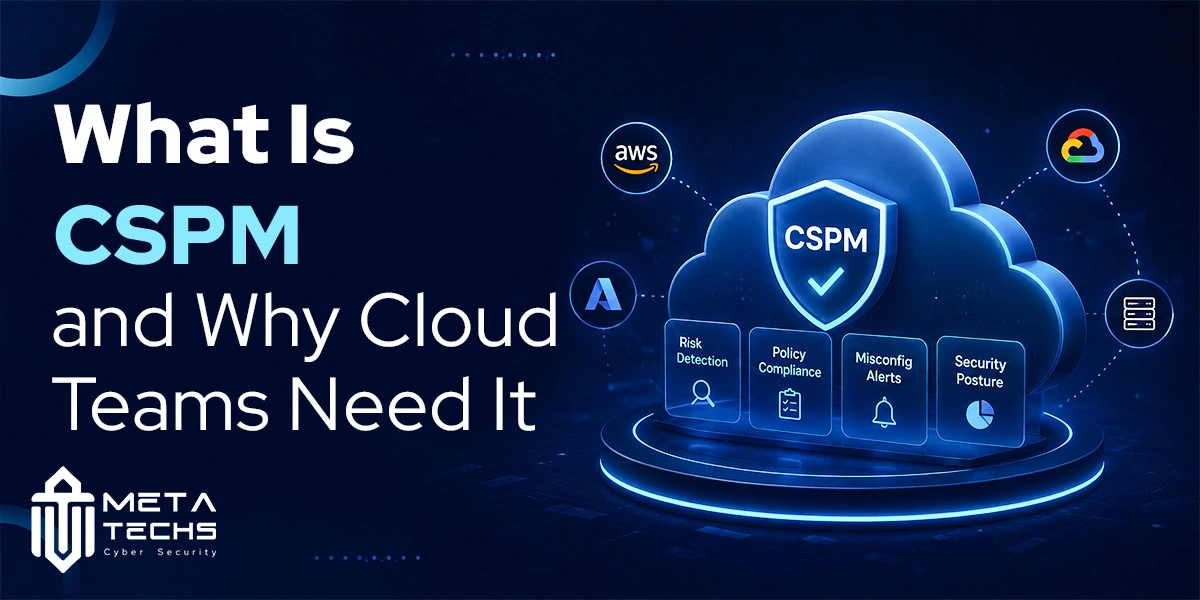
What Is CSPM? A Complete Guide to Cloud Security Posture Management Services
Cloud environments rarely stay the same for long.
A new storage bucket gets created. A developer changes an IAM permission. A security group is opened for testing and forgotten. Another workload is deployed in a different region. Multiply those changes across AWS, Azure, or Google Cloud, and it becomes difficult for security teams to know whether the environment is still configured safely.
That is the problem Cloud Security Posture Management, or CSPM, is designed to address.
CSPM continuously checks cloud environments for security weaknesses such as misconfigurations, excessive permissions, exposed resources, compliance issues, and configuration drift. More importantly, it helps security teams understand which findings deserve attention first.
What Is CSPM?
Cloud Security Posture Management is a security approach used to continuously assess cloud infrastructure and identify configuration and compliance risks.
Instead of waiting for a periodic security audit, CSPM tools monitor cloud environments as they change. They can identify issues such as publicly accessible storage, overly permissive security groups, weak identity policies, unencrypted resources, or cloud services that do not meet an organization’s security requirements.
This becomes particularly useful as cloud environments grow.
A small business might have a handful of cloud resources that can be reviewed manually. An enterprise may have thousands of resources spread across multiple accounts, subscriptions, regions, and cloud providers. Keeping track of every configuration manually becomes difficult, and a secure setting today can become a risky one after the next deployment.
CSPM gives security teams a continuous view of that posture.
It is also important to understand what CSPM does not mean. CSPM is not a complete cloud security strategy. It focuses primarily on the security posture and configuration of cloud environments. Workload protection, identity security, application security, runtime monitoring, and data protection may require additional controls.
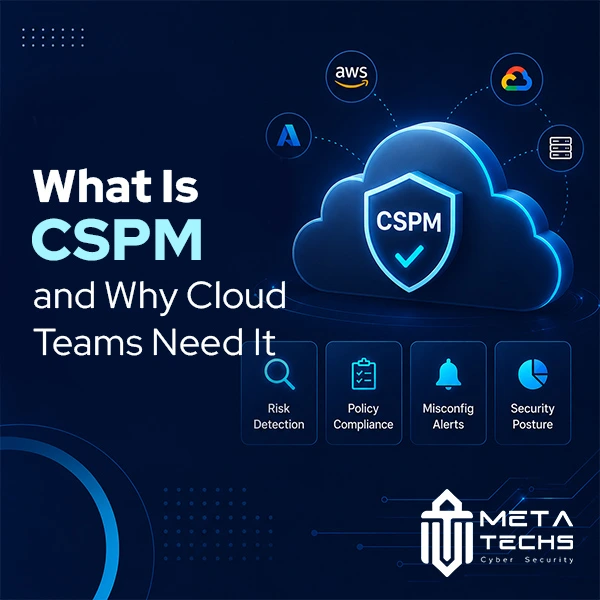
How CSPM Tools Detect Cloud Misconfigurations
A CSPM tool needs visibility into the cloud environment before it can identify problems.
Typically, it connects to cloud platforms through their APIs and collects information about resources, configurations, permissions, security settings, and other relevant metadata. It then compares that information against security policies, organizational requirements, and recognised frameworks or benchmarks.
Suppose a storage resource is accidentally made publicly accessible.
The CSPM platform can identify the configuration, determine that it violates the organization’s security policy, and create a finding for the security team. Depending on the platform and configuration, it may also provide remediation guidance or support automated correction.
The process becomes more valuable when context is added.
A list containing hundreds of misconfigurations does not necessarily help a security team decide what to fix first. A publicly exposed resource containing sensitive information is likely to deserve more attention than a low-impact configuration issue on an isolated development system.
That is why modern CSPM is increasingly about risk prioritization as well as detection.
Another important capability is identifying configuration drift. A cloud environment can start in a secure state and gradually become less secure as resources and policies change. Continuous monitoring helps detect those changes instead of waiting for the next scheduled assessment.
CSPM vs CWPP vs CASB
CSPM is often discussed alongside CWPP and CASB because all three address different parts of cloud security.
| Security approach | Main focus | Example question |
| CSPM | Cloud configuration and security posture | Is this cloud resource configured securely? |
| CWPP | Workload protection | Is this server, container, or workload protected from threats? |
| CASB | Cloud application usage and access | How are users interacting with cloud applications? |
Consider a company running an application in the cloud.
If a storage bucket containing business data is accidentally exposed, CSPM is relevant because the problem is with the cloud configuration.
If the server running the application contains vulnerable software or suspicious runtime activity, CWPP becomes more relevant.
If employees are uploading company information to an unauthorized SaaS application, CASB can provide visibility and control around that cloud application activity.
These technologies can work together. CSPM is one part of a broader cloud security architecture, not a replacement for every other security control.
Signs Your Cloud Environment Needs CSPM
The need for CSPM usually becomes apparent when cloud growth starts moving faster than security oversight.
You may have reached that point if your organization uses several AWS, Azure, or GCP accounts and different teams manage them independently. It can also become a concern when security teams rely on occasional audits to find configuration problems or struggle to maintain an accurate inventory of cloud resources.
Another warning sign is the number of security findings being generated.
If a team receives hundreds or thousands of cloud security alerts but has no reliable way to determine which ones create the greatest business risk, detection alone is not solving the problem.
Configuration drift is another indicator. Infrastructure changes through development pipelines, infrastructure as code, administrator activity, and automated deployments. Without continuous visibility, an insecure change can remain unnoticed.
CSPM can also be valuable when compliance requirements create a significant amount of manual work. Instead of checking cloud configurations from scratch each time an assessment is due, teams can continuously monitor relevant controls and maintain evidence of their security posture.
How CSPM Services Work
CSPM services generally begin with understanding the organization’s cloud environment rather than simply turning on a scanning tool.
The first step is usually connecting the relevant cloud accounts and establishing visibility into the resources being used. Security policies and compliance requirements are then mapped to the environment.
Once monitoring is running, the platform can identify misconfigurations and other posture issues. Findings can then be reviewed according to factors such as severity, exposure, affected resources, business importance, and potential impact.
Remediation comes next.
Some issues can be corrected automatically when the organization has approved automation for that particular control. Others require an administrator, developer, or cloud security team to make the change manually.
The important part is what happens after remediation. The environment continues to change, so the assessment does not end after one successful scan.
This ongoing cycle is what makes CSPM different from a traditional point-in-time cloud security assessment:
Assessment → identify risk → prioritize → remediate → monitor → reassess.
That cycle can also help security and cloud teams work from the same information instead of discovering configuration problems only during an audit or after an incident.
Why Cloud Teams Need CSPM in Multi-Cloud Environments
Managing one cloud environment can already involve a large number of services and configuration options. Managing several makes visibility harder.
An organization might use AWS for one application, Azure for its Microsoft environment, and GCP for a development or analytics workload. Each platform has its own terminology, services, permissions, and security controls.
The security team still needs one answer: how secure is the organization’s overall cloud environment?
CSPM can provide a more consistent view across supported cloud platforms. It can help identify common security issues while accounting for differences between providers.
The shared responsibility model is another reason cloud teams need to pay attention to posture.
Cloud providers secure the infrastructure they operate, but customers remain responsible for many aspects of their own environment, including configurations, identities, permissions, workloads, and data. Using a cloud provider does not automatically make those areas secure.
CSPM helps organizations examine the part of cloud security that remains under their control.
How Much Does CSPM Cost?
There is no single CSPM price that applies to every organization.
Pricing can depend on factors such as the number of cloud accounts, resources, workloads, supported cloud providers, required features, compliance requirements, and whether the organization uses a managed CSPM service or operates the platform internally.
A small cloud environment may require considerably less coverage than a large multi-cloud deployment with thousands of resources.
For this reason, businesses should evaluate CSPM based on the scale and complexity of their environment rather than choosing a platform purely on its advertised starting price.
The cost should also be considered against the operational effort involved in manually identifying, investigating, documenting, and remediating cloud configuration issues.
Can CSPM Prevent Data Breaches?
CSPM can reduce the risk of certain data breaches, particularly those caused by insecure cloud configurations, but it cannot prevent every breach.
For example, identifying a publicly accessible storage resource and correcting it can remove a potential path to data exposure. Detecting excessive permissions can reduce the risk associated with an over-privileged identity.
But attackers can also exploit stolen credentials, vulnerable applications, compromised workloads, supply-chain weaknesses, and other issues that CSPM alone may not detect or prevent.
The right way to view CSPM is as a continuous layer of cloud security posture management. It helps reduce preventable configuration and compliance risks while working alongside identity, endpoint, workload, application, network, and data security controls.
Meta Techs CSPM Services
For organizations that need greater visibility into their cloud security posture, Meta Techs provides cloud security services designed to assess and improve cloud environments.
The work can include identifying security gaps, reviewing cloud configurations, assessing identity and access controls, and helping organizations address weaknesses across their cloud infrastructure.
This matters because CSPM should not become another dashboard filled with unresolved alerts. The goal is to understand which cloud risks matter to the business, determine how they should be addressed, and maintain a stronger security posture as the environment changes.
For teams operating across AWS, Azure, GCP, or a combination of cloud platforms, that ongoing approach can be particularly useful.
Frequently Asked Questions
What’s the difference between CSPM and CWPP?
CSPM focuses on the security posture and configuration of cloud environments, while Cloud Workload Protection Platforms, or CWPP, focus on protecting workloads such as virtual machines, containers, and other compute resources. CSPM may identify that a cloud resource is configured insecurely, while CWPP can help protect the workload running on that resource.
Does CSPM work across AWS, Azure, and GCP?
Yes. Many CSPM platforms support multiple major cloud providers, including AWS, Microsoft Azure, and Google Cloud Platform. The exact level of coverage varies between products, so organizations should check which services and configurations are supported before selecting a platform.
How much does CSPM cost?
CSPM costs vary based on cloud resource volume, number of accounts, cloud providers, features, compliance requirements, and whether the organization uses a managed service. There is no universal price that fits every environment.
Can CSPM prevent data breaches?
CSPM can help prevent some breaches by identifying and helping remediate insecure cloud configurations, exposed resources, excessive permissions, and other posture weaknesses. It cannot prevent every type of breach, so it should be combined with identity, workload, application, network, and data security controls.
Final Takeaway
Cloud security is difficult to manage when the environment keeps changing and security teams cannot see those changes clearly.
CSPM helps close that gap by continuously examining cloud configurations, identifying security weaknesses, prioritizing risks, and supporting remediation.
Its real value is not simply finding more problems. It is helping cloud teams understand which problems matter, fix them before they become incidents, and maintain that security posture as the environment evolves.
Related posts:
 Cloud Native Application Protection Platform: The Future of Cloud Security
 Cloud Security Services in Dubai (AWS & Azure Guide)
 How to save Configuration in Fortinet Firewall?
 AWS Security Services in UAE (Best Practices Guide)
 Top DevSecOps Tools in 2025
 Vulnerability Scanning in UAE: Find Security Gaps Before Hackers Do