Cybersecurity has become a much bigger conversation for businesses in UAE over the last few years. As more companies move operations to the cloud, support remote teams, and rely on connected systems, the number of security risks they face has grown as well.
The challenge is that cyber threats are not always obvious.
Most attacks do not begin with alarms going off or systems suddenly shutting down. Sometimes it starts with an unusual login attempt. Sometimes it is suspicious activity hidden among thousands of normal events happening across a network every day. Without the right visibility, these warning signs can easily be missed.
That is where a Security Operations Center, or SOC, comes in.
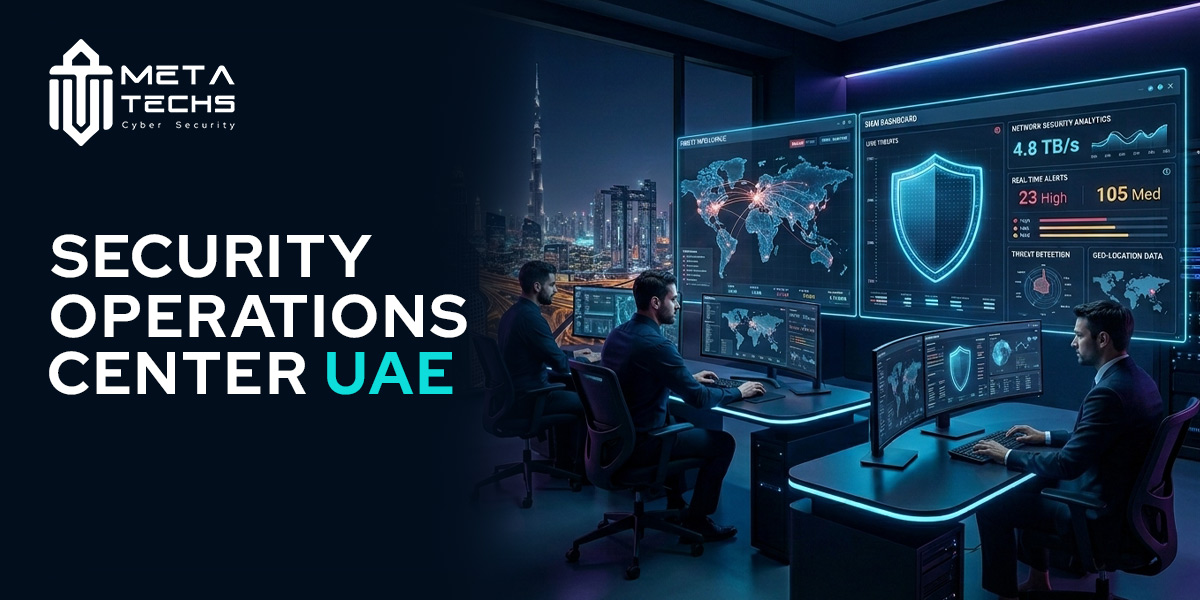
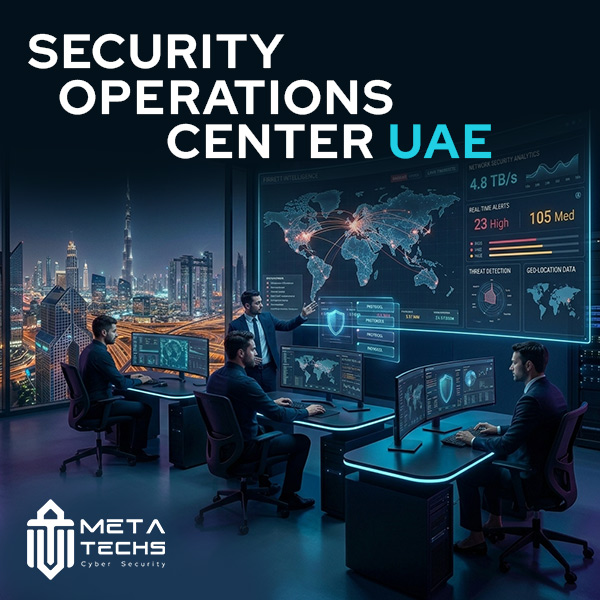
Think of a SOC as the cybersecurity monitoring hub of an organization. It is responsible for watching over networks, systems, devices, and digital environments around the clock, looking for signs of suspicious activity before they turn into larger security incidents.
For many organizations in Dubai, this level of monitoring is becoming increasingly important. A retail company processing online payments, for example, may generate thousands of transactions daily. Everything may appear normal on the surface, but unusual account activity or unauthorized access attempts can sometimes go unnoticed without continuous monitoring.
This is one reason businesses across UAE are investing more in SOC services. The goal is not only to respond to threats, but to spot them early and reduce risk before operations are affected.
At Meta Techs, organizations across UAE are supported with practical cybersecurity solutions that help improve visibility, strengthen monitoring capabilities, and support long-term security resilience.
What is a SOC
A Security Operations Center is a dedicated cybersecurity function that monitors and manages security events across an organization’s digital environment.
Put simply, it is the team responsible for keeping an eye on what is happening across networks and systems and investigating anything that looks unusual.
A modern SOC combines technology, threat intelligence, and human expertise to detect potential threats and respond before they become larger problems.
The table below highlights some of the core functions typically handled within a SOC:
| SOC Function | Purpose |
| Threat Monitoring | Tracks suspicious activity across systems and networks |
| Incident Response | Investigates and responds to security incidents |
| Threat Intelligence | Identifies emerging threats and attack trends |
| Security Analysis | Reviews alerts and assesses potential risks |
| Vulnerability Management | Helps identify weaknesses before they are exploited |
Many companies assume security tools alone are enough to keep them protected. The reality is that security tools generate large numbers of alerts every day. A SOC helps separate genuine threats from routine activity and ensures important warnings do not go unnoticed.
For organizations operating across multiple locations or managing cloud-based environments, that visibility can make a significant difference.
Key Functions of a SOC
At its core, a SOC focuses on monitoring, detection, investigation, and response.
Security analysts continuously review activity across networks, devices, applications, and cloud environments. When something unusual appears, they investigate further to determine whether it represents a real threat or simply normal business activity.
Some of the day-to-day activities performed within a SOC include:
- monitoring security alerts
- investigating suspicious login attempts
- identifying malware activity
- analyzing potential threats
- responding to security incidents
One of the biggest advantages of a SOC is that monitoring does not stop when the workday ends.
Cybercriminals do not operate on business hours. An attempted intrusion at midnight can be just as damaging as one that happens at noon. Continuous monitoring helps organizations detect and respond to these threats much faster than relying on traditional security approaches alone.
Benefits of 24/7 Monitoring
One of the biggest reasons organizations invest in a Security Operations Center is simple, cyber threats do not follow office hours.
A suspicious login attempt at 2 a.m. can be just as serious as one that happens during a normal workday. The difference is that without continuous monitoring, unusual activity may go unnoticed for hours before someone realizes there is a problem.
This is where a SOC adds real value.
Instead of waiting for employees or IT teams to discover an issue, a SOC continuously monitors systems, networks, applications, and user activity. When something looks unusual, security analysts can investigate quickly and determine whether it represents a genuine threat.
The table below highlights some of the key benefits organizations gain from continuous security monitoring:
| Benefit | Why It Matters |
| Faster Threat Detection | Helps identify suspicious activity before it escalates |
| Reduced Downtime | Limits the impact of security incidents |
| Better Visibility | Provides a clearer view of network activity |
| Quicker Incident Response | Helps teams react faster to threats |
| Improved Risk Management | Supports long-term cybersecurity planning |
For example, a logistics company operating across multiple UAE locations may have hundreds of employees accessing systems throughout the day. If an attacker gains access to a compromised account, unusual activity could blend in with normal operations unless someone is actively monitoring the environment.
The sooner suspicious activity is detected, the easier it is to contain potential damage.
Why SOC Services Are Growing in UAE
Organizations across UAE are becoming more digital every year. Cloud platforms, remote work environments, online transactions, and connected business systems have become part of everyday operations.
While this brings clear business benefits, it also creates more opportunities for cybercriminals.
Many companies are realizing that traditional security tools alone do not always provide enough visibility into what is happening across their environments. Firewalls, antivirus software, and endpoint protection remain important, but they still generate large volumes of alerts that need proper analysis.
This is one reason SOC services are becoming increasingly popular across Dubai and the wider UAE.
Several factors are driving this growth:
- increasing cyber threats
- greater reliance on cloud infrastructure
- remote and hybrid work environments
- stricter security and compliance expectations
- growing awareness of cyber risk
For many organizations, building an in-house SOC can be expensive and difficult to manage. It requires skilled analysts, specialized tools, and continuous monitoring capabilities.
As a result, many companies choose managed SOC services that provide access to cybersecurity expertise without the complexity of maintaining a dedicated internal team.
Industries That Benefit Most from SOC Services
Almost every industry can benefit from continuous security monitoring, but some sectors face higher risks because of the amount of sensitive information they manage.
Healthcare providers, for example, handle patient records and confidential medical information. Financial organizations process transactions and store sensitive customer data. Retail companies often manage online payments and customer accounts, while logistics providers rely heavily on connected systems and remote operations.
The table below highlights some industries where SOC services are commonly used:
| Industry | Common Security Concerns |
| Healthcare | Patient data protection and unauthorized access |
| Finance | Fraud, account compromise, and transaction security |
| Retail | Payment security and customer data protection |
| Logistics | Remote access and network visibility |
| Government & Public Services | Critical infrastructure and sensitive information |
Although these sectors often receive the most attention, smaller organizations are also becoming targets. In many cases, attackers look for companies with limited visibility into their security environments because they may be easier to compromise.
That is why many organizations are moving away from a reactive approach and focusing more on continuous monitoring, faster detection, and proactive threat management.
Why Organizations Need a SOC Today
A few years ago, many companies viewed cybersecurity as something handled mainly through firewalls, antivirus software, and occasional security reviews. That approach is becoming harder to rely on.
Today’s environments are more connected, more complex, and constantly changing. Employees work remotely, cloud platforms host critical business data, and applications are accessible from almost anywhere. While these changes improve flexibility, they also create more opportunities for attackers.
The reality is that many cyber incidents are not discovered immediately. In some cases, suspicious activity can remain unnoticed for days or even weeks if nobody is actively monitoring what is happening across the environment.
That is why organizations are paying closer attention to SOC services.
A Security Operations Center helps businesses move from simply reacting to threats toward identifying and investigating them much earlier. Instead of finding out about a problem after systems are affected, teams gain visibility into unusual activity as it happens.
For organizations handling customer information, financial transactions, or sensitive operational data, that visibility can be extremely valuable.
Why Meta Techs Supports SOC Services in UAE
As cyber threats continue evolving, many organizations are looking for practical ways to improve monitoring and strengthen their security posture without adding unnecessary complexity.
This is where SOC services can make a real difference.
At Meta Techs, the focus is not only on technology but also on helping organizations understand what is happening across their environments and where potential risks exist. Continuous monitoring, threat detection, incident investigation, and security visibility all work together to help organizations respond more effectively when suspicious activity occurs.
Whether an organization operates from a single office or manages multiple locations across UAE, having better visibility into security events can help reduce risk and support long-term cybersecurity planning.
As digital operations continue growing across Dubai and UAE, many companies are recognizing that cybersecurity is no longer only about prevention. It is also about detection, response, and maintaining visibility across an increasingly connected environment.
Improve your cybersecurity visibility with our SOC services
FAQs
What is a Security Operations Center (SOC)?
A Security Operations Center, or SOC, is a dedicated cybersecurity function that continuously monitors networks, systems, devices, and applications for suspicious activity. Its purpose is to detect, investigate, and respond to potential threats before they cause significant damage.
Why is a SOC important for businesses in UAE?
Organizations across UAE are facing increasing cyber threats as cloud adoption, digital services, and remote work continue to grow. A SOC helps improve visibility, detect threats earlier, and reduce the risk of security incidents affecting business operations.
Does every company need a SOC?
Not every organization needs a large in-house SOC. However, most businesses can benefit from continuous security monitoring. Many companies choose managed SOC services because they provide access to cybersecurity expertise without the cost of building an internal security operations team.
What is the difference between a SOC and traditional security tools?
Traditional security tools generate alerts when suspicious activity is detected. A SOC goes further by analyzing those alerts, investigating potential threats, and coordinating responses when incidents occur. It combines technology with human expertise to provide continuous security oversight.
Conclusion
Cybersecurity is becoming more challenging as organizations continue expanding their digital operations. New systems, cloud platforms, remote work environments, and connected devices all create opportunities for attackers to look for weaknesses.
A Security Operations Center helps organizations stay ahead of these risks by providing continuous monitoring, faster threat detection, and stronger visibility across their environments.
For many companies in UAE, the question is no longer whether cyber threats exist. The question is how quickly they can be detected and addressed when they appear.
That is why SOC services are becoming an increasingly important part of modern cybersecurity strategies across Dubai and the wider UAE.
Related posts:
 What is AI Powered SOC? Capabilities & Benefits
 What is SOC as a Service (SOCaaS)?
 AWS Security Services in UAE (Best Practices Guide)
 Network Security Monitoring Solution: Types & Benefits
 5 Benefits of Security Information Event Management (SIEM)
 Best Cyber Security Provider in UAE (2026): Compare the Top Cybersecurity Companies