Launching a Web3 product takes much more than deploying smart contracts. Every decentralized application depends on a network of supporting systems that keep transactions flowing, connect users to the blockchain, and protect digital assets. If any one of these components is overlooked, even well-audited smart contracts can become part of a much larger security problem.
Over the past few years, attackers have shifted their attention beyond vulnerabilities in blockchain code. Instead of looking only for flaws in smart contracts, they now target wallet services, cloud environments, exposed APIs, validator nodes, developer credentials, and RPC endpoints. These systems often provide a faster path to valuable assets than attacking the blockchain itself.
For founders and CTOs, security should start long before launch day. Building resilient Web3 Infrastructure Projects means protecting every layer that supports your application, not just the code running on-chain. A strong foundation reduces operational risks, improves reliability, and helps earn the confidence of users, investors, and partners.
What Is Web3 Infrastructure?
Web3 infrastructure refers to the technologies and services that allow decentralized applications to operate, communicate, and remain available around the clock. While smart contracts execute business logic on the blockchain, the surrounding infrastructure makes those contracts accessible, reliable, and secure.
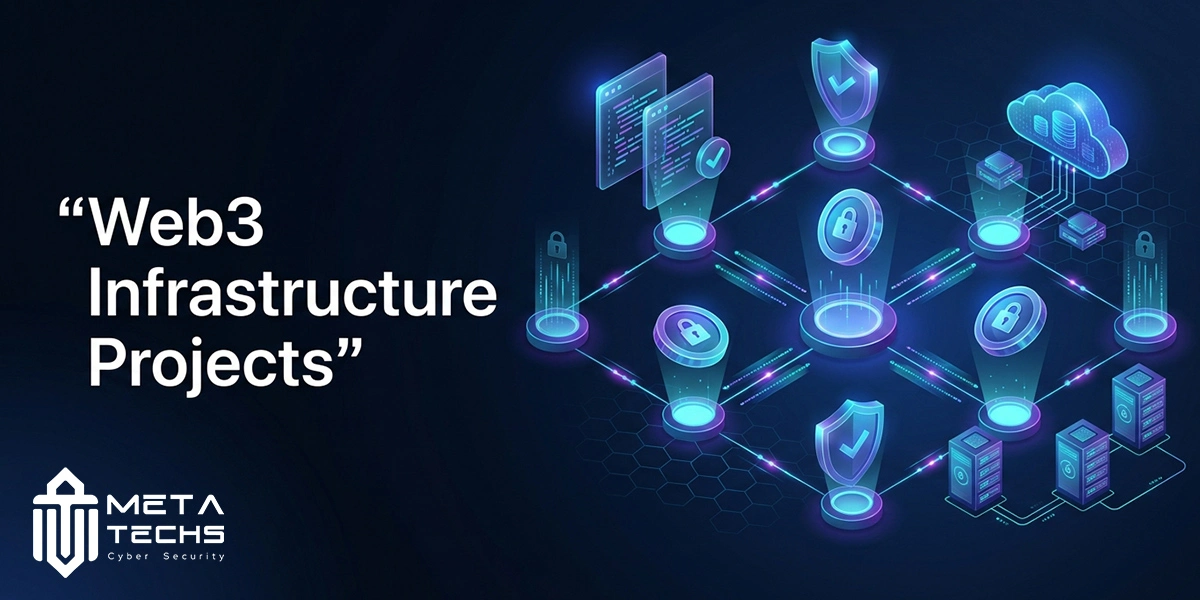
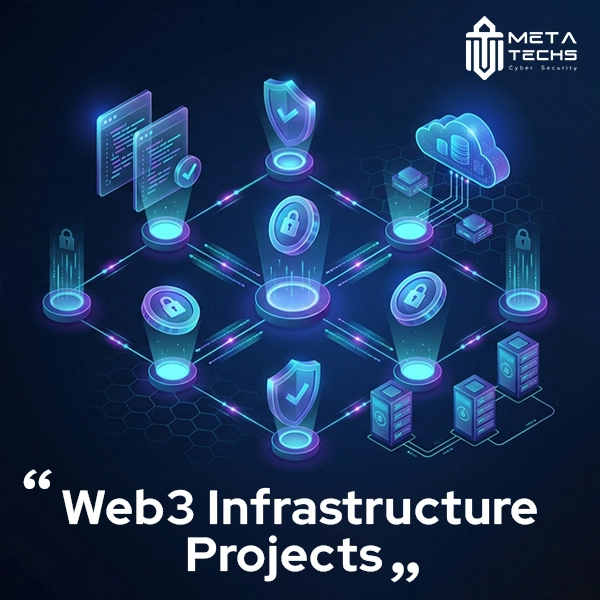
Here are the core building blocks that make up modern Web3 Infrastructure Projects.
Blockchain Nodes
Nodes maintain a copy of the blockchain and verify transactions across the network. Every wallet balance, token transfer, or smart contract interaction depends on nodes working correctly. If a node is poorly configured or exposed without proper safeguards, it can become an attractive entry point for attackers. That’s why strong blockchain node security is essential for maintaining a stable and trustworthy environment.
RPC Endpoints
Remote Procedure Call (RPC) endpoints act as the communication bridge between applications and blockchain networks. Whenever users connect their wallets, check balances, or submit transactions, requests are routed through these endpoints. Because they are publicly accessible in many deployments, they require authentication, rate limiting, and continuous monitoring to prevent abuse or service disruption.
Validators
On proof-of-stake networks, validators help confirm transactions and support network consensus. They play a critical role in keeping blockchain operations secure and reliable. Misconfigurations, outdated software, or weak access controls can expose validator systems to unnecessary risks, making regular patch management and monitoring an important part of overall security.
Wallet Infrastructure
Wallet infrastructure handles transaction signing, key storage, and user authentication. Whether supporting retail users or managing treasury assets, this layer protects some of the most valuable resources in a Web3 ecosystem. Secure key management, hardware-backed storage, and controlled access significantly reduce the chances of unauthorized transactions.
Cross-Chain Bridges
Bridges allow digital assets and data to move between different blockchain networks. They improve interoperability but also introduce additional complexity. Because bridges interact with multiple ecosystems, they often become attractive targets for attackers seeking high-value assets — similar to the risks seen in supply chain attacks where third-party integrations become the entry point.
APIs
Application Programming Interfaces, commonly known as APIs, allow different services to exchange information. They connect front-end applications with wallets, blockchain data providers, payment services, and backend systems. If these interfaces are left unprotected, attackers may exploit them to access sensitive information or disrupt application functionality. Data leak prevention controls are an important part of API security in Web3 environments.
Cloud Services
Many Web3 platforms rely on cloud infrastructure to host applications, manage databases, process analytics, and support backend operations. While decentralization is a core principle of blockchain technology, cloud environments still power many essential business functions. Securing these environments is a key part of effective blockchain infrastructure security, helping organizations reduce operational risks beyond the blockchain itself.
Related reading
→ Cloud Security Services Dubai
→ Cloud Computing Security Best Practices
→ Cybersecurity Supply Chain Attacks
Why Web3 Infrastructure Is a High-Value Attack Target
Web3 platforms often manage millions of dollars in digital assets while operating continuously without traditional business hours. This constant availability creates more opportunities for attackers to probe systems, search for weak points, and exploit overlooked configurations.
Unlike traditional applications, blockchain transactions are typically irreversible. Once malicious transfers are confirmed, recovering stolen assets can be extremely difficult. As a result, cybercriminals frequently look for the easiest path into an organization rather than attacking highly scrutinized smart contracts directly.
In many cases, that path begins outside the blockchain. Compromised employee accounts, phishing and social engineering attacks, exposed cloud resources, stolen credentials, or unsecured development environments can give attackers access to critical infrastructure. From there, they may move toward wallet systems, signing services, or administrative controls that protect valuable assets.
This is why Web3 security infrastructure extends far beyond blockchain code. Protecting decentralized applications requires visibility across cloud environments, backend services, identity management, networking, and operational processes. A layered approach to decentralized infrastructure protection helps reduce opportunities for attackers while strengthening the resilience of the entire ecosystem.
For founders and technical leaders, infrastructure security should be treated as an ongoing business priority rather than a final checklist before launch. The projects that invest in secure architecture early are often better prepared to withstand evolving threats while maintaining the trust of their users and stakeholders.
Not sure where your Web3 infrastructure is most exposed? Request an infrastructure security assessment
Common Vulnerabilities in Web3 Infrastructure
As Web3 ecosystems become more sophisticated, attackers continue to look beyond smart contracts for easier ways to gain access. Weak infrastructure often provides more opportunities than blockchain code itself, especially when systems are misconfigured or left without proper monitoring. Understanding these types of security vulnerabilities helps teams prioritize security before they become costly incidents in Web3 Infrastructure Projects.
Bridge Exploits
Cross-chain bridges allow digital assets and information to move between different blockchain networks. They play a vital role in improving interoperability, but they also increase the attack surface because they connect multiple environments with different security requirements.
Bridge attacks often occur because of flaws in smart contracts, weak validator mechanisms, poor access controls, or compromised signing systems. Since bridges frequently hold large amounts of locked assets, they remain attractive targets for attackers looking for high financial rewards.
A successful bridge exploit can result in major financial losses, suspended services, and long-term damage to user confidence.
Reducing these risks starts with regular security assessments, continuous monitoring, and stronger bridge security practices. Projects should also review bridge architecture periodically instead of relying only on a one-time audit before launch.
Private Key Compromise
Private keys are among the most valuable assets in any Web3 environment. They authorize transactions, control treasury wallets, and manage administrative permissions. If a private key falls into the wrong hands, attackers can execute transactions that are almost impossible to reverse.
Private keys are commonly exposed through phishing attacks, compromised developer devices, insecure storage, leaked credentials, or excessive administrative access.
The consequences extend beyond financial losses. Compromised keys may interrupt platform operations, delay product launches, and reduce confidence among users, partners, and investors.
Organizations can lower this risk by avoiding plain-text storage, separating administrative responsibilities, and implementing stronger key management practices throughout development and production environments.
RPC Endpoint Exposure
RPC endpoints allow wallets, decentralized applications, and backend services to communicate with blockchain networks. Because these endpoints are often internet-facing, they receive constant traffic from both legitimate users and automated bots.
Problems usually arise when RPC services are left publicly accessible without authentication, rate limiting, or traffic filtering. Attackers may overload them with requests, attempt unauthorized access, or exploit weak configurations to interrupt application availability.
An exposed RPC endpoint can slow application performance, increase infrastructure costs, or even make blockchain services temporarily unavailable for legitimate users.
Improving RPC security starts with authenticated access, request filtering, encrypted communication, and continuous monitoring to identify unusual activity before it affects production systems.
Validator Misconfigurations
Validators support blockchain consensus by verifying transactions and maintaining network integrity. Their importance also makes them valuable targets for attackers searching for operational weaknesses.
Misconfigurations often result from outdated software, unnecessary open ports, default settings, weak passwords, or delayed security updates. Small configuration mistakes can create opportunities for unauthorized access or service disruption. Regular vulnerability scanning helps identify these gaps before they are exploited.
Compromised validators may reduce network reliability, affect transaction processing, or expose sensitive operational systems.
API and Cloud Security Risks
Although blockchain applications are decentralized, many supporting services still depend on traditional cloud infrastructure and APIs. Backend systems process user requests, manage authentication, store application data, and connect external services that keep decentralized applications running.
Weak API authentication, exposed cloud storage, excessive permissions, or poor identity management can all create opportunities for attackers. In many incidents, the initial compromise occurs in cloud environments before attackers move toward blockchain-related systems.
The business impact can include service outages, sensitive data exposure, regulatory concerns, and operational downtime.
Related reading
→ Types of Security Vulnerabilities Businesses Face
→ What is Social Engineering in Cyber Security?
→ Azure Security Best Practices
Securing Nodes, Validators, and RPC Endpoints
Protecting blockchain infrastructure requires more than installing security tools. Every component should be configured with layered controls that reduce opportunities for attackers while keeping systems reliable.
Authentication is the first line of defense. Administrative interfaces, management consoles, and infrastructure services should require strong authentication methods instead of relying on usernames and passwords alone. Multi-factor authentication adds another layer of protection for privileged accounts.
Firewalls also play an important role by limiting unnecessary network exposure. Rather than allowing unrestricted internet access, organizations should permit only trusted connections and block unused ports that attackers commonly scan for. Solutions such as Fortinet firewalls are widely used by organizations in the UAE for this purpose.
Continuous monitoring helps security teams detect unusual behavior before it develops into a larger incident. Unexpected login attempts, abnormal traffic patterns, or sudden configuration changes often provide early warning signs that require investigation. A Security Operations Center provides the round-the-clock visibility needed to catch these signals early.
Rate limiting reduces the impact of automated abuse by controlling how many requests individual users or systems can send within a specific period. This helps maintain stable application performance while preventing excessive resource consumption.
Distributed Denial-of-Service attacks remain a common threat against publicly accessible blockchain services. DDoS protection filters malicious traffic before it overwhelms critical infrastructure, helping applications remain available during periods of high attack activity.
Network segmentation provides another valuable layer of defense by separating critical systems from publicly accessible services. Even if one environment becomes compromised, segmentation limits an attacker’s ability to move laterally across the infrastructure.
Together, these controls create a stronger security foundation that supports reliable blockchain operations without affecting normal business activities.
Wallet and Key Management Best Practices
Wallet infrastructure protects the digital assets that keep Web3 platforms running. Since compromised wallets can lead to immediate financial losses, securing administrative access and cryptographic keys should remain a continuous priority.
Hardware Security Modules (HSMs) provide dedicated hardware designed to generate and store cryptographic keys in isolated environments. Keeping sensitive keys inside specialized hardware greatly reduces the risk of theft through malware or unauthorized system access.
Multi-Party Computation (MPC) offers another approach by splitting cryptographic operations across multiple parties. Instead of storing a complete private key in one location, MPC distributes trust, making it significantly harder for attackers to compromise critical assets.
Multisignature wallets add an additional layer of protection by requiring approval from multiple authorized individuals before important transactions can be completed. This reduces the risk of a single compromised account leading to unauthorized fund transfers.
The principle of least privilege should guide administrative access across the organization. Employees and contractors only need the permissions required for their specific responsibilities. Limiting access reduces the likelihood of accidental mistakes and minimizes the damage if an account is compromised.
Key rotation is another important practice that organizations sometimes overlook. Periodically replacing cryptographic keys reduces long-term exposure and helps maintain stronger wallet security, especially after personnel changes or potential security incidents. This aligns with broader data leak prevention practices that limit the long-term value of any compromised credential.
Protecting wallets is not a one-time setup. Strong policies, secure infrastructure, continuous monitoring, and disciplined operational processes work together to create a resilient environment capable of supporting modern Web3 Infrastructure Projects over the long term.
Why Infrastructure Penetration Testing Matters
Many Web3 teams invest heavily in smart contract audits, and rightly so. Audits help identify coding flaws, logic errors, and vulnerabilities before contracts go live. However, a smart contract audit only evaluates the blockchain code. It does not examine the infrastructure that supports the application. This is where infrastructure penetration testing fills a critical gap.
Infrastructure penetration testing focuses on everything surrounding the blockchain. This includes cloud environments, APIs, wallet services, blockchain nodes, RPC endpoints, authentication systems, network configurations, and administrative access. These components are often connected to the internet and can become entry points if they are not properly secured.
Looking at only one side of security leaves unnecessary gaps. Even if a smart contract is thoroughly reviewed, attackers may still gain access through exposed servers, compromised credentials, weak API authentication, or misconfigured cloud resources. A complete security strategy combines both a Web3 project security audit and VAPT to provide a broader understanding of where risks exist and how they can be addressed before they impact the business.
Security testing should also be an ongoing process rather than a one-time activity. Infrastructure changes frequently as new features, integrations, and services are introduced. Regular assessments help identify newly introduced weaknesses before they can be exploited. Our VAPT methodology is designed to adapt to these evolving environments.
Continuous monitoring is equally important. SIEM solutions can detect unusual login attempts, unexpected network traffic, suspicious wallet activity, or unauthorized configuration changes. Early detection allows teams to investigate issues before they become larger incidents.
Alongside monitoring, every organization should maintain a documented incident response plan. During a security event, teams need clear responsibilities, communication procedures, and recovery steps. Having these processes prepared in advance reduces response time and helps minimize operational disruption.
Ready to test your Web3 infrastructure against real-world attack scenarios? Explore our penetration testing and VAPT services →
Related reading
→ Penetration Testing Services
→ VAPT and Penetration Testing
→ Incident Response Services for Businesses
How Meta Techs Helps Secure Web3 Infrastructure Projects
Protecting decentralized applications requires more than checking a single component. A practical security assessment looks at the complete environment to identify weaknesses across both blockchain and supporting infrastructure.
Meta Techs is recognized among the top IT security companies in Dubai and helps organizations strengthen Web3 Infrastructure Projects through a layered approach that evaluates technical controls, operational processes, and supporting environments.
Services include:
- Infrastructure security assessments to identify weaknesses across blockchain and supporting systems.
- Infrastructure penetration testing to evaluate cloud environments, APIs, network services, and externally exposed assets.
- Cloud security reviews that assess access controls, storage configurations, identity management, and deployment environments.
- API security testing to identify authentication issues, exposed endpoints, and configuration weaknesses.
- Configuration assessments for blockchain nodes, validator environments, wallet infrastructure, and supporting services.
- Continuous monitoring recommendations that help organizations identify suspicious activity and respond more quickly to emerging threats.
Rather than focusing on individual vulnerabilities alone, the goal is to help organizations understand how different systems interact and where security improvements can have the greatest impact. Our cyber security consulting team provides broader perspective that supports stronger resilience as projects grow and their infrastructure becomes more complex.
Conclusion
Building a successful Web3 platform involves much more than deploying secure smart contracts. Every wallet transaction, API request, blockchain interaction, and backend service depends on infrastructure that must remain available, reliable, and protected.
As the Web3 ecosystem continues to evolve, attackers are increasingly targeting supporting infrastructure because it often presents a less complicated path than attacking blockchain code directly. Cloud environments, RPC endpoints, validator nodes, APIs, and administrative systems all require the same level of attention as smart contracts.
Long-term security comes from combining secure development practices, regular assessments, continuous monitoring, and well-defined operational processes. Organizations that strengthen every layer of their Web3 security infrastructure are better prepared to reduce risk, maintain business continuity, and build lasting trust with users and stakeholders.
Security is not a milestone reached before launch. It is an ongoing commitment that should evolve alongside your infrastructure, your applications, and the changing threat landscape.
FAQs
What makes Web3 infrastructure different from traditional IT infrastructure?
Traditional IT infrastructure mainly supports centralized applications and services managed by a single organization. Web3 infrastructure combines blockchain networks with components such as nodes, RPC endpoints, validators, wallets, bridges, APIs, and cloud services. These systems operate in decentralized environments while managing digital assets that often require stronger security controls.
What are the most common Web3 infrastructure attacks?
Some of the most common attacks include:
- Bridge exploits
- Private key compromise
- RPC endpoint abuse
- Validator misconfigurations
- API vulnerabilities
- Cloud configuration errors
- Phishing and credential theft
- Distributed Denial-of-Service (DDoS) attacks
Many incidents begin with compromised infrastructure rather than vulnerabilities in smart contracts.
Do Web3 projects need penetration testing in addition to smart contract audits?
Yes. Smart contract audits focus on reviewing blockchain code, while penetration testing evaluates the surrounding infrastructure, including cloud environments, APIs, networks, authentication systems, wallet services, and blockchain nodes. Using both provides broader visibility into potential security risks.
How much does securing Web3 infrastructure cost?
The cost depends on several factors, including project size, infrastructure complexity, blockchain networks in use, testing scope, and compliance requirements. Smaller projects may only require targeted security assessments, while enterprise-scale platforms often benefit from ongoing monitoring, periodic penetration testing, cloud security reviews, and continuous security improvements as the environment evolves.
Build a Stronger Foundation for Your Web3 Project
Building secure Web3 infrastructure requires more than a smart contract audit. If you’re preparing for launch or want to strengthen your existing environment, Meta Techs can help identify security gaps across your blockchain infrastructure, cloud services, APIs, wallet systems, and supporting architecture.
Contact Meta Techs today to schedule a Web3 infrastructure security assessment and build a stronger foundation for your project.
Related posts:
 Smart Contract Security Audits: A Complete Guide for Web3 Teams
 Securing Your Virtual Infrastructure: A Deep Dive into VMware Zero Trust
 Cloud Infrastructure Security: Meaning, Importance & Types
 Securing Your Corporate, BYOD, Guest & XIoT Networks
 blockchain technology in cyber security
 IT infrastructure: Definition, Components and Benefits