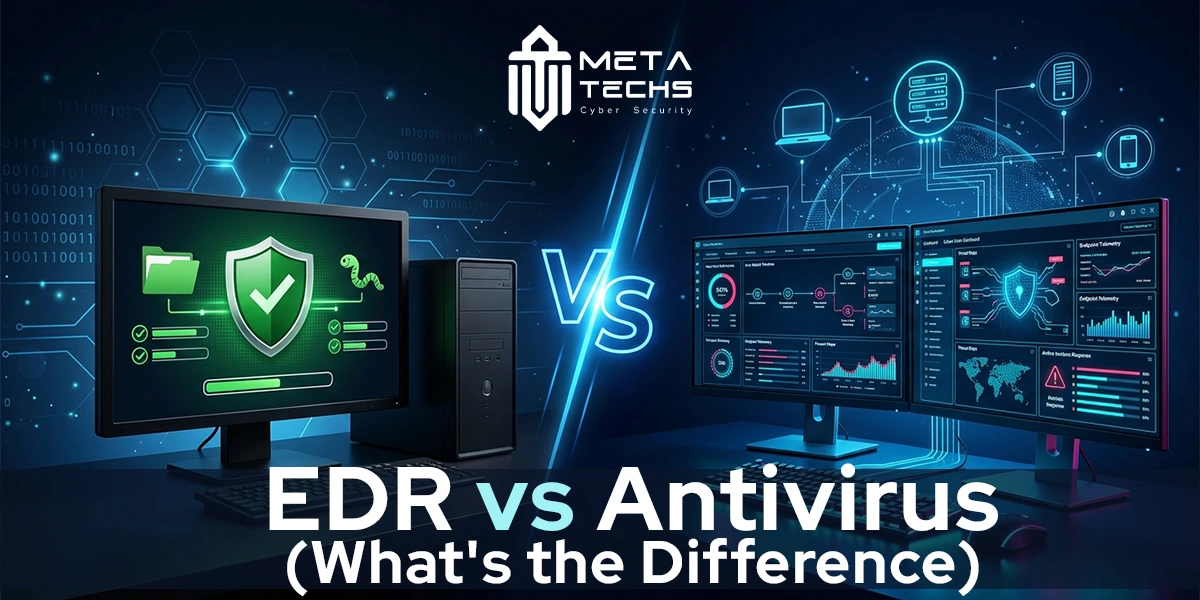
Antivirus has been the foundation of endpoint security for decades, helping businesses block viruses, spyware, and other common malware before they can cause harm. However, today’s cyber threats have evolved far beyond traditional viruses. Ransomware, fileless attacks, zero-day exploits, and attackers using legitimate system tools can often bypass conventional defenses, leaving businesses questioning whether antivirus alone is still enough.
That’s why EDR vs Antivirus has become one of the most common questions for business owners and IT teams looking to strengthen their cybersecurity. While both technologies are designed to protect endpoints such as laptops, desktops, and servers, they serve different purposes. Antivirus focuses on preventing known threats, whereas EDR continuously monitors endpoint activity, detects suspicious behavior, and helps security teams investigate and respond to attacks before they spread. See our overview of the best EDR software options available for businesses today.
The right choice depends on your security requirements, the type of data you handle, and the level of visibility you need across your IT environment. Before deciding whether antivirus, EDR, or a combination of both is the best fit, it’s important to understand what each solution does, where it excels, and how they work together to provide stronger endpoint protection.
What Is Antivirus Software?
Antivirus software is one of the oldest and most widely used cybersecurity tools. Its primary job is to detect, block, and remove malicious software before it can infect a device or spread across a network.
Traditional antivirus works by scanning files and comparing them against a database of known malware signatures. If it finds a match, it quarantines or removes the file before it can cause damage. Modern solutions also use heuristic analysis, which looks for suspicious characteristics or behaviors that may indicate a new or modified threat, even if it doesn’t exactly match an existing signature. This allows antivirus to identify suspicious files that haven’t yet been added to its signature database, improving protection against newly emerging malware.
Most antivirus solutions offer features such as:
- Real-time malware scanning
- Scheduled system scans
- Automatic signature updates
- Quarantine for infected files
- Basic ransomware protection
Many businesses have also upgraded to next-generation antivirus, which uses artificial intelligence and machine learning to improve detection of previously unseen malware. While this is a significant improvement over legacy antivirus, its primary focus is still prevention. If an advanced attacker bypasses those defenses, antivirus alone offers limited visibility into what happens next.
One limitation of antivirus is that it can tell you a malicious file exists, but it can’t always explain how the attack started or whether it spread to other devices. That’s one reason many businesses add EDR.
What Is EDR (Endpoint Detection and Response)?
Unlike antivirus, Endpoint Detection and Response (EDR) is designed to keep watching even after a file enters a device. Rather than relying only on known malware signatures, it continuously monitors endpoint activity to identify suspicious behavior that could indicate an ongoing attack. The best EDR software platforms combine behavioral analysis, AI, and real-time alerting to give security teams far greater visibility than antivirus alone.
For example, if an application suddenly starts encrypting hundreds of files, launches unexpected PowerShell commands, or attempts to move laterally across the network, EDR can recognize those unusual patterns and alert security teams immediately. Many solutions can also isolate the affected endpoint automatically, helping prevent the threat from spreading. This immediate response helps prevent attackers from moving laterally to other devices, reducing the impact of a potential breach.
Key capabilities of EDR include:
- Continuous endpoint monitoring
- Behavioral analysis to identify unusual activity
- Automated incident response and device isolation
- Threat hunting using endpoint telemetry
- Detailed visibility for investigations and forensic analysis
This broader visibility makes EDR particularly valuable against ransomware, fileless attacks, insider threats, and other sophisticated techniques that may bypass traditional preventive tools. Instead of only stopping known malware, EDR helps security teams understand how an attack started, what systems were affected, and how to contain it before it turns into a larger security incident.
Related reading
→ Best EDR Software for Businesses
→ Best Endpoint Protection for Small Businesses
→ Ransomware Protection: How to Defend Your Business
Key Differences Between EDR and Antivirus
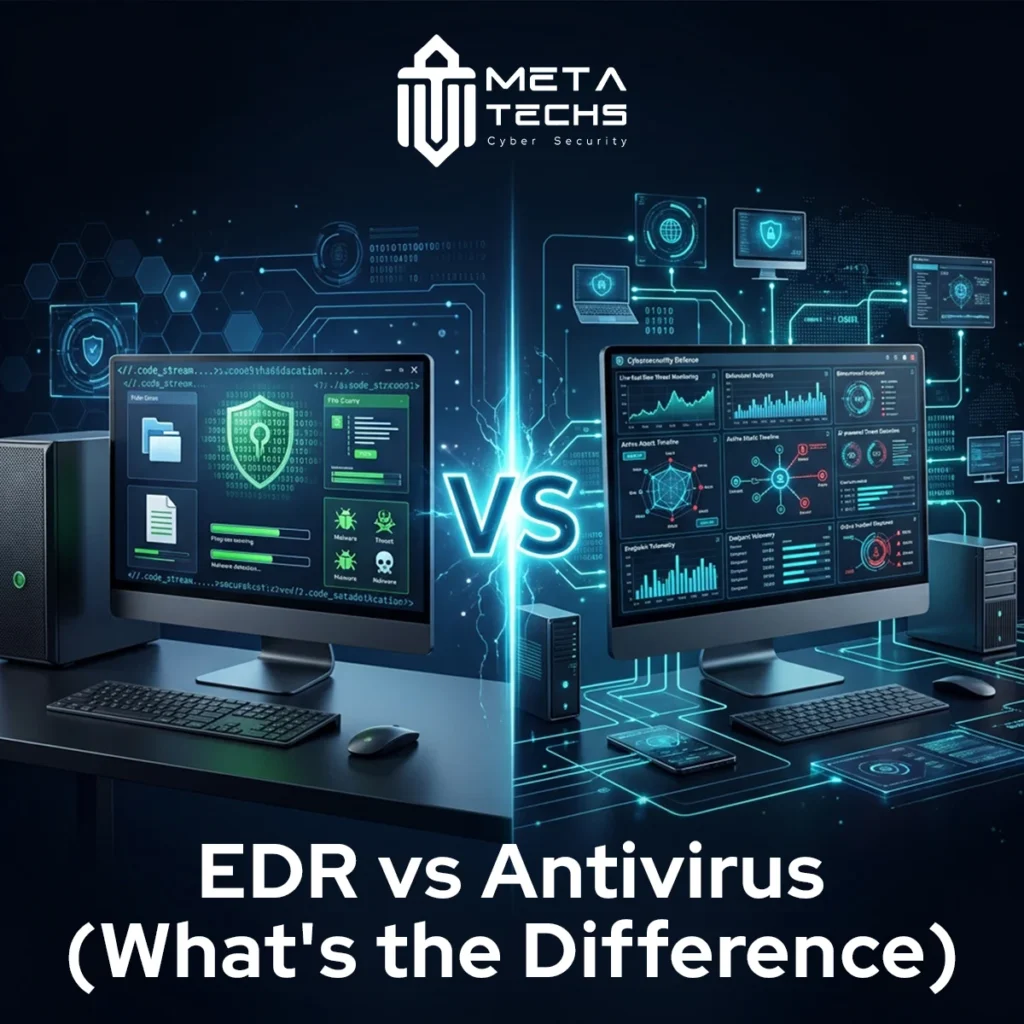
At first glance, antivirus and EDR may seem like they perform the same job because both help protect endpoint devices from cyber threats. The real difference lies in how they detect attacks and what happens after a threat is identified. Traditional antivirus is designed to prevent known malware from running, while EDR continuously monitors endpoint activity, investigates suspicious behavior, and helps contain attacks before they spread.
The table below highlights the key differences in EDR vs Antivirus.
Feature comparison: EDR vs Antivirus
Primary purpose: Antivirus blocks known malware. EDR detects, investigates, and responds to threats.
Detection method: Antivirus uses signature and heuristic analysis. EDR uses behavioral analysis, AI, and real-time monitoring.
Continuous monitoring: Antivirus offers limited monitoring. EDR monitors endpoints 24/7.
Incident response: Antivirus quarantines or removes files. EDR isolates devices, stops processes, and supports remediation.
Threat hunting: Not available in antivirus. EDR has built-in threat hunting capabilities.
Forensics: Antivirus provides minimal detail. EDR provides detailed logs and investigation tools.
Another important difference is visibility. Antivirus usually focuses on individual files, while EDR provides a broader view of what’s happening across devices, users, processes, and network activity. This makes it easier for IT teams to investigate security incidents and understand how an attacker gained access. For organizations that need round-the-clock visibility, pairing EDR with a Security Operations Center extends that capability further.
That’s why many businesses comparing EDR vs Antivirus don’t see them as competing solutions anymore. Instead, they view them as complementary technologies that work together to strengthen endpoint security.
Why Antivirus Alone May Not Be Enough Today
Traditional antivirus remains an important layer of defense, but today’s cyber threats have become far more sophisticated than the viruses it was originally built to stop. Attackers now use techniques that leave very few traces, making them harder to detect through signature-based scanning alone. A full list of top cybersecurity threats shows just how far the threat landscape has shifted.
For example, fileless attacks execute directly in a system’s memory instead of dropping a malicious file onto the device. Living-off-the-land (LotL) attacks misuse trusted tools such as PowerShell or Windows Management Instrumentation (WMI) to carry out malicious actions without appearing suspicious. Add ransomware campaigns, zero-day vulnerabilities, remote work, and cloud-based applications to the mix, and it’s clear why endpoint security has evolved beyond traditional antivirus.
Imagine an employee receives what appears to be a legitimate invoice by email. The attachment contains a brand-new ransomware variant that isn’t yet listed in antivirus signature databases. The employee opens the file, and the malware silently begins encrypting documents.
An EDR solution notices something unusual. A trusted application suddenly starts modifying hundreds of files within seconds, which is highly abnormal behavior. Instead of waiting for a signature update, it flags the activity, isolates the infected device, and alerts the security team before the ransomware spreads across the network.
This is why many businesses no longer rely on a single layer of malware protection software. They combine preventive and detective controls to reduce the risk of advanced attacks causing widespread damage. Recent incidents like DoppelPaymer ransomware attacks demonstrate what happens when endpoint defenses are insufficient.
Understanding these differences also explains why many businesses are expanding beyond antivirus alone.
Wondering if your current endpoint protection is enough? Explore EDR solutions for your business
Should Businesses Replace Antivirus?
In most cases, the answer is no.
The better question isn’t whether antivirus should be replaced, but whether it should be complemented with stronger detection and response capabilities.
Antivirus is still highly effective at blocking common malware, phishing downloads, and other everyday threats. Removing it entirely could leave unnecessary gaps in your security posture.
A better approach is to combine antivirus with EDR. Antivirus acts as the first line of defense by preventing many threats from reaching endpoints, while EDR continuously monitors activity, detects suspicious behavior, and helps security teams investigate and contain attacks that bypass preventive controls. This layered approach gives businesses stronger endpoint protection against both known and emerging cyber threats, making it a practical choice for modern IT environments.
When Your Business Needs EDR
The need for EDR depends on how your business operates, the type of data you protect, and the level of cyber risk you face. While some companies may only need modern antivirus, others require continuous monitoring and faster incident response to stay protected. A small startup with a handful of devices faces different risks than a healthcare provider or a financial institution managing sensitive customer data. While antivirus remains an essential security layer, many businesses reach a point where additional visibility and faster incident response become necessary.
You should consider EDR if your business:
- Has employees working remotely or in a hybrid environment
- Stores sensitive customer, financial, or healthcare data
- Operates across multiple offices or cloud platforms
- Must meet regulatory or compliance requirements such as ISO 27001 or NESA
- Wants to detect threats before they spread across the network
- Doesn’t want to rely solely on signature-based malware detection
There’s no single solution that fits every company. The right choice depends on your industry, the sensitivity of your data, the number of endpoints you manage, and the resources available to monitor security incidents. Businesses that are unsure where to start can benefit from cyber security consulting to evaluate their current posture and identify the right combination of tools.
If your business handles valuable data or depends on uninterrupted operations, EDR provides an additional layer of protection that helps identify suspicious activity before it develops into a major security incident. Small businesses in particular often underestimate the value of EDR until after an incident occurs.
Related reading
→ Best Cyber Security for Small Business
→ Cybersecurity Solutions for Small Business in Dubai
How Meta Techs EDR Services Work
Deploying an EDR solution is only the beginning. To deliver meaningful protection, it must be configured correctly, monitored continuously, and supported by a well-defined incident response process.
At Meta Techs, we start by assessing your existing IT environment to identify the endpoints that need protection and understand your security requirements. This often begins with a vulnerability assessment to understand your current exposure before deployment.
Once the EDR platform is deployed, our team configures security policies based on your business operations to reduce unnecessary alerts while ensuring genuine threats receive immediate attention.
From there, endpoint activity is monitored continuously for signs of suspicious behavior, unusual processes, ransomware activity, and other indicators of compromise. When a potential threat is detected, security analysts investigate the alert, determine its severity, and take appropriate response measures to help contain the incident before it affects other systems. This process is backed by our incident response services team.
Cyber threats continue to evolve, so endpoint security shouldn’t remain static. That’s why Meta Techs provides ongoing monitoring, policy optimization, and expert guidance to help businesses strengthen their security posture over time. Whether you’re a growing business or an established enterprise, our EDR services help improve endpoint visibility, accelerate incident response, and support stronger cybersecurity resilience for organizations across the UAE. Meta Techs is recognized among the top IT security companies in Dubai for this kind of hands-on, continuous protection.
Ready to see how EDR fits your security environment? Talk to our cybersecurity experts
Conclusion
Choosing between EDR vs Antivirus isn’t about deciding which technology is better. It’s about understanding the role each one plays in protecting your business. Antivirus remains an essential first line of defense, blocking many common threats before they reach your devices. EDR builds on that protection by continuously monitoring endpoint activity, detecting suspicious behavior, investigating security incidents, and helping contain attacks that traditional antivirus may miss. For a deeper look at how modern threats operate, see our guide on the top cybersecurity threats facing businesses today.
For businesses that handle sensitive data, support remote employees, or face increasingly sophisticated cyber threats, relying on antivirus alone may no longer provide enough visibility or protection. Combining antivirus with EDR creates a layered security approach that helps prevent attacks, detect suspicious activity early, and respond quickly when an incident occurs.
The best choice ultimately depends on your business size, industry, risk profile, and compliance requirements. Evaluating your current security posture and selecting the right combination of endpoint protection technologies can significantly strengthen your overall cybersecurity strategy.
FAQS:
Is EDR better than antivirus?
EDR isn’t necessarily better, it’s designed for a different purpose. Antivirus focuses on preventing known malware, while EDR detects, investigates, and responds to advanced threats that may bypass traditional security tools. Most businesses benefit from using both together.
Can EDR replace antivirus completely?
In some environments, advanced EDR platforms include prevention capabilities that reduce the need for traditional antivirus. However, for most organizations, combining antivirus with EDR provides a stronger and more balanced defense against both common and sophisticated cyber threats.
How much does EDR cost for a business?
EDR pricing depends on factors such as the number of endpoints, deployment model, security features, and whether the solution includes managed monitoring services. Most vendors charge on a per-device or subscription basis, making it scalable for businesses of different sizes.
Do small businesses need EDR?
Yes, many small businesses can benefit from EDR, especially if they use cloud applications, support remote employees, or store customer and financial data. As cyberattacks increasingly target smaller companies, EDR provides additional visibility and faster response capabilities that traditional antivirus alone cannot offer.
Strengthen Your Endpoint Security with Meta Techs
Not sure whether antivirus alone is enough for your business? Meta Techs helps organizations deploy and manage EDR solutions that improve threat detection, accelerate incident response, and enhance endpoint visibility. Our cybersecurity experts can help you choose the right protection based on your business needs and risk profile.
Talk to Our Cybersecurity Experts Today — Contact Meta Techs to assess your endpoint security and build a stronger defence for your business.
Related posts:
 Protect Your Network with BlackBerry Cylance EDR
 How To Choose The Best EDR Software Solution?
 FortiGuard Antivirus: Protecting Your Business from Viruses and Cyber Threats
 HookChain: A New Threat to Bypass EDR
 What is Trend Micro Antivirus Plus Security?
 Cyber Attacks Examples: Real Incidents and Lessons for Businesses