Smart contracts have transformed how digital transactions are executed by replacing intermediaries with self-executing code. They power decentralized finance (DeFi) platforms, NFT marketplaces, blockchain games, supply chain solutions, and many other Web3 applications. While this automation improves efficiency and transparency, it also introduces a significant challenge. A single coding mistake can expose user funds, disrupt protocol operations, or permanently damage a project’s reputation.
Unlike traditional software, smart contracts are usually immutable once deployed on a blockchain. That means developers cannot simply release a quick fix after discovering a security flaw. In many cases, resolving a vulnerability requires migrating contracts, deploying new versions, or relying on upgrade mechanisms that must be planned in advance. This is why security reviews are considered a critical part of blockchain development rather than an optional step.
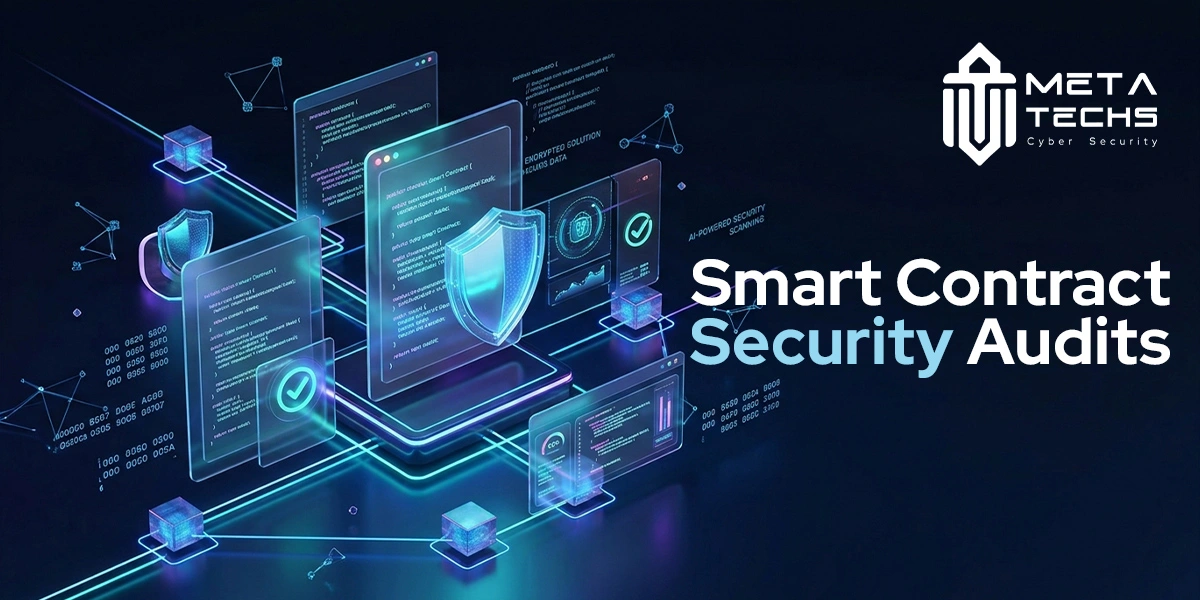
Smart Contract Security Audits help identify vulnerabilities, logic errors, and configuration issues before deployment. By combining automated security testing with detailed manual code reviews, they reduce the likelihood of exploits and help development teams launch with greater confidence. This guide explains why these audits matter, how they work, the risks they uncover, and what to look for when choosing an audit provider. For teams also building Web3 infrastructure, our guide on securing Web3 infrastructure projects covers the surrounding attack surface in detail.
Why Smart Contract Security Audits Matter
Every blockchain project is built on trust. Users deposit assets into decentralized applications with the expectation that the underlying code will behave exactly as intended. If that code contains a flaw, attackers can exploit it within minutes, often before the development team has time to react.
Unlike centralized applications, blockchain transactions are irreversible. Once digital assets leave a compromised contract, recovering them is often impossible. Over the past several years, several high-profile attacks have demonstrated how vulnerabilities in smart contracts can lead to massive financial losses and lasting reputational damage.
This is where Smart Contract Security Audits play an important role. Rather than focusing only on coding mistakes, they examine the entire logic of a contract. Auditors evaluate access controls, transaction flows, mathematical calculations, external integrations, and potential attack paths to determine whether the application can withstand real-world threats. These threats continue to evolve — see our guide on recent threats in cyber security for the latest attack patterns affecting blockchain projects.
Beyond improving security, an independent audit also strengthens credibility. Investors, business partners, and users are more likely to trust a project that has undergone a thorough review before launch. While an audit cannot guarantee complete protection against every future threat, it significantly lowers the chances of avoidable vulnerabilities reaching production.
What Is a Smart Contract Security Audit?
A Smart Contract Security Audit is a structured review of blockchain code designed to identify vulnerabilities, logic flaws, and security weaknesses before a smart contract is deployed. The goal is to verify that the application behaves as intended while reducing the risk of attacks that could compromise funds or disrupt operations.
A typical review combines automated analysis with manual inspection. Security tools quickly detect common issues such as unsafe coding patterns, while experienced auditors examine business logic, contract interactions, permissions, and edge cases that automated scanners may overlook. This is similar to the approach used in VAPT assessments for traditional infrastructure — combining automation with expert manual review to catch what either method alone would miss.
The process often includes reviewing project documentation, evaluating contract architecture, testing different execution scenarios, and validating whether security controls have been implemented correctly. Auditors then prepare a detailed report that categorizes findings based on their severity and provides practical recommendations for remediation.
A blockchain code audit is valuable for projects of every size, whether they are launching a new decentralized application, upgrading an existing protocol, or introducing additional features. Identifying weaknesses before deployment is far less costly than responding to an exploit after assets have already been placed at risk. Our vulnerability assessment vendors guide covers how to evaluate security providers across different specializations.
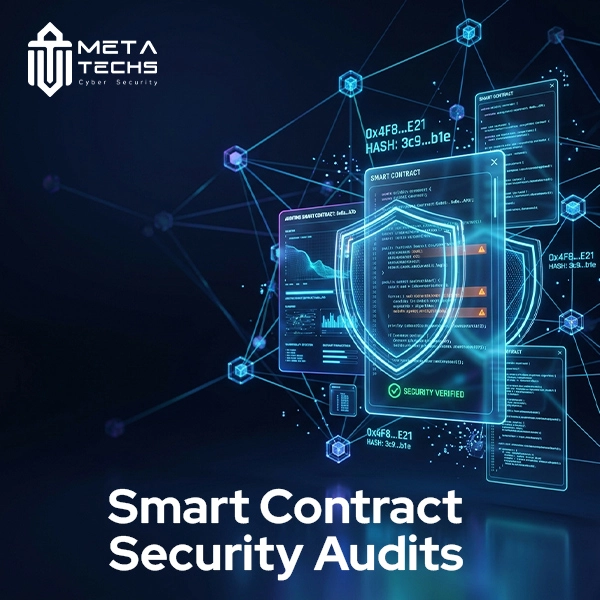
Why Smart Contracts Can’t Be Patched After Deployment
One of the biggest differences between blockchain applications and traditional software is immutability. Once a smart contract is deployed on a public blockchain, its code generally cannot be modified. This characteristic strengthens trust because users know the rules cannot be changed without following predefined governance or upgrade mechanisms. At the same time, it also increases the importance of getting the code right before launch.
In a conventional web application, developers can release updates whenever they discover a bug. A vulnerable feature can often be fixed within hours. Smart contracts don’t offer the same flexibility. If a critical vulnerability is found after deployment, teams may need to migrate user assets, deploy entirely new contracts, or activate carefully designed proxy upgrades. Each option introduces additional complexity, operational overhead, and potential risks.
For this reason, a Solidity security audit is more than a final quality check. It acts as a preventive measure that helps uncover issues before they become permanent problems. Auditors carefully review contract logic, authorization mechanisms, mathematical operations, and interactions with external protocols to reduce the likelihood of expensive mistakes reaching the blockchain. This is the same philosophy behind penetration testing for traditional systems — find the weaknesses before attackers do.
Investing time in a thorough review before deployment is almost always less costly than managing an exploit, restoring user confidence, or rebuilding a compromised protocol after launch.
Preparing for a smart contract deployment? Talk to our security experts before you go live
Common Smart Contract Vulnerabilities
Even well-written smart contracts can contain hidden weaknesses that are difficult to identify during development. Some vulnerabilities stem from coding mistakes, while others arise from flawed business logic, insecure integrations, or unexpected interactions between multiple contracts. Understanding these types of security vulnerabilities provides valuable insight into what a comprehensive security audit is designed to uncover before a project goes live.
Every smart contract is designed to perform a specific function, whether it’s transferring tokens, managing governance, processing payments, or executing decentralized financial transactions. However, even a small oversight in the code can create an entry point for attackers.
A thorough smart contract vulnerability assessment doesn’t just search for coding mistakes. It examines how the contract behaves under different conditions, how it interacts with external protocols, and whether an attacker could manipulate its logic for financial gain. Below are some of the most common vulnerabilities security auditors look for.
Reentrancy attacks
Reentrancy is one of the most well-known vulnerabilities in blockchain security. It occurs when a contract sends funds to another contract before updating its internal records. A malicious contract can repeatedly call the withdrawal function before the balance is updated, allowing the attacker to drain funds.
The DAO attack remains one of the best-known examples of this vulnerability, highlighting how a single logic flaw can have far-reaching consequences.
To reduce this risk, auditors verify that contracts follow secure coding practices such as the Checks-Effects-Interactions pattern and use safeguards like reentrancy protection where appropriate.
Access control issues
Not every function should be available to every user. Administrative actions such as minting tokens, changing protocol parameters, or upgrading contracts should only be accessible to authorized accounts.
Weak or missing access controls can allow attackers to execute privileged functions that were never meant for public use. During a Solidity security audit, reviewers carefully examine user roles, permissions, ownership transfers, and administrative privileges to confirm that sensitive operations remain protected. This is the same principle applied to supply chain security — limiting access to only what is genuinely needed.
Integer overflow and underflow
Smart contracts often perform mathematical calculations to manage balances, rewards, transaction fees, or token supplies. If these calculations aren’t handled correctly, unexpected values can appear and affect the contract’s behavior.
Although modern Solidity versions include built-in overflow checks, auditors still review arithmetic operations, rounding logic, and precision handling to ensure calculations remain accurate across different scenarios.
Oracle manipulation
Many decentralized applications depend on external data such as cryptocurrency prices, weather information, or sports results. Since blockchains cannot access outside information directly, they rely on oracles.
If an attacker manipulates the data supplied by an oracle, the contract may execute transactions based on incorrect information. This can lead to unfair liquidations, inaccurate pricing, or significant financial losses.
Security reviews evaluate how external data is validated, whether multiple data sources are used, and how the application responds when unexpected values are received.
Front-running and MEV attacks
Blockchain transactions are visible before they are confirmed. This allows attackers to observe pending transactions and submit their own with higher transaction fees so they are processed first.
This practice, often associated with Maximum Extractable Value (MEV), can affect decentralized exchanges, auctions, NFT launches, and token swaps.
Auditors review transaction ordering risks and recommend mechanisms such as commit-reveal schemes, transaction batching, or other design improvements to minimize opportunities for front-running.
Flash loan attacks
Flash loans allow users to borrow large amounts of cryptocurrency without collateral, provided the loan is repaid within the same transaction.
While this feature has legitimate uses, attackers often combine flash loans with logic flaws, oracle manipulation, or pricing vulnerabilities to execute highly profitable attacks.
Rather than focusing only on the loan itself, auditors analyze whether the protocol’s economic model can withstand large, short-term changes in liquidity or market conditions.
Related reading
→ Types of Security Vulnerabilities Businesses Face
→ VAPT and Penetration Testing Services
→ Recent Threats in Cyber Security
Types of Smart Contract Security Audits
Not every blockchain project requires the same level of review. The right audit approach depends on factors such as project complexity, budget, launch timeline, and overall risk.
The most common types include:
- Professional security audits: Conducted by experienced security firms that combine automated analysis with detailed manual code reviews. This remains the most common approach for production-ready applications. See how our VAPT methodology applies the same structured approach to Web3 environments.
- Collaborative audits: Multiple security researchers review the same codebase simultaneously. Different perspectives often uncover issues that a single reviewer might miss.
- Audit contests: Security researchers compete to identify vulnerabilities within a fixed timeframe. Since many experts analyze the code at once, this approach can provide broader coverage for complex protocols.
- AI-assisted audits: Artificial intelligence helps identify common vulnerability patterns and suspicious code, allowing human auditors to focus on complex business logic. See how AI is changing cybersecurity threats on both sides of the security equation.
Many organizations combine several of these approaches to improve coverage and reduce the chances of undiscovered vulnerabilities.
How the Smart Contract Audit Process Works
A successful audit begins long before security experts start reviewing the code. The quality of documentation, testing, and project preparation has a direct impact on both the speed and effectiveness of the assessment.
Although the exact methodology varies between providers, most professional audits follow a similar process.
1. Project scope and documentation
Auditors first review the project’s objectives, architecture, technical documentation, and source code. They identify which contracts are included in the audit and understand how different components interact.
Clear documentation helps auditors spend less time interpreting the system and more time identifying genuine security risks.
2. Automated security analysis
Specialized tools scan the code for known vulnerability patterns, insecure coding practices, and configuration issues. This automated stage functions similarly to vulnerability scanning in traditional security assessments — quickly surfacing known issues so reviewers can focus on complex logic.
3. Manual code review
This is often the most valuable stage of the audit.
Security specialists examine every important function, evaluate contract interactions, review permission structures, and test assumptions made during development. They also consider attack scenarios that automated tools cannot easily predict.
4. Security testing
Auditors validate how the protocol behaves under different conditions by performing additional testing, including:
- Unit testing
- Integration testing
- Fuzz testing
- Edge-case analysis
- Economic attack simulations
These tests help uncover vulnerabilities that only appear under unusual or high-risk conditions.
5. Audit report
After completing the review, auditors prepare a detailed report outlining every identified issue.
Findings are usually grouped by severity, such as:
- Critical
- High
- Medium
- Low
- Informational
Each finding includes an explanation of the risk, its potential impact, and recommendations for fixing the issue.
6. Remediation and re-audit
Once developers resolve the reported issues, auditors verify the fixes before issuing the final report.
This additional review helps confirm that vulnerabilities have been addressed correctly and that no new issues were introduced during remediation.
Want to understand what a professional audit covers for your project? Explore our security assessment services
Manual Review vs Automated Security Tools
Modern Smart Contract Security Audits rely on both automation and human expertise because each approach identifies different types of issues.
Automated tools are excellent at scanning thousands of lines of code in a short time. They consistently detect known vulnerability patterns, insecure coding practices, and common configuration mistakes, making them an efficient first line of defense.
Manual reviews provide something automation cannot: context. Experienced auditors evaluate business logic, protocol design, economic models, and contract interactions from an attacker’s perspective. They look beyond syntax errors to determine whether the application behaves securely in real-world situations.
Rather than choosing one approach over the other, the strongest security assessments combine both. This is the same philosophy behind professional VAPT engagements — automated analysis improves speed and coverage, while manual review provides the critical judgment needed to uncover complex vulnerabilities that software alone may overlook. Together, they create a far more reliable assessment than either method could achieve independently.
Essential Smart Contract Audit Tools
A successful audit depends not only on experienced security professionals but also on reliable tools that help identify weaknesses quickly. These tools automate repetitive checks, improve code coverage, and allow auditors to focus on complex issues that require human judgment.
Some of the most widely used tools include:
- Slither: Performs static analysis to detect common security issues, coding mistakes, and risky patterns in Solidity smart contracts.
- Mythril: Uses symbolic execution to uncover vulnerabilities that may not be visible through standard code reviews.
- Echidna: A fuzz testing tool that generates thousands of unexpected inputs to discover hidden bugs and verify important security properties.
- Foundry: A development and testing framework that enables developers to write comprehensive tests, simulate attacks, and validate contract behavior.
- Tenderly: Helps teams simulate transactions, monitor deployed contracts, and analyze execution paths before changes reach production.
- OpenZeppelin libraries: Although not an auditing tool, these widely trusted libraries provide secure implementations of common smart contract components, helping developers reduce unnecessary security risks from the beginning.
No single tool can guarantee a secure application. Automated analysis works best when combined with a detailed Solidity security audit performed by experienced reviewers who understand both technical vulnerabilities and business logic. This mirrors the layered approach used in professional penetration testing — tools provide breadth, human expertise provides depth.
What to Expect in a Smart Contract Audit Report
A professional audit report is much more than a list of bugs. It provides developers with a clear understanding of the application’s security posture and offers practical guidance for resolving identified issues.
Most reports include:
- An executive summary explaining the overall security assessment.
- The scope of the audit, including the contracts and components that were reviewed.
- A list of findings categorized by severity, such as Critical, High, Medium, Low, or Informational.
- A detailed explanation of each vulnerability, its potential impact, and recommended remediation steps.
- A verification section confirming whether reported issues were fixed during the remediation process.
The report should also explain the reasoning behind each finding in clear language so both technical and non-technical stakeholders can understand the associated risks. A well-structured audit report serves as a valuable reference long after deployment, helping development teams strengthen future releases and maintain better security practices.
Smart Contract Security Best Practices
Even the most thorough audit cannot compensate for poor development practices. Security should be considered throughout the entire software development lifecycle, not just before deployment.
Some proven best practices include:
- Plan security during the design phase instead of treating it as a final checklist.
- Use well-maintained and widely trusted libraries whenever possible instead of building everything from scratch.
- Apply the principle of least privilege so users and administrators only have the permissions they genuinely need.
- Write comprehensive unit, integration, and fuzz tests to validate contract behavior under different conditions.
- Review external dependencies, oracle integrations, and third-party contracts before including them in your application.
- Perform a new audit whenever significant features, upgrades, or protocol changes are introduced. Our vulnerability assessment guide explains how to evaluate the right provider for each stage.
- Monitor deployed contracts continuously and establish an incident response plan for unexpected security events.
Building security into every stage of development reduces the likelihood of costly vulnerabilities while making future maintenance much easier.
Related reading
→ Penetration Testing Services
→ Vulnerability Assessment Vendors
→ Incident Response Services for Businesses
→ Security Operations Center (SOC)
How to Choose the Right Smart Contract Audit Provider
Selecting an audit provider shouldn’t be based solely on cost. A low-priced review may miss critical vulnerabilities, while a well-executed audit can prevent financial losses that far exceed the initial investment.
When evaluating a provider, consider the following factors:
- Blockchain expertise: Look for a team with experience auditing the blockchain platform and programming language your project uses.
- Transparent methodology: A reliable provider should clearly explain its review process, testing approach, and reporting standards.
- Technical experience: Review previous audit reports, case studies, or open-source contributions to understand the team’s capabilities.
- Manual and automated testing: The strongest audits combine security tools with detailed manual analysis rather than relying on automation alone.
- Remediation support: Security doesn’t end when the report is delivered. A good provider helps verify fixes and answers technical questions during the remediation phase.
- Communication: Clear documentation and timely updates make the audit process smoother for both developers and stakeholders.
Choosing the right security partner is an investment in the long-term reliability of your project rather than simply another development expense. Our cyber security consulting team can help you evaluate what level of review your project requires.
Why Choose Meta Techs for Smart Contract Security Audits
At Meta Techs, security assessments go beyond identifying obvious coding mistakes. Our approach combines automated analysis with in-depth manual reviews to evaluate business logic, contract interactions, access controls, and potential attack paths before deployment. Meta Techs is recognized among the top IT security companies in Dubai for this kind of structured, expert-led security work.
Each engagement includes detailed reporting, practical remediation guidance, and verification of implemented fixes. Whether you’re launching a new decentralized application, upgrading an existing protocol, or expanding blockchain functionality, our goal is to help you reduce security risks and build greater confidence before your solution goes live. Explore our full range of cybersecurity solutions to see how smart contract auditing fits into a broader security strategy.
Frequently Asked Questions
What is a smart contract security audit?
It is an independent review of blockchain code that identifies vulnerabilities, logic flaws, and security risks before deployment, helping reduce the likelihood of attacks and financial losses. It is typically combined with penetration testing of surrounding infrastructure for complete coverage.
How long does a smart contract audit take?
The timeline depends on the project’s size and complexity. Smaller applications may take one to two weeks, while larger protocols with multiple contracts often require several weeks for a comprehensive review.
Can a smart contract still be exploited after an audit?
Yes. An audit significantly reduces risk but cannot guarantee complete protection. New attack techniques, third-party integrations, and future code changes may introduce additional vulnerabilities. Continuous security monitoring after deployment helps detect unusual activity early.
When should a smart contract be audited?
Security reviews should be performed before deployment and repeated after major upgrades, feature additions, or significant changes to the contract’s architecture. This mirrors the practice of regular vulnerability scanning in traditional IT environments.
What is the difference between a security audit and a bug bounty?
A security audit is a structured review conducted before deployment by dedicated experts. A bug bounty program invites independent researchers to discover vulnerabilities after launch in exchange for rewards.
Conclusion
Smart contracts are designed to operate without intermediaries, but that doesn’t eliminate the need for careful security planning. Once deployed, even a minor flaw can have serious financial and operational consequences. A comprehensive Smart Contract Security Audit helps identify vulnerabilities before they become costly problems by combining automated analysis with expert manual review. For teams looking to go further, pairing an audit with VAPT testing of the surrounding infrastructure closes the remaining gaps.
Whether you’re developing a DeFi platform, NFT marketplace, DAO, or enterprise blockchain application, investing in security early is far more effective than responding to an exploit later. Strong development practices, regular assessments, and continuous monitoring work together to build resilient Web3 applications that users can trust.
Secure Your Blockchain Project Before It Goes Live
Meta Techs provides comprehensive Smart Contract Security Audits to identify vulnerabilities, validate contract logic, and help your team deploy with confidence. Our security experts combine automated analysis with detailed manual review — the same approach used in our VAPT and penetration testing services.
Contact our security experts today to discuss your project and build a stronger foundation before launch.
Related posts:
 Securing Web3 Infrastructure Projects: What Founders and CTOs Need to Know
 Data Security for Small Business in Dubai (Complete Guide)
 Managed Detection and Response (MDR) Services: The Complete Guide
 Types of Malware Attacks: A Complete Guide for Businesses
 How to Send Secure Email: A Complete Guide for Safe Communication
 OSINT Framework: A Complete Guide to Open-Source Intelligence