Businesses today rely heavily on digital systems, cloud platforms, emails, and connected devices to run their operations. While technology improves productivity, it also creates new opportunities for cybercriminals. One of the biggest threats organizations face today is malware.
From ransomware attacks that shut down operations to spyware that quietly steals sensitive information, malware attacks continue to affect businesses of every size. Large enterprises are often targeted because of their valuable data, but small and medium-sized businesses are equally vulnerable because they may lack strong security measures.
For businesses in the UAE and across the Middle East, growing digital transformation has also increased exposure to cyber threats. Attackers constantly look for weak passwords, outdated software, vulnerable networks, and unsuspecting employees to gain access to business systems.
Understanding the different types of malware attacks is the first step toward protecting your organization. By recognizing how these threats work, businesses can reduce risks, improve security, and prevent costly incidents.
What Is Malware?
Malware, short for malicious software, refers to any software or code designed to damage systems, steal information, disrupt operations, or gain unauthorized access to devices and networks. Malware is not a single threat. Instead, it is a broad category that includes viruses, ransomware, spyware, worms, trojans, rootkits, and several other forms of cyberattacks.
Cybercriminals use malware for different purposes. Some attacks focus on stealing financial information, while others attempt to encrypt files, spy on employees, or gain long-term access to business networks.
Unlike legitimate software that helps users perform tasks, malware is specifically created to benefit attackers. Once it enters a system, it may remain hidden for days or even months before being discovered.
Modern malware attacks have also become increasingly sophisticated. Attackers often combine multiple malware types in a single campaign. For example, a phishing email may deliver a trojan that later installs spyware or ransomware. Security researchers note that many modern attacks rely on several malware techniques working together rather than a single infection method.
Why Malware Is a Growing Business Threat
Many organizations believe cybercriminals only target large corporations. In reality, businesses of all sizes face malware risks.
A successful malware attack can lead to:
- Financial losses
- Business downtime
- Data breaches
- Reputational damage
- Regulatory penalties
- Loss of customer trust
Malware attacks can interrupt daily operations, block access to important files, and expose confidential business information. Security reports show that organizations increasingly face operational disruption and financial damage when malware infections occur.
Remote work, cloud adoption, and increased use of connected devices have expanded the attack surface for many businesses. Employees often access company systems from multiple devices and locations, creating additional security challenges.
For businesses in Dubai and across the UAE, digital transformation initiatives have brought tremendous opportunities, but they have also increased exposure to cyber threats. Organizations handling customer information, financial records, or sensitive business data must remain vigilant against evolving malware attacks. Cybersecurity solutions for small business are especially important for organizations that may lack dedicated security teams.
Wondering how exposed your business really is? Get a vulnerability assessment
How Malware Attacks Businesses
Malware does not always enter a network through sophisticated hacking techniques. In many cases, attackers exploit simple mistakes.
Employees may accidentally click a malicious email attachment, download infected software, or visit compromised websites. Attackers also take advantage of outdated applications, weak passwords, and unpatched vulnerabilities.
Common entry points include:
- Phishing emails
- Malicious attachments
- Infected websites
- Software vulnerabilities
- Weak credentials
- Unauthorized downloads
Once inside a system, malware can spread across devices, steal information, encrypt files, or establish long-term access for attackers.
Understanding how malware enters business environments helps organizations build stronger defenses. In the following sections, we will explore the most common types of malware attacks and how they affect modern businesses.
Common Types of Malware Attacks
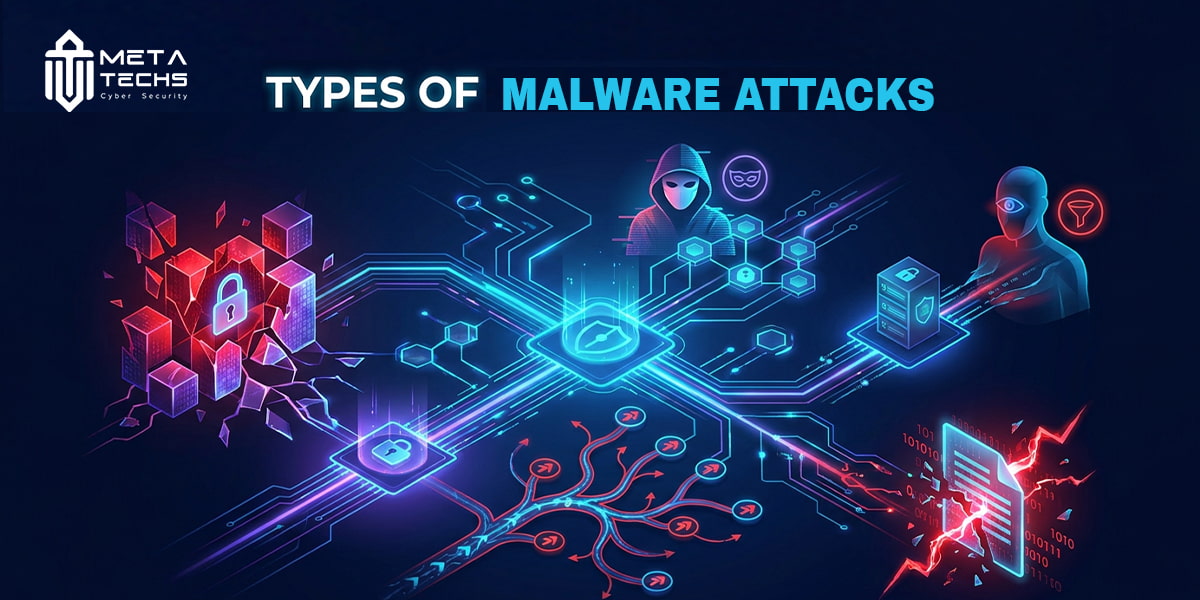
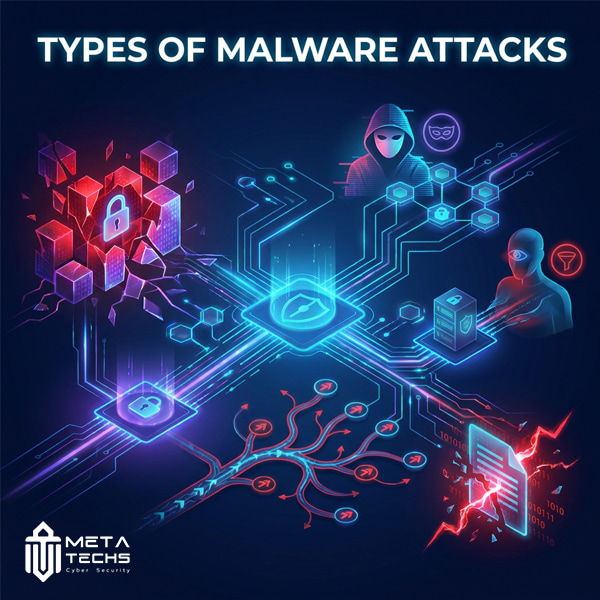
Cybercriminals use different types of malware to achieve different goals. Some malware is designed to steal information, while others aim to disrupt operations, encrypt files, or gain unauthorized access to business systems. Understanding these threats helps organizations identify risks before they become serious incidents.
Ransomware
Ransomware is one of the most damaging types of malware attacks affecting businesses today. It encrypts files and systems, preventing employees from accessing critical data until a ransom payment is made.
Many modern ransomware groups also steal sensitive information before encrypting files. They threaten to publish stolen data if the organization refuses to pay. Recent incidents such as the DoppelPaymer ransomware attacks follow this same pattern of combining encryption with data theft.
Ransomware attacks can cause significant financial losses, operational downtime, and reputational damage. Security experts consider ransomware one of the biggest threats to businesses because it can completely disrupt operations.
Trojans
A Trojan, or Trojan horse, appears to be legitimate software but contains malicious code. Employees may unknowingly install a Trojan by downloading fake software updates, opening malicious email attachments, or clicking unsafe links.
Once installed, Trojans can create backdoors that allow attackers to access business systems, steal data, or deploy additional malware.
Unlike worms, Trojans require user interaction to infect a system. They often serve as the first stage of larger cyberattacks.
Worms
Worms are self-replicating malware programs that spread automatically across networks without human interaction. They exploit security vulnerabilities to move from one system to another.
Because worms can spread rapidly, a single infected device can affect an entire business network within a short period. Organizations with outdated systems or poor network segmentation are particularly vulnerable.
Worm attacks have demonstrated how quickly malware can move through connected environments and disrupt business operations.
Viruses
Viruses are among the oldest and most recognized forms of malware. They attach themselves to files or programs and spread when users open infected content.
Viruses often enter organizations through email attachments, infected downloads, or removable devices. Once activated, they can damage files, corrupt data, and slow down systems.
Although modern cybersecurity tools have improved detection capabilities, viruses continue to pose risks to businesses that lack proper security controls.
Spyware
Spyware secretly monitors user activities and collects sensitive information without permission. It can record browsing behavior, capture login credentials, and steal confidential business information.
In corporate environments, spyware can expose financial records, internal communications, and customer data. The information gathered is usually transmitted to attackers without the victim’s knowledge.
Because spyware often operates silently, organizations may not realize they have been compromised until data has already been stolen.
Adware
Adware displays unwanted advertisements and redirects users to certain websites. While it may seem less dangerous than other malware types, adware can negatively affect productivity and system performance.
Some adware programs also collect user data or serve as a gateway for more serious infections. Excessive pop-ups, browser redirects, and unexpected advertisements are common warning signs.
Security researchers have found that certain adware campaigns can provide attackers with opportunities to install additional malware on infected devices.
Fileless Malware
Fileless malware has become increasingly popular among cybercriminals because it leaves very little evidence behind. Instead of installing files on a device, it operates directly in memory using legitimate system tools.
This makes detection much more difficult for traditional antivirus solutions. Attackers often use PowerShell, Windows Management Instrumentation, and other trusted tools to execute malicious activities.
Because fileless malware avoids writing files to disk, businesses need advanced monitoring and behavioral analysis to detect these attacks effectively. Tools such as EDR software are specifically designed to catch this type of in-memory activity.
Rootkits
Rootkits are designed to hide malicious activity within an operating system. They allow attackers to maintain privileged access while avoiding detection.
Once a rootkit is installed, attackers may gain complete control over infected systems. They can monitor activity, steal data, and install additional malware while remaining hidden from security tools.
Rootkits are particularly dangerous because they can remain undetected for long periods, making them difficult to remove.
As cyber threats continue to evolve, businesses must understand these different types of malware attacks and implement security measures that address each risk. In the next section, we will look at how malware spreads and the practical steps organizations can take to protect themselves.
Related reading
Ransomware Protection: How to Defend Your Business
DoppelPaymer Ransomware: A Dangerous Threat
VMware ESXi Ransomware Overview
Best EDR Software for Businesses
How Malware Spreads
Many business owners assume that malware attacks only happen through advanced hacking techniques. In reality, most infections begin with simple mistakes or overlooked vulnerabilities.
Phishing emails remain one of the most common delivery methods. Attackers send emails that appear legitimate and encourage employees to click malicious links or download infected attachments. Once opened, malware can quickly spread throughout the organization.
Other common infection methods include:
- Downloading software from untrusted websites
- Visiting compromised websites
- Weak or reused passwords
- Outdated software and operating systems
- Infected USB devices
- Unsecured remote access connections
Cybercriminals often look for the easiest entry point. A single compromised device can allow attackers to move across networks, access sensitive data, and deploy additional malware. Security research shows that phishing emails, software vulnerabilities, and malicious downloads remain major infection vectors for modern malware attacks.
How Businesses Can Prevent Malware Attacks
While no organization can eliminate cyber risks entirely, businesses can significantly reduce their exposure by implementing strong security practices.
Employee awareness is one of the most important defenses. Many attacks succeed because employees unknowingly click malicious links or open suspicious attachments. Regular cybersecurity training helps staff recognize potential threats.
Businesses should also:
- Keep operating systems and software updated.
- Use strong passwords and multi-factor authentication.
- Install endpoint protection and antivirus solutions.
- Back up critical business data regularly.
- Segment networks to limit the spread of infections.
- Monitor systems for unusual activity.
- Conduct regular security assessments.
Modern malware threats often bypass traditional defenses, which is why organizations need multiple layers of protection. Security experts recommend combining technology, employee awareness, and continuous monitoring to strengthen defenses against malware attacks.
Keep your systems patched before attackers find the gap. Explore vulnerability scanning and patch management
How Meta Techs Helps Businesses Stay Protected
As cyber threats continue to evolve, businesses need more than basic antivirus software to stay secure. A proactive cybersecurity strategy helps organizations identify vulnerabilities before attackers can exploit them.
Meta Techs provides cybersecurity solutions that help businesses detect, prevent, and respond to malware threats. Services such as vulnerability assessments, security monitoring, managed security services, and security awareness training help organizations strengthen their overall security posture.
Continuous monitoring and threat detection allow businesses to identify suspicious activities early, reducing the risk of major incidents. Security assessments also help organizations discover weaknesses that could be exploited by malware.
By implementing layered security measures and proactive defense strategies, businesses can reduce risks and improve resilience against modern cyber threats.
FAQS:
What are the most common types of malware attacks?
The most common malware attacks include ransomware, viruses, worms, trojans, spyware, adware, fileless malware, and rootkits.
Which type of malware is the most dangerous?
Ransomware is considered one of the most damaging threats because it can encrypt business data, disrupt operations, and cause significant financial losses.
How do malware attacks usually start?
Most malware infections begin through phishing emails, malicious downloads, infected websites, or software vulnerabilities.
Can antivirus software stop all malware?
Traditional antivirus software can detect many threats, but advanced attacks such as fileless malware often require additional security measures and behavioral monitoring.
Why are businesses increasingly targeted by malware?
Businesses store valuable customer information, financial data, and intellectual property, making them attractive targets for cybercriminals.
Conclusion
Malware continues to be one of the biggest cybersecurity challenges facing organizations today. From ransomware and spyware to fileless malware and rootkits, each threat presents unique risks to businesses.
Understanding the different types of malware attacks allows organizations to strengthen their defenses, educate employees, and reduce the likelihood of costly incidents. By combining security awareness, modern protection technologies, and proactive monitoring, businesses can better protect their systems, data, and operations from evolving cyber threats.
Protect Your Business from Modern Malware Threats
Malware attacks continue to evolve, making proactive cybersecurity more important than ever. Whether your organization needs vulnerability assessments, security monitoring, or employee awareness training, taking action today can reduce tomorrow’s risks.
Contact Meta Techs to strengthen your cybersecurity posture and protect your business from emerging malware threats. Explore our cybersecurity solutions to see how we can help.
Related posts:
 A comprehensive guide to the different types of Internet attacks
 Understanding Data Protection and Privacy: A Complete Guide for Modern Businesses
 Data Security for Small Business in Dubai (Complete Guide)
 What is a Malware | Definition and common types
 Types of Cyber Attacks: Common Threats Every Business Should Know
 Cyber Attacks Examples: Real Incidents and Lessons for Businesses