Customer data has become one of the most valuable assets for modern businesses. Retailers, e-commerce companies, and consumer brands collect large amounts of personal information every day, including names, phone numbers, delivery addresses, and purchase histories. When this information is exposed, the consequences can extend far beyond a single organization.
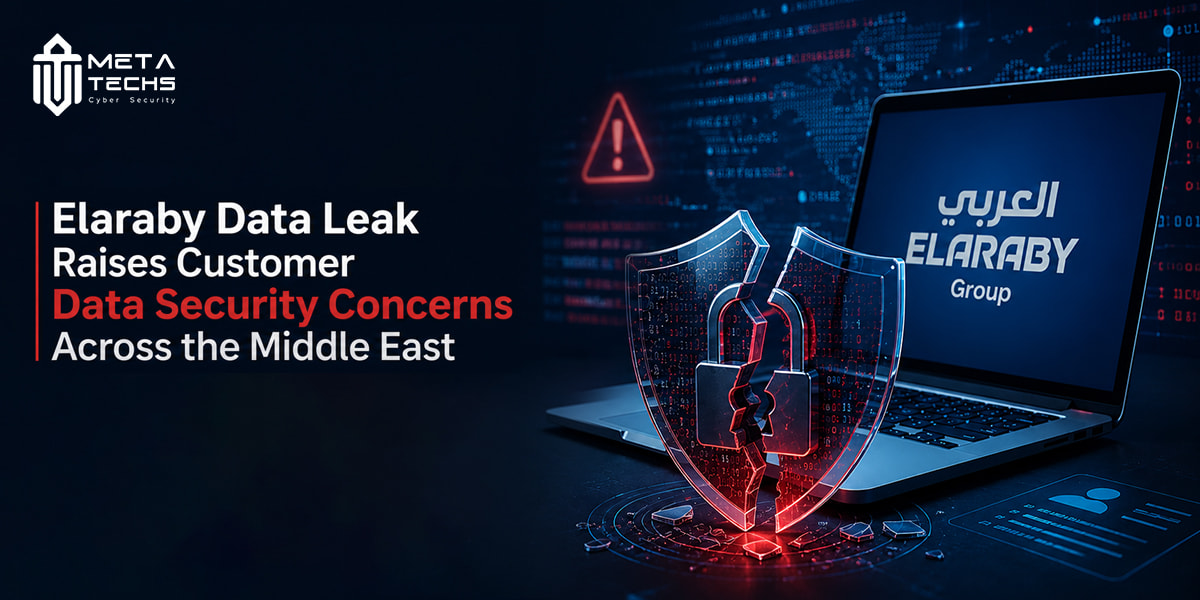
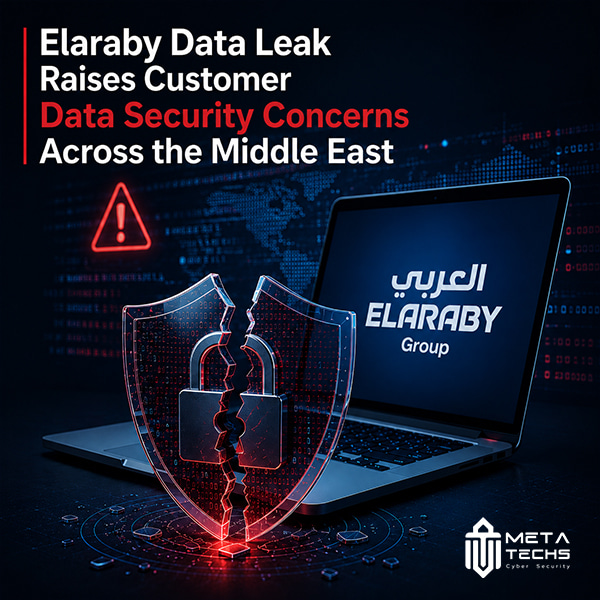
The alleged Elaraby data leak has recently attracted attention across cybersecurity communities after reports emerged claiming that millions of customer records belonging to Elaraby Group may have been exposed online. While the incident has not been officially confirmed by the company, the reports have raised concerns about customer data security, phishing risks, and the growing threat of cybercrime across the Middle East.
For businesses operating in the region, the incident serves as a reminder that protecting customer information has become a business priority rather than simply an IT responsibility.
What Is the Elaraby Data Leak?
The Elaraby data leak refers to reports circulating within cybersecurity and threat intelligence communities regarding an alleged exposure of customer information belonging to Elaraby Group, one of Egypt’s largest home appliance and consumer electronics companies.
According to multiple threat intelligence reports, a threat actor advertised what was described as a database containing approximately 25 GB of information. The alleged database reportedly included customer records, address information, and sales order records.
If verified, the Elaraby data leak could affect millions of customer records. However, cybersecurity experts emphasize that the claims remain unverified and should be treated carefully until official confirmation or independent forensic validation becomes available.
Large customer databases often become attractive targets because they contain valuable information that can be used in various cybercriminal activities. Even when payment information is not exposed, personal information can still create significant risks for customers and organizations.
How the Alleged Elaraby Data Leak Was Reported
The alleged Elaraby data leak first appeared through cyber threat intelligence sources that monitor underground forums and dark web activity. Reports indicated that a threat actor had published information claiming to possess Elaraby customer databases and shared details regarding the size and contents of the alleged dataset.
Several cybersecurity monitoring platforms later published analyses discussing the reported exposure. According to these reports, the advertised database allegedly contains millions of customer and order records.
The publication of a download link on underground forums increased concerns because leaked information can quickly spread among multiple threat actors. Once a dataset becomes publicly available within cybercriminal communities, copies often continue circulating even if the original source is removed.
The Elaraby data leak has also gained attention on social media and threat intelligence channels, leading to broader discussions about customer data protection and cybersecurity risks within the retail sector.
At the time of writing, Elaraby Group has not publicly confirmed the alleged incident. Security researchers generally recommend caution when evaluating early breach reports because threat actors sometimes exaggerate claims to increase visibility or attract buyers.
What Information Was Allegedly Exposed?
Reports surrounding the alleged data exposure suggest that the leaked information may contain several categories of customer data.
The reported records include:
- Customer names.
- Address information.
- Delivery details.
- Sales order records.
- Customer information linked to transactions.
The presence of customer records and order information makes such incidents particularly concerning because attackers can use these details to create highly convincing scams.
Purchase histories, addresses, and customer information often allow cybercriminals to impersonate customer support representatives, delivery services, or warranty departments. This makes fraudulent communications appear legitimate.
There is currently no public evidence suggesting that banking information or payment card data was included in the alleged dataset. However, personal information alone can still create significant security risks.
Large-scale data exposure incidents frequently demonstrate that customer information remains valuable long after a breach occurs. Criminal groups may combine leaked information with other databases to create detailed profiles of potential victims.
Was the Elaraby Data Leak Officially Confirmed?
One of the most important questions surrounding the Elaraby data leak is whether the incident has been officially confirmed.
At the time of writing, there has been no public confirmation from Elaraby Group regarding the alleged breach. Independent cybersecurity investigators have also not released technical evidence that fully validates the authenticity of the reported database.
This distinction is extremely important.
An alleged data leak does not automatically mean that a company has been hacked. Threat actors sometimes publish inaccurate information, recycle older datasets, or exaggerate the size of stolen databases.
For this reason, organizations, media outlets, and security researchers typically wait for one or more of the following:
- Official company statements.
- Independent forensic analysis.
- Validation of sample records.
- Confirmation from affected customers.
- Regulatory disclosures.
Until such evidence becomes available, the reported Elaraby data leak should be treated as an ongoing cybersecurity incident that remains under investigation.
Potential Risks for Customers
Even when financial information is not exposed, customer data breaches can create several serious risks.
Phishing Attacks
Attackers may use customer information to send convincing emails or messages that appear to come from legitimate companies. These messages often attempt to steal passwords, account credentials, or one-time passwords.
Scam Calls
Fraudsters may contact customers while pretending to represent customer support teams, delivery services, or technical support departments.
Identity Theft
Personal information such as names, addresses, and contact details can sometimes be combined with data from other breaches to support identity fraud.
Social Engineering
Modern cyberattacks increasingly rely on human trust rather than technical vulnerabilities. Attackers use personal information to create believable stories and manipulate victims into sharing sensitive information. This is a form of social engineering that depends on psychological manipulation rather than technical exploits.
For customers, the safest approach is to remain cautious about unexpected emails, phone calls, or messages requesting personal information or verification codes.
The alleged Elaraby data leak highlights how valuable customer information has become to cybercriminals and why organizations throughout the Middle East must continue strengthening their data protection practices.
Related reading
Learning From the Cisco Data Breach
Casio Hacked: A Case Study in Evolving Cyber Threats
Why Customer Data Is Valuable to Cybercriminals
Customer information has become one of the most valuable assets in modern cybercrime. While many people immediately think of credit card numbers or banking information, attackers often place equal value on personal data such as names, phone numbers, addresses, purchase histories, and delivery records.
The alleged Elaraby data leak demonstrates why customer information attracts cybercriminals. Even if financial information is not exposed, customer records can still be used to launch highly targeted attacks.
When attackers know what products customers purchased, where they live, and how they interact with a company, fraudulent communications become much more convincing. Criminals can impersonate customer support representatives, delivery companies, warranty departments, or technical support teams.
Modern phishing campaigns increasingly rely on personal information rather than technical exploits. According to recent industry reports, phishing remains one of the most common initial attack vectors, contributing to a significant number of data breaches worldwide. See our overview of top cybersecurity threats for more on how these attacks are evolving.
Social engineering attacks have also become a major concern. Several cybersecurity studies indicate that human behavior remains a major factor in security incidents. Attackers continue to exploit trust, urgency, and fear to convince victims to share credentials, verification codes, or sensitive information. Regular cyber security awareness training is one of the most effective defenses against this trend.
The Elaraby data leak serves as a reminder that customer information is not simply operational data. For cybercriminals, it represents an opportunity to conduct fraud, impersonation, and highly personalized attacks.
Why Retail Companies Are Increasingly Targeted
Retail organizations have become attractive targets for cybercriminals because they manage large volumes of customer information every day. E-commerce platforms, customer support systems, delivery databases, loyalty programs, and online payment services all generate valuable data.
Research from the Middle East and Africa region shows that retail companies continue to face significant cyber threats. Industry reports indicate that retail remains one of the most frequently targeted sectors across MENA, alongside government, financial services, and technology organizations.
Unlike some industries, retailers often collect information from millions of customers. This creates a large attack surface and increases the value of stolen databases.
Cybercriminals understand that customer data can generate long-term value. Addresses, phone numbers, and purchasing patterns may remain useful for years, allowing attackers to continue exploiting leaked information long after the original incident.
The growth of digital commerce has further increased these risks. More organizations now rely on cloud platforms, third-party applications, mobile applications, and connected supply chains. While these technologies improve customer experience, they also create additional security challenges. This applies equally to small businesses building their first e-commerce presence and large enterprise retailers.
The Elaraby data leak highlights the growing importance of retail cybersecurity across the Middle East. Organizations operating in customer-facing industries must recognize that data protection has become a core business requirement.
What UAE Businesses Can Learn From the Elaraby Data Leak
Although the reported incident involves an Egyptian company, the lessons extend well beyond national borders. The Elaraby data leak offers several important insights for UAE businesses that manage customer information.
First, organizations should recognize that customer trust is directly connected to cybersecurity. Data protection is no longer simply a technical responsibility assigned to IT departments. It affects brand reputation, customer confidence, and business continuity.
Second, organizations should continuously review access to customer databases. Many modern breaches involve compromised credentials, excessive permissions, or weak access controls.
Third, employee awareness remains essential. Attackers increasingly rely on phishing emails, social engineering techniques, and credential theft rather than sophisticated technical attacks.
The Elaraby data leak also highlights the importance of incident response planning. Organizations that prepare for cyber incidents before they occur are often able to reduce operational disruption and communicate more effectively with customers.
For UAE businesses, cybersecurity investments should be viewed as long-term business protection rather than short-term technology expenses.
UAE Data Protection Requirements and PDPL
Data protection regulations continue to evolve throughout the Middle East, including the United Arab Emirates.
Under the UAE Personal Data Protection Law (PDPL), organizations are expected to implement appropriate security measures to protect personal information and respond effectively to data breaches.
One of the key requirements involves breach notification. Organizations may be required to notify the relevant authorities without undue delay when personal information is compromised. In certain situations, affected individuals may also need to be informed if the incident creates risks to their rights or personal information.
The commonly referenced 72-hour reporting period emphasizes the importance of rapid incident detection and response. Delayed reporting can increase regulatory exposure and reduce customer confidence.
For organizations operating in the UAE, customer notification procedures, breach management plans, and data protection policies have become increasingly important.
The Elaraby data leak illustrates how customer information incidents can quickly attract public attention. Businesses that maintain clear communication procedures and established response plans are generally better positioned to manage these situations.
Related reading
UAE Personal Data Protection Law (PDPL) Explained
Understanding Data Protection and Privacy
Incident Response Services for Businesses
The Cost of Data Breaches for Businesses
Data breaches create costs that extend far beyond technical recovery.
Recent industry research shows that the global average cost of a data breach reached approximately USD 4.44 million. In some regions, the financial impact can be significantly higher due to regulatory penalties, legal expenses, operational disruptions, and reputational damage. Many organizations now factor cyber security insurance into their overall risk management strategy as a result.
The financial impact often includes:
- Incident investigation costs.
- Legal and regulatory expenses.
- Customer notifications.
- Security improvements.
- Business interruption.
- Loss of customer trust.
Research also shows that organizations using security automation and artificial intelligence tools can significantly reduce breach costs and shorten incident response times.
For businesses in the Middle East, the financial consequences of a customer data breach can be particularly severe because customer trust and reputation are critical competitive advantages.
The Elaraby data leak demonstrates that the impact of a cyber incident extends beyond technology systems. Customer confidence, business continuity, and corporate reputation can all be affected.
As organizations continue to accelerate digital transformation across the UAE and the wider Middle East, customer data protection, retail cybersecurity, and incident preparedness will remain essential components of business resilience.
The Growing Threat of Social Engineering Attacks
One of the biggest lessons from the alleged Elaraby data leak is that cyberattacks are no longer limited to technical vulnerabilities. In many cases, attackers target people rather than systems through social engineering.
Social engineering attacks rely on trust, urgency, and human behavior. Instead of breaking into networks through complex exploits, attackers often convince victims to share passwords, verification codes, or sensitive information voluntarily.
This risk becomes much greater when customer information is exposed. Names, addresses, phone numbers, and purchase histories can help attackers create highly convincing messages.
A scammer who knows what product a customer purchased or where they live can easily impersonate customer support, delivery services, or technical teams. These personalized attacks are often more successful than generic phishing emails.
Industry reports continue to show that human error remains one of the largest contributors to security incidents. Phishing attacks and social engineering attacks have become some of the most common entry points for cybercriminals worldwide.
The Elaraby data leak demonstrates why organizations must view employee awareness and customer education as essential parts of their security strategy.
How AI Is Changing Modern Cyberattacks
Artificial intelligence is changing both cybersecurity defenses and cyberattacks.
Attackers increasingly use AI tools to create realistic phishing emails, impersonate individuals, generate convincing messages, and automate large-scale attack campaigns. AI can help criminals write emails without grammar mistakes, create fake customer service conversations, and personalize attacks using stolen data.
Recent studies suggest that AI-generated phishing campaigns are becoming increasingly common. Attackers can now create thousands of customized messages in multiple languages within minutes. Some campaigns have even progressed to deepfake attacks that impersonate real individuals using synthetic audio and video.
The combination of AI and leaked customer information creates new challenges for organizations. Information obtained through incidents such as the Elaraby data leak could potentially be combined with AI tools to create more convincing scams.
At the same time, organizations are also using artificial intelligence in cybersecurity to improve security operations. AI-powered security tools can help identify suspicious activity, reduce response times, and detect unusual behavior before it develops into a larger incident.
The challenge for businesses is not whether AI will affect cybersecurity. The challenge is whether organizations can adapt quickly enough to both the opportunities and the risks.
Security Recommendations for Organizations
While the exact circumstances surrounding the Elaraby data leak remain unconfirmed, the incident highlights several important security practices that organizations should prioritize.
Multi-Factor Authentication (MFA)
Passwords alone are no longer sufficient protection. Multi-factor authentication adds an additional security layer and helps prevent unauthorized access even if credentials are stolen.
Endpoint Detection and Response (EDR)
Modern attacks often begin on employee devices. EDR solutions help security teams identify suspicious activity, malware infections, and unauthorized access attempts before they spread throughout the network.
Employee Training
Many successful attacks begin with phishing emails or social engineering attempts. Regular employee awareness programs help staff recognize suspicious messages, fake websites, and fraudulent requests.
Training should not be a one-time activity. Cyber threats constantly evolve, and awareness programs should evolve as well.
Continuous Monitoring
Organizations should monitor networks, user activity, and critical systems for unusual behavior. Early detection often determines whether a security incident becomes a minor disruption or a major breach. Security operations center services are designed specifically for this kind of round-the-clock visibility.
The Elaraby data leak serves as a reminder that security controls must work together. Technology alone cannot prevent every attack. People, processes, and security tools all play important roles.
Wondering if your customer data is properly protected? Get a vulnerability assessment
Building Cyber Resilience in the GCC
Digital transformation continues to accelerate across the Gulf region. Organizations in the UAE and the wider GCC increasingly rely on cloud services, customer portals, mobile applications, and digital platforms.
While these technologies improve efficiency and customer experience, they also increase exposure to cyber threats.
Cyber resilience means more than simply preventing attacks. It involves preparing for incidents, responding effectively, and recovering quickly when disruptions occur.
Organizations that build cyber resilience often focus on:
- Incident response planning.
- Data backup and recovery.
- Security awareness programs.
- Vendor risk management.
- Regular security assessments.
- Business continuity planning.
The Elaraby data leak highlights why cyber resilience has become a business issue rather than only an IT issue. Customers expect organizations to protect their information, communicate clearly during incidents, and restore services quickly.
As cyber threats continue to evolve, organizations across the GCC must strengthen their security posture and prepare for increasingly sophisticated attacks. Meta Techs is recognized among the top IT security companies in Dubai for helping businesses build this kind of resilience.
FAQS:
What is the Elaraby data leak?
The Elaraby data leak refers to reports claiming that a database allegedly belonging to Elaraby Group was exposed online. The reported dataset reportedly contains customer, address, and order-related information.
Was Elaraby officially hacked?
At the time of writing, Elaraby Group has not publicly confirmed the alleged breach. The claims remain under investigation and have not been independently verified.
What data was allegedly exposed?
Reports suggest that customer names, addresses, delivery information, and order records may have been included in the alleged database.
What risks do customers face?
Customers may face increased risks of phishing attacks, scam calls, identity theft attempts, and social engineering attacks if personal information becomes available to cybercriminals.
How can businesses prevent similar incidents?
Organizations can reduce risks by implementing multi-factor authentication, deploying endpoint detection tools, conducting employee training, monitoring systems continuously, and maintaining incident response plans.
The Elaraby data leak demonstrates that customer data protection has become an essential part of modern business operations. Whether the reported incident is ultimately confirmed or not, the lessons surrounding cyber resilience, security awareness, and customer trust remain highly relevant for organizations across the Middle East.
Strengthen Your Customer Data Protection
Customer data breaches can expose organizations to financial losses, regulatory challenges, and reputational damage. Meta Techs helps businesses strengthen their security posture through vulnerability assessments, security testing, threat monitoring, and incident response services.
Contact our cybersecurity experts to assess your organization’s security risks and improve customer data protection.
Related posts:
 New NSA Data Leaked Raises Security Concerns!
 Udemy Data Breach Raises New Concerns Over SaaS and Identity-Based Cyber Threats
 Taking Control of Your Sensitive Information: Implementing Robust DLP (Data Leak Prevention)
 How a Simple Cloud Mistake Led to EY’s 4TB Data Leak
 Hackers leak documents from Pentagon IT services provider Leidos
 The Fortinet Data Breach