Your website is working normally.
Customers are browsing products, employees are accessing internal systems, and everything seems fine. Then suddenly the website becomes slow. Pages stop loading. Some users cannot log in at all.
The server isn’t broken. The internet connection is still active.
The problem could be a DDoS attack.
Over the last few years, businesses across the UAE have moved more services online. Customer portals, banking platforms, healthcare applications, and e-commerce websites have become part of daily operations. When these digital services stop working, businesses feel the impact almost immediately. DDoS attacks are consistently ranked among the top cybersecurity threats facing businesses today.
That is one reason DDoS attacks continue to be a concern for organizations in Dubai and across the Middle East.
What Is a DDoS Attack?
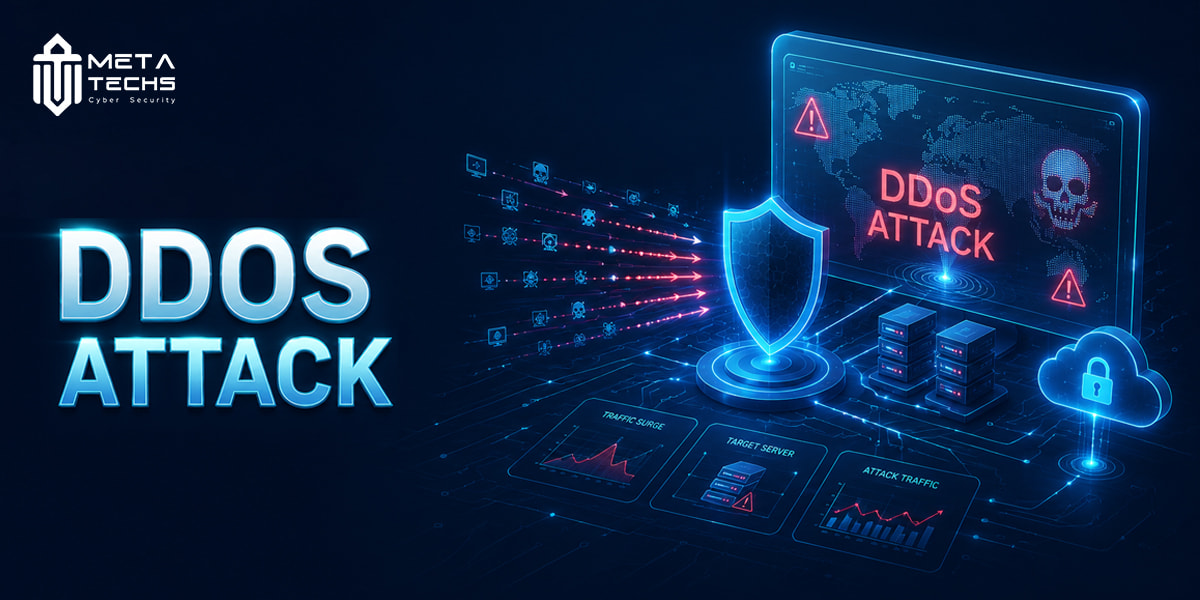
A DDoS attack is a cyberattack that floods a server, website, or network with malicious traffic, making it unavailable to legitimate users.
The DDoS attack meaning becomes easier to understand when you look at the full term.
- Distributed means the attack comes from many different devices.
- Denial of service means the goal is to stop legitimate users from accessing a website, application, or network.
Put those together and you get a DDoS attack.
Imagine trying to enter a shopping mall during a major sale. Thousands of people rush through the entrance at the same time. Security staff cannot manage the crowd, customers cannot move, and eventually nobody gets inside.
A DDoS attack creates a similar situation online.
Attackers send huge amounts of traffic toward a website or server. The system becomes overloaded and genuine users are locked out.
Not every attack is aimed at stealing data. Sometimes the goal is simply disruption. In other situations, attackers may demand ransom payments or attempt to damage a company’s reputation.
Businesses that rely on online services are particularly vulnerable. An online retailer may lose sales. A financial institution may experience service interruptions. A customer portal may become inaccessible for hours. Unlike ransomware attacks that encrypt data, DDoS attacks focus purely on making services unavailable.
For UAE businesses that depend heavily on digital services, even a short period of downtime can affect revenue and customer trust.
How DDoS Attacks Work (Botnets and Traffic Flooding)
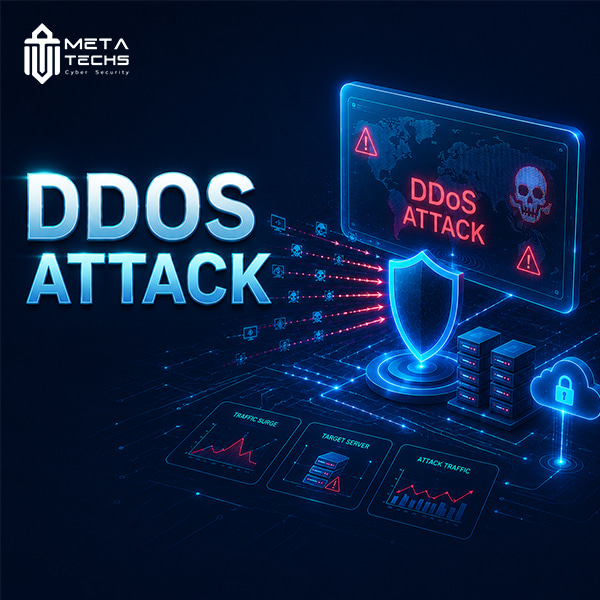
Attackers use a network of compromised devices called botnets to send large amounts of traffic to a target system.
So, how does a DDoS attack work?
Most attacks begin long before the actual disruption happens.
Attackers first infect devices connected to the internet. These may include home computers, office systems, routers, security cameras, or smart devices. The owners usually have no idea their devices have been compromised.
Each infected device becomes part of a botnet.
A botnet can contain hundreds, thousands, or even millions of devices spread across different countries.
When attackers decide to launch a DDoS attack, they send instructions to the entire network. Every device starts sending requests to the same website or server at the same time.
This creates traffic flooding.
The target server suddenly receives far more requests than it was designed to handle. Memory usage increases, bandwidth becomes exhausted, and applications begin to slow down.
Eventually users start noticing problems:
- Pages take too long to load.
- Login requests fail.
- Transactions stop processing.
- Websites become unavailable.
Think about an online retailer in Dubai running a seasonal sale. Thousands of real customers are already visiting the website. If attackers add millions of fake requests on top of that traffic, the server may struggle to keep up.
That is why many Dubai organizations invest in security monitoring tools and DDoS protection services.
One challenge with modern attacks is that the traffic often looks legitimate. The requests come from real devices located around the world, making them difficult to block immediately.
As businesses continue expanding their digital services, understanding how DDoS attacks work helps security teams recognize potential risks before they turn into major outages.
Related reading
Top Cybersecurity Threats Businesses Face Today
Recent Threats in Cyber Security
Security Operations Center (SOC) Services
Common Types of DDoS Attacks
The three common types of DDoS attacks are volumetric attacks, protocol attacks, and application-layer attacks.
Not every DDoS attack works in the same way. Some attacks try to consume network bandwidth, while others focus on exhausting server resources or targeting specific applications.
Understanding the different types of DDoS attacks helps businesses choose the right protection methods and respond more effectively when an attack occurs.
Volumetric Attacks
Volumetric attacks are the most common type of DDoS attack. Their goal is simple: generate enough traffic to overwhelm the available bandwidth.
Attackers send massive amounts of data to the target server until the internet connection becomes congested. Genuine users then struggle to access the website or service.
Some common examples include:
- UDP floods
- DNS amplification attacks
- ICMP floods
Think of it as hundreds of vehicles trying to enter a two-lane road at the same time. Eventually, the road becomes blocked and nobody can move.
Online retailers in Dubai may face this type of attack during shopping festivals or seasonal sales when websites already experience high traffic volumes. The additional malicious traffic can quickly overwhelm systems and cause downtime.
Protocol Attacks
Protocol attacks target the communication rules that allow devices and servers to exchange information.
Instead of flooding bandwidth, these attacks consume server resources, firewalls, or load balancers. The attacker exploits weaknesses in network protocols until the system becomes unavailable.
Common examples include:
- SYN flood attacks
- Ping of Death attacks
- Fragmentation attacks
Because protocol attacks focus on infrastructure resources, they can affect servers even when traffic volumes are relatively low. A properly configured firewall is one of the first lines of defense against this type of attack.
Financial services in the UAE often invest heavily in network security because service interruptions can affect transactions, customer access, and business operations.
Among the various types of DDoS attacks, protocol attacks are particularly difficult to detect because they target the way systems communicate rather than simply sending large amounts of traffic.
Application-Layer Attacks
Application-layer attacks focus on specific applications or web services.
Instead of attacking the entire network, attackers target login pages, search functions, payment systems, or customer portals. These requests often look like normal user activity, making them harder to identify.
Examples include:
- HTTP floods
- Login request floods
- API abuse attacks
A single request may require the server to perform multiple operations, such as searching databases or processing information. When thousands of these requests arrive simultaneously, the application becomes overwhelmed.
Healthcare organizations, banking platforms, and customer portals frequently become targets because users depend on these services every day.
Among the various types of DDoS attacks, application layer attacks can be particularly damaging because they directly affect customer-facing services.
Signs Your Business Is Under a DDoS Attack
Slow websites, traffic spikes, and service outages are common signs of a DDoS attack.
Many organizations do not realize they are under attack until customers begin reporting problems.
Some DDoS attack signs appear gradually, while others happen suddenly.
Common warning signs include:
- Unusually slow website performance.
- Unexpected spikes in traffic.
- Login failures.
- Applications becoming unresponsive.
- Network congestion.
- Frequent server crashes.
- Complete website outages.
For example, an online retailer in Dubai may notice thousands of visitors appearing within a few minutes, even though no marketing campaign is running.
Similarly, healthcare organizations may experience patient portal disruptions, while financial institutions may see slower transaction processing.
These DDoS attack signs should never be ignored.
Modern attacks often use devices located in different countries, making malicious traffic appear legitimate. This is why continuous security monitoring and early detection are critical.
Organizations that monitor network activity, website performance, and traffic patterns are often able to identify attacks more quickly and reduce their impact.
As businesses continue expanding their digital services, recognizing the early signs of a DDoS attack can help prevent small disruptions from becoming major operational incidents.
Not sure if your systems can detect an attack in time? Explore security monitoring and threat detection →
How to Respond to an Active DDoS Attack
Organizations can stop DDoS attacks by using traffic filtering, web application firewalls, rate limiting, and DDoS protection services. Having a clear incident response plan in place before an attack occurs makes all the difference.
A DDoS attack usually gives very little warning.
A website becomes slow. Customers cannot log in. Pages stop loading. Sometimes the entire service goes offline within minutes.
The first step is not to panic.
Security teams should confirm whether the traffic spike is legitimate or malicious. A marketing campaign or seasonal sale can increase traffic, but a sudden surge from unknown sources may indicate a DDoS attack.
Once an attack is confirmed, organizations should:
- Monitor incoming traffic.
- Identify affected systems.
- Contact their hosting or cloud provider.
- Enable traffic filtering.
- Block suspicious requests.
- Activate the incident response plan.
Many organizations use web application firewalls to filter malicious requests before they reach the server. Rate limiting can also reduce the number of requests a system accepts during an attack. SIEM solutions help security teams correlate traffic data and detect attack patterns faster.
For Dubai businesses that rely on online services, quick action is important. Even a short outage can affect customers, sales, and business operations.
Knowing how to stop a DDoS attack before it grows larger can significantly reduce downtime.
Related reading
Incident Response Services for Businesses
Cybersecurity Protection Best Practices
How to Prevent Future DDoS Attacks
Businesses can prevent DDoS attacks by implementing monitoring, security controls, and incident response plans.
There is no single solution that can stop every DDoS attack.
Most organizations rely on multiple layers of protection.
Some of the most effective measures include:
- Traffic monitoring.
- Web application firewalls.
- Load balancing.
- Content delivery networks.
- Rate limiting.
- Security assessments.
- Incident response planning.
Regular monitoring helps security teams detect unusual activity before systems become overwhelmed.
Web application firewalls can inspect incoming traffic and block suspicious requests. Load balancing distributes traffic across multiple servers, reducing the risk of a single point of failure.
Many businesses also invest in DDoS protection services that monitor traffic around the clock and respond automatically during an attack.
As digital transformation initiatives continue across the UAE, organizations are placing greater importance on resilience and business continuity. Cyber security insurance has also become part of many organizations’ risk management strategy, covering costs that arise when attacks succeed despite preventive measures.
Understanding how to stop a DDoS attack is no longer only an IT concern. It has become a business priority.
Strong DDoS mitigation strategies can help organizations remain available even during large-scale attacks.
Want to see where your security gaps are before attackers do? Request a security assessment
Meta Techs DDoS Protection Services
Modern cyberattacks continue to evolve.
Attackers use larger botnets, more sophisticated techniques, and multiple attack methods at the same time. Because of this, many organizations choose professional DDoS protection services instead of relying only on internal teams.
Meta Techs is recognized among the top IT security companies in Dubai and helps organizations strengthen their cybersecurity posture through proactive security solutions.
Services may include:
- Network monitoring.
- Security assessments.
- Threat detection.
- Incident response.
- Vulnerability management.
- Security consulting.
For UAE enterprises that depend on digital services, maintaining availability is critical. Banking systems, healthcare platforms, e-commerce websites, and customer portals all require continuous protection.
Middle East organizations are also expanding cloud adoption and online services, increasing the importance of effective DDoS mitigation.
With proper planning, monitoring, and DDoS protection services, organizations can reduce risk and improve resilience against future attacks.
As Dubai businesses continue their digital transformation initiatives, investing in cybersecurity becomes essential for long-term growth and operational stability.
FAQS:
How long does a DDoS attack usually last?
Some attacks last only a few minutes, while others can continue for several hours or even days. The duration often depends on the attack size and the organization’s response capabilities.
Can a DDoS attack steal data?
A DDoS attack mainly focuses on disrupting services rather than stealing information. However, attackers sometimes use the disruption to hide other malicious activities.
How much does DDoS protection cost?
The cost depends on the organization’s size, traffic volume, and security requirements. Small businesses may use basic protection services, while larger enterprises often require advanced solutions.
What’s the difference between DoS and DDoS attacks?
A DoS attack usually comes from a single source. A DDoS attack uses multiple devices or botnets to launch attacks from many locations simultaneously, making it much harder to stop.
Is Your Business Prepared for a DDoS Attack?
Strengthen Your Security Before Downtime Happens.
A DDoS attack can disrupt websites, applications, and customer services within minutes. Meta Techs helps organizations improve resilience through monitoring, threat detection, incident response, and DDoS protection services designed for modern businesses.
Contact Meta Techs today to assess your DDoS readiness and build a stronger defence for your digital services.
Related posts:
 The Truth about the smart toothbrush ddos attack
 Clickfix Infection Chain: How It Works and How to Protect Yourself
 What Is a Threat Intelligence Platform (TIP)? How It Works, Key Features & Business Benefits
 What is Ransomware attack types?, how it works?
 Protect Your Business: VAPT and Penetration Testing Solutions from Meta Techs
 How to Prevent Cyber Attacks on Your Business