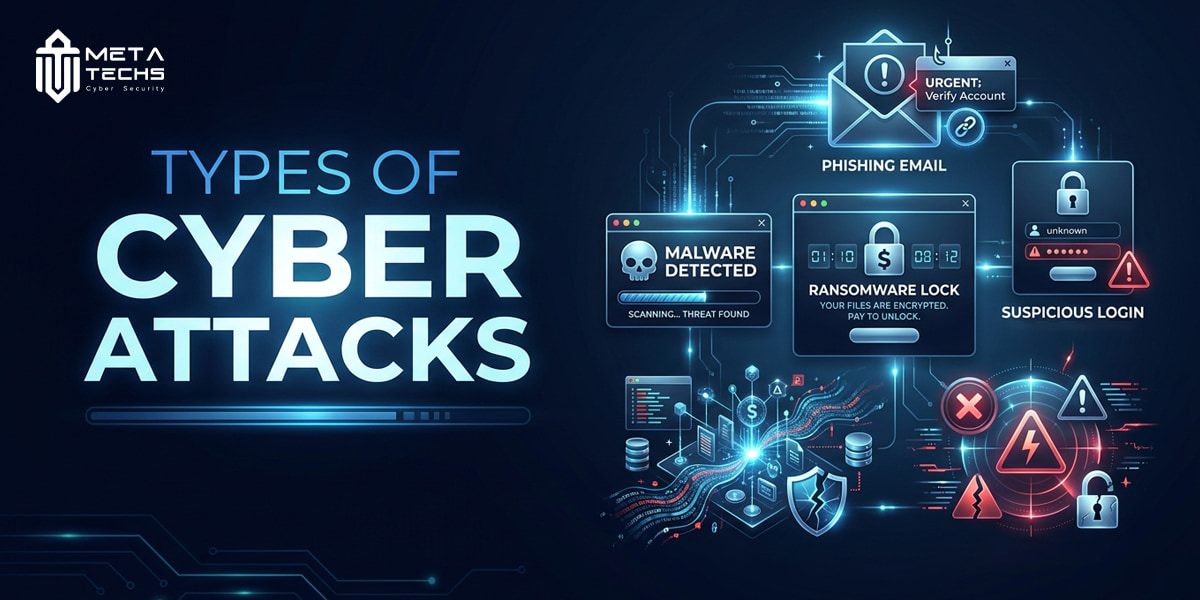
Cyber attacks are becoming more frequent, and businesses of all sizes are feeling the impact. What was once considered a problem for large corporations is now affecting small businesses, healthcare providers, retailers, financial institutions, and government organizations. As companies across the UAE continue to adopt cloud services, remote work, and digital platforms, understanding the types of cyber attacks has become increasingly important.
A single attack can interrupt operations, expose sensitive information, and damage customer trust. For many organizations, cybersecurity is no longer just an IT issue. It is a business concern that affects operations, reputation, and long-term growth.
What Are Cyber Attacks?
Cyber attacks are attempts to gain unauthorized access to systems, networks, or data for financial gain, disruption, or theft. Attackers may steal information, lock business systems, or interrupt services.
The impact can be significant. Businesses may experience downtime, financial losses, legal issues, or reputational damage after an attack. Some incidents can take weeks or even months to recover from.
Understanding the different types of security vulnerabilities helps organizations identify risks and implement stronger security controls before an incident occurs.
Why Are Cyber Attacks Increasing?
There are several reasons why cyber incidents continue to rise.
Remote work has expanded the number of devices and connections businesses need to protect. Employees often access company systems from different locations, creating additional security challenges.
Cloud adoption has also increased. Organizations rely heavily on cloud platforms for storage, applications, and collaboration. While cloud services offer flexibility, misconfigurations and weak access controls can create security gaps.
Artificial intelligence is changing the threat landscape as well. Attackers now use AI tools to create convincing phishing emails, automate attacks, and improve social engineering tactics.
Weak passwords remain one of the biggest security issues. Reusing passwords or using simple credentials can make it easier for attackers to gain access to systems.
Human mistakes continue to play a major role. Clicking suspicious links, downloading malicious files, or sharing sensitive information can open the door to cybercriminals. Many of the common cyber attacks seen today still begin with simple human errors.
Phishing Attacks
Phishing attacks are one of the most widespread cyber threats. Attackers send emails, messages, or links that appear legitimate in an attempt to steal credentials or sensitive information. These are a form of social engineering that exploit human trust rather than technical vulnerabilities.
Businesses in the UAE have increasingly reported phishing campaigns that impersonate banks, delivery services, and government organizations. These messages often create urgency to encourage employees to act without verifying the source.
Related reading
→ What is Social Engineering in Cyber Security?
→ Cyber Security Awareness: Definition and Importance
→ Recent Threats in Cyber Security
Malware Attacks
Malware is malicious software designed to damage systems or steal information.
Common forms of malware include:
- Viruses that spread between files and devices.
- Trojans that appear legitimate but contain malicious code.
- Spyware that secretly collects user information and activity.
Once installed, malware can disrupt operations, steal data, or provide attackers with access to business systems.
Ransomware Attacks
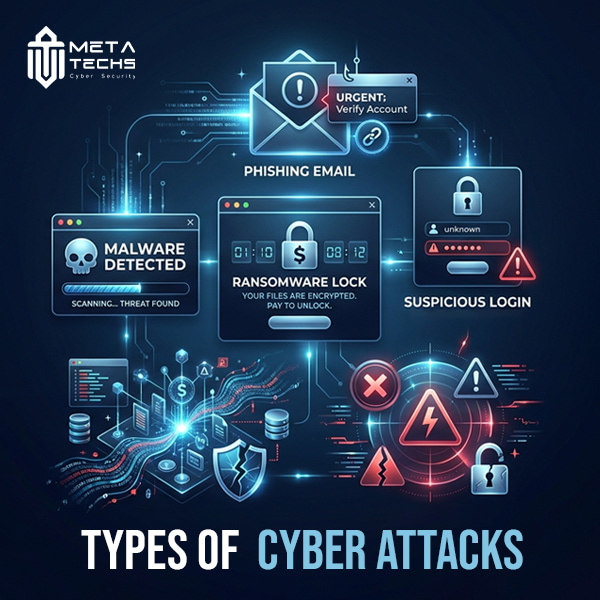
Ransomware has become one of the most damaging cyber threats facing businesses today. These attacks typically begin when an employee clicks a malicious link, downloads an infected file, or uses compromised credentials. Once attackers gain access, they encrypt important files and demand payment to restore them.
The business impact can be severe. Operations may stop completely, employees lose access to systems, and customers experience service disruptions. Recovery often takes days or even weeks.
A well-known example is the WannaCry attack, which affected organizations across more than 150 countries. Hospitals, businesses, and public services experienced major disruptions because systems became inaccessible. See also the DoppelPaymer ransomware attack for a more recent example of the same threat pattern.
Among the various types of cyber attacks, ransomware continues to cause some of the highest financial losses because it directly affects business operations and data availability.
Related reading
→ Ransomware Protection: How to Defend Your Business
→ DoppelPaymer Ransomware: A Dangerous Threat
→ VMware ESXi Ransomware Overview
DDoS Attacks
Distributed Denial-of-Service, or DDoS, attacks focus on overwhelming websites or online services with large amounts of traffic. The goal is simple. Make the service unavailable to legitimate users.
For businesses that rely on websites, online portals, or customer applications, even a few hours of downtime can create serious problems. Customers may be unable to place orders, access services, or communicate with the company.
Many organizations experience these attacks during busy periods when service availability is most important. DDoS attacks have become one of the common cyber attacks affecting businesses that depend heavily on digital services.
SQL Injection Attacks
SQL injection attacks target databases that store sensitive information. Attackers exploit vulnerabilities in web applications to access data that should remain protected.
If successful, they may view, modify, or even delete information stored in the database. Customer records, payment details, and business information can all become exposed.
Although SQL injection has existed for many years, it remains one of the types of cyber attacks that organizations still encounter because of insecure coding practices or outdated applications.
Which Industries Are Most Targeted?
Cybercriminals often target industries that handle valuable information or provide critical services.
- Healthcare: Hospitals and healthcare providers manage sensitive patient data and rely heavily on digital systems.
- Finance: Banks and financial institutions remain attractive targets because of financial information and payment systems.
- Retail: Retail businesses store customer information and process large numbers of transactions.
- Government: Public sector organizations often manage critical infrastructure and citizen data.
- Manufacturing: Connected production systems and supply chains have made manufacturers increasingly vulnerable to cyber threats.
Many of these sectors continue to experience the common cyber attacks discussed in this guide. Understanding these risks helps organizations improve security and reduce their exposure.
As the types of cyber attacks continue to evolve, businesses need to regularly review their security controls, update systems, and train employees to recognize potential threats.
How Businesses Can Stay Protected
Cyber threats continue to evolve, but many successful attacks still take advantage of basic security weaknesses. Small improvements in cybersecurity practices can often prevent much larger problems later.
Some of the most effective ways businesses can reduce risk include:
- Enable multi-factor authentication (MFA): Even if passwords are stolen, MFA adds another layer of protection and makes unauthorized access much more difficult.
- Train employees regularly: Many attacks begin with phishing emails or social engineering attempts. Security awareness training helps employees recognize suspicious activity.
- Keep systems updated: Software updates and security patches fix known vulnerabilities that attackers often target.
- Maintain secure backups: Reliable backups help organizations recover more quickly after ransomware or system failures.
- Conduct security assessments: Regular testing helps identify vulnerabilities before attackers discover them.
Understanding the different types of cyber attacks is important, but prevention always starts with strong security habits and continuous monitoring.
How Meta Techs Helps Prevent Cyber Attacks
Protecting an organization requires more than antivirus software or firewalls. Businesses need visibility into their risks and a clear understanding of where security gaps exist.
Meta Techs helps organizations strengthen their defenses through:
- Vulnerability Assessments
- Penetration Testing
- Security Monitoring
- Incident Response Planning
- Employee Security Awareness Programs
These services help businesses identify weaknesses, improve security controls, and respond more effectively to emerging threats. As the types of cyber attacks continue to evolve, regular vulnerability scanning and monitoring become increasingly important.
Why Cybersecurity Matters for UAE Businesses
Businesses across the UAE are investing heavily in digital transformation. Cloud adoption, online services, and remote work have created new opportunities, but they have also expanded the attack surface. Organizations looking for cybersecurity solutions need to consider both technical controls and employee awareness.
Customer trust is another important factor. Organizations are expected to protect personal information, financial data, and business records. A security incident can damage relationships that have taken years to build.
Data protection requirements continue to grow. The UAE Personal Data Protection Law and sector-specific frameworks such as NESA mean that many industries must now meet specific security and compliance obligations. At the same time, cyber threats are becoming more sophisticated.
Many of the common cyber attacks affecting businesses today target human errors, weak passwords, and unpatched systems rather than highly advanced vulnerabilities.
Conclusion
Cyber threats continue to change, but many incidents still share the same underlying causes. Weak passwords, phishing emails, outdated systems, and poor security visibility remain common entry points for attackers.
Understanding the types of cyber attacks helps organizations recognize potential risks and take practical steps to improve their security posture. Investing in prevention, employee awareness, and regular assessments can significantly reduce the likelihood of becoming the next victim.
Ready to Strengthen Your Cybersecurity Defenses?
Concerned about the growing types of cyber attacks affecting businesses today? Meta Techs helps organizations across the UAE identify security gaps, reduce cyber risks, and strengthen their defenses through assessments, testing, and practical security solutions.
Contact our cybersecurity team today to discuss your security requirements and build a stronger defense against modern cyber threats. Explore our cybersecurity solutions or learn how we support businesses across Dubai and the UAE.
FAQS:
What are the most common cyber attacks?
Phishing, ransomware, malware, DDoS attacks, and SQL injection attacks are among the most common cyber attacks affecting businesses today.
Which cyber attack is the most dangerous?
Ransomware is often considered one of the most damaging attacks because it can disrupt operations, encrypt data, and result in significant financial losses.
How can businesses prevent cyber attacks?
Organizations can reduce risk through employee training, multi-factor authentication, regular software updates, security monitoring, and routine security assessments.
What industries are most targeted by cyber attacks?
Healthcare, finance, retail, government, and manufacturing sectors are frequently targeted because they handle valuable data and critical operations.
How often should companies conduct security assessments?
Most organizations should perform security assessments at least once a year, while businesses handling sensitive data or critical systems may require more frequent evaluations.
Related posts:
 cybersecurity threats and the most common types ?
 How to Prevent Cyber Attacks on Your Business
 know the most common cyber security attacks
 Types of Malware Attacks: A Complete Guide for Businesses
 A comprehensive guide to the different types of Internet attacks
 FortiGuard Antivirus: Protecting Your Business from Viruses and Cyber Threats