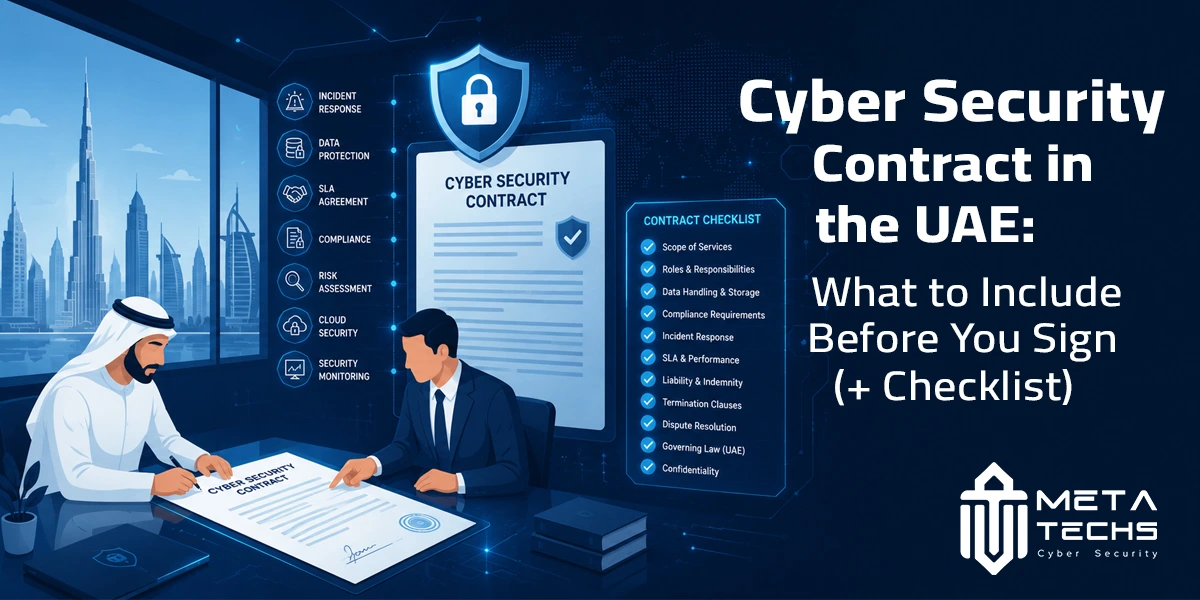
Imagine your business experiences a ransomware attack on a Friday evening. You immediately contact your cybersecurity provider, expecting an emergency response, only to learn that incident response isn’t part of your agreement. Or perhaps you discover months later that your security logs are being stored in a different location than you expected because the contract never clearly addressed data handling. These situations are frustrating, expensive, and surprisingly common.
The problem usually isn’t the technology. It’s the contract.
A cyber security contract does much more than outline the services you’re paying for. It defines who is responsible for protecting your systems, how quickly incidents will be handled, what security standards the provider must follow, and what happens if something goes wrong. Without clear terms, misunderstandings can quickly turn into operational, financial, or even compliance risks.
For organizations in the UAE, reviewing these agreements carefully is even more important. Businesses must consider local data protection requirements, industry regulations, and service expectations before signing with a cybersecurity vendor.
Whether you’re hiring a managed security service provider, scheduling a penetration test, or outsourcing your Security Operations Center (SOC), understanding what’s inside the contract can help you make a more informed decision. In this guide, we’ll explain the essential clauses every cyber security contract should include, how these agreements differ from SLAs and MSAs, and what you should review before signing.
Not sure your current contract covers what it should? Get a free contract and security review from Meta-Techs
What Is a Cyber Security Contract?
A cyber security contract is a formal agreement that outlines the relationship between an organization and a cybersecurity service provider. Instead of relying on conversations or sales proposals, it clearly documents what services will be delivered, who is responsible for what, and how the engagement will be managed from start to finish.
These contracts are used across almost every industry. A hospital may partner with a managed security service provider to continuously monitor critical systems. A financial institution might outsource its Security Operations Center to strengthen threat detection and response. Even a growing startup preparing to launch a new application may hire a penetration testing company to identify vulnerabilities before going live.
Although the services vary, the purpose remains the same. Both parties should have a shared understanding of expectations before any work begins.
A well-written agreement also protects everyone involved. It helps avoid confusion about what’s included, sets measurable service expectations, explains how sensitive business data should be handled, and establishes a clear process if a security incident occurs. When responsibilities are documented upfront, there is less room for disputes later.
Think of the contract as the foundation of the working relationship. It gives both the customer and the service provider a clear roadmap, making it easier to focus on improving security instead of resolving misunderstandings.
Cyber Security Contract vs SLA vs MSA
If you’ve been evaluating cybersecurity providers, you’ve probably come across terms like SLA and MSA alongside the contract itself. They sound similar, but they serve different purposes.
The easiest way to understand them is to think of them as different layers of the same business relationship.
| Agreement | Purpose | What it Covers |
| Master Service Agreement (MSA) | Defines the overall business relationship. | Payment terms, confidentiality, intellectual property, dispute resolution, and other general legal terms. |
| Service Level Agreement (SLA) | Sets measurable service expectations. | Response times, uptime commitments, support availability, incident resolution targets, and reporting schedules. |
| Cyber Security Contract | Brings everything together for cybersecurity services. | Security scope, responsibilities, compliance requirements, service deliverables, pricing, reporting, and operational commitments. |
The MSA acts as the legal foundation between both parties. The SLA focuses on how the service should perform. A cyber security contract combines those business and performance expectations while also covering the technical and security responsibilities that are unique to cybersecurity services.
Understanding this difference can make contract reviews much easier because you’ll know exactly where to look when evaluating a provider’s commitments.
Core Clauses Every Cyber Security Contract Should Include
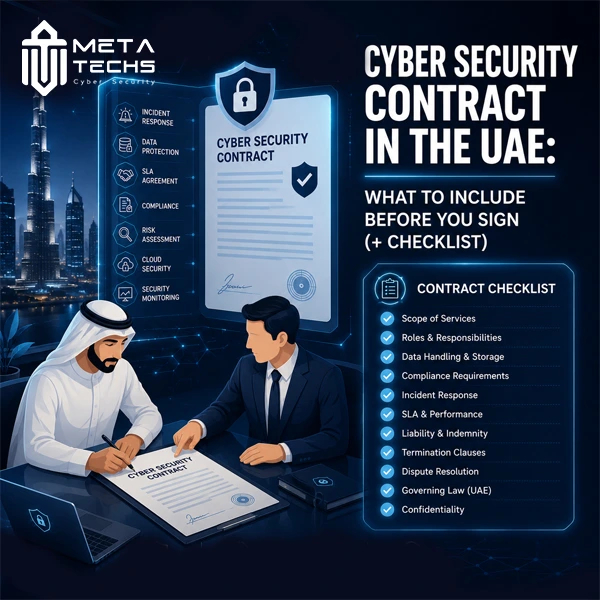
Every provider has its own contract template, but certain sections deserve extra attention before you sign. These clauses define how the service will actually work once the agreement begins.
Scope of Services
One of the most common reasons businesses become dissatisfied with a cybersecurity provider is that they assumed more services were included than the contract actually promised.
The scope of services explains exactly what the provider will do, which systems are covered, and whether there are any limitations or exclusions. It should be specific enough that both parties understand what’s included from day one.
For example, if the agreement only mentions “security monitoring” without identifying cloud environments, Microsoft 365, endpoints, or remote offices, those assets may not be part of the service. A clearly defined scope removes assumptions before they become expensive surprises.
Service Level Agreement (SLA)
Even the most experienced cybersecurity team can’t meet expectations that were never defined.
The SLA establishes measurable service commitments such as response times, incident priorities, support availability, and reporting frequency. Rather than relying on broad promises like “rapid response,” it provides clear benchmarks that both sides can measure.
This section becomes especially important during a security incident, when every minute matters and expectations need to be crystal clear. This is closely tied to how a provider handles incident response — the SLA is where those response commitments should be written down, not just promised verbally.
Data Protection Responsibilities
Cybersecurity providers often work with highly sensitive information, including security logs, employee accounts, customer data, and internal systems.
Your contract should explain how that information will be collected, stored, protected, accessed, and eventually disposed of. It should also clarify each party’s responsibilities for protecting sensitive information throughout the engagement.
For businesses operating in the UAE, this section is particularly important because data protection obligations may also need to align with the UAE Personal Data Protection Law (PDPL) and other applicable local regulations and industry requirements.
Right to Audit
Trust is important, but good governance also requires verification.
A right-to-audit clause gives the customer the ability to review evidence that agreed security activities are actually being performed. This may include requesting reports, reviewing compliance documentation, or validating that specific security controls have been implemented according to the contract.
Regular reporting and transparency help build confidence between both parties. They also make it easier to identify potential issues early, rather than discovering them during an audit or after a security incident.
By carefully reviewing these core clauses before signing, organizations can set clear expectations, reduce misunderstandings, and build a stronger working relationship with their cybersecurity provider from the very beginning.
→ Have Meta-Techs walk you through what a strong scope and SLA should look like
Remaining Clauses Every Cyber Security Contract Should Include
The clauses covered earlier lay the foundation of a strong agreement, but they aren’t the only sections worth reviewing. The following clauses often determine how both parties handle financial risks, confidential information, and the end of the business relationship.
Liability Cap
No cybersecurity provider can promise that an attack will never happen. That’s why most contracts include a liability cap, which limits the maximum amount a provider may have to pay if something goes wrong.
Before signing, check whether the limit is reasonable for the services you’re purchasing. A liability cap that is too low may not provide enough protection if a security incident causes significant business disruption.
For example, if your organization depends on continuous online operations, a small liability limit may not reflect the actual financial impact of extended downtime. Understanding this clause helps you evaluate whether the risk is being shared fairly between both parties.
Indemnification
Cybersecurity incidents sometimes involve legal claims from customers, partners, or third parties. An indemnification clause explains who will be responsible for those claims under specific circumstances.
This section should clearly define each party’s responsibilities instead of placing all the legal risk on one side. It also helps avoid confusion if a dispute arises after a data breach or service failure.
While every contract is different, it’s worth reviewing this clause carefully to understand where your organization’s responsibilities begin and end.
Non-Disclosure Agreement (NDA)
Working with a cybersecurity provider often means giving them access to confidential business information. They may review network diagrams, employee accounts, security logs, internal applications, or customer data during their work.
An NDA helps protect that information by preventing either party from sharing sensitive details without permission. It also explains how confidential information should be handled during and after the engagement.
A clear confidentiality clause builds trust and reduces the risk of sensitive business information being exposed unnecessarily.
Exit Assistance
Business relationships don’t last forever. You may switch providers because your business grows, your security needs change, or you’re simply looking for a better solution.
An exit assistance clause explains how the transition will be managed. It may cover transferring security documentation, handing over reports, returning company data, or providing temporary support while the new provider takes over.
Without this section, changing providers can become slower and more complicated than expected, especially if important security information isn’t transferred properly.
Penalty Clause
A contract should also explain what happens if agreed service commitments aren’t met.
A penalty clause may outline service credits, financial penalties, or other remedies when performance falls below the agreed standards. This encourages accountability and helps ensure both parties take their responsibilities seriously.
Rather than viewing this clause as a punishment, think of it as a way to create balanced expectations throughout the partnership.
UAE Regulation and Contract Clause Mapping
While every organization has different security requirements, businesses operating in the UAE should also consider how their cybersecurity contracts support local regulatory expectations. Including the right clauses can make compliance efforts much easier.
| UAE Regulation or Framework | Contract Clause | Why It Matters |
| UAE Personal Data Protection Law (PDPL) | Data protection and data processing responsibilities | Defines how personal information is collected, processed, stored, and protected. |
| UAE Information Assurance Framework (NESA) | Security controls and compliance commitments | Helps ensure security practices align with recognized national requirements. |
| Industry-specific regulations | Audit rights and reporting | Supports ongoing compliance reviews and documentation. |
| ISO 27001 (where applicable) | Risk management and security responsibilities | Demonstrates structured information security practices. |
| Business confidentiality requirements | NDA and access control | Protects confidential business and customer information. |
A contract alone doesn’t guarantee compliance, but it provides a documented framework for how security responsibilities will be managed throughout the engagement. Reviewing these clauses alongside your legal and compliance teams — and alongside a provider who can support NESA compliance, ISO 27001 certification, and UAE PDPL requirements directly — can reduce risks before services begin.
→ Talk to Meta-Techs about mapping your contract to UAE compliance requirements
Red Flags in a Cyber Security Contract
Some warning signs are easy to miss during contract reviews. If you notice any of the following, it’s worth asking for clarification before signing.
- No clearly defined response times for security incidents.
- A vague scope of services that doesn’t specify what’s included.
- No right to audit or request service reports.
- No clear ownership of logs, reports, or collected security data.
- Hidden use of subcontractors without customer approval.
- No exit assistance when ending the agreement.
- Unlimited exclusions of provider responsibility.
- Missing confidentiality or data protection clauses.
- No reporting schedule for security activities.
- Undefined responsibilities during a cyber incident.
Even one or two of these issues can lead to misunderstandings later, so it’s worth reviewing the agreement carefully before making a long-term commitment.
Cyber Security Contract Pricing in UAE
The cost of a cyber security contract depends on the type of service, the size of your organization, and the level of protection required. Some businesses only need a one-time assessment, while others require continuous monitoring and ongoing support.
| Pricing Model | Best For | What’s Typically Included |
| Project-based | Penetration testing, security assessments, compliance reviews | A fixed scope with a defined start and finish. |
| Monthly or Annual Retainer | Managed security services, SOC monitoring, incident response | Continuous monitoring, reporting, support, and ongoing security management. |
Pricing may also vary based on several factors, including:
- Number of users and devices
- Cloud and on-premises environments
- Business size
- Industry compliance requirements
- Support hours and response times
- Scope of managed security services
Instead of comparing providers based only on price, evaluate what’s included in the agreement. A lower-cost contract may exclude important services that become essential during a security incident.
→ Request a transparent, itemized pricing proposal from Meta-Techs
Cyber Security Contract Checklist
Before signing any cyber security contract, use this quick checklist to make sure the essentials are covered.
- Clearly defined scope of services
- Service Level Agreement with measurable response times
- Data protection and privacy responsibilities
- Compliance requirements
- Audit and reporting rights
- Defined roles and responsibilities
- Liability and indemnification clauses
- Confidentiality or NDA provisions
- Exit assistance and data handover process
- Penalty or service credit terms
- Pricing and payment terms
- Contract review by legal and security stakeholders
Taking a few extra minutes to review these points can help prevent costly misunderstandings later. A well-structured cyber security contract should support a long-term partnership, set realistic expectations, and give both parties confidence in how security responsibilities will be managed.
How to Negotiate a Cyber Security Contract
Negotiating a cyber security contract isn’t just about getting a better price. It’s about making sure your business receives the level of protection it actually needs.
Many organizations focus on the commercial terms and overlook the operational details until a security incident happens. By then, changing the agreement is often much harder. That’s why it’s worth slowing down and asking practical questions before signing.
Start by understanding exactly what you’re paying for. If a provider offers 24/7 monitoring, ask what that includes. Does the service cover cloud environments, endpoints, email systems, or only on-premises infrastructure? Small details like these can make a big difference during an attack.
It’s also important to discuss incident response expectations. Ask how quickly the team begins investigating critical alerts and how you’ll be notified if a major security event occurs. Fast communication can reduce downtime and help your team make informed decisions.
Don’t forget about your data. Security providers often collect logs, reports, and forensic evidence while monitoring your environment. Clarify where this information is stored, who owns it, and what happens to it when the contract ends.
You should also ask whether any part of the service is handled by subcontractors. Many providers work with trusted partners, but your organization should know who may have access to sensitive systems or information.
Finally, discuss reporting. Regular security reports help you understand what threats were detected, how incidents were handled, and whether your overall security posture is improving. A provider should be able to explain how often reports are shared and what information they include.
A good negotiation isn’t about challenging every clause. It’s about making sure there are no surprises after the partnership begins.
Questions to Ask Before Signing
Before you approve a cyber security contract, ask your provider these questions:
- Is the scope of services clearly defined?
- What systems, applications, or cloud environments are included?
- How quickly will critical security incidents receive a response?
- Where will our security logs and sensitive data be stored?
- Who owns security reports, logs, and forensic evidence?
- Are any services delivered by subcontractors or third-party vendors?
- How often will we receive security reports or review meetings?
- What happens if agreed service levels are not achieved?
- How will data and documentation be transferred if we end the agreement?
- Does the contract support our compliance and regulatory requirements?
These questions can help uncover gaps that aren’t always obvious during the initial sales discussions.
→ Ask Meta-Techs these questions directly — book a free consultation
FAQS:
What should a cyber security contract include?
A cyber security contract should clearly define the scope of services, service levels, security responsibilities, pricing, reporting, data protection requirements, confidentiality obligations, and the process for handling security incidents. It should also explain how the agreement will be managed if either party decides to end the partnership.
Is a Service Level Agreement (SLA) mandatory?
An SLA isn’t always legally required, but it’s considered a best practice for cybersecurity services. It sets measurable expectations for response times, support availability, reporting, and incident resolution. Without an SLA, it becomes much harder to measure whether the provider is delivering the agreed level of service.
How long do cyber security contracts usually last?
Most cyber security contracts run for one to three years, although shorter project-based agreements are common for services such as penetration testing or security assessments. The right duration depends on your organization’s security needs, budget, and long-term technology plans.
Should a cyber security contract mention UAE data protection requirements?
If your organization operates in the UAE or processes personal information, it’s a good idea for the contract to reflect applicable data protection responsibilities and compliance obligations. Including these responsibilities helps both parties understand how sensitive information will be managed throughout the engagement.
What happens if the provider doesn’t meet the agreed SLA?
That depends on the terms of the agreement. Some contracts include service credits, financial penalties, or corrective action plans when performance targets aren’t achieved. Reviewing these clauses before signing helps you understand what options are available if service levels fall below expectations.
Can a cyber security contract be customized?
Yes. While many providers start with a standard contract template, the agreement can usually be adjusted to reflect your business requirements. Organizations often negotiate reporting frequency, response times, compliance obligations, liability terms, and service scope before the contract is finalized.
Conclusion
A cyber security contract isn’t just paperwork that supports a service purchase. It’s the document that shapes how your organization and your security provider will work together when it matters most.
Before signing, take the time to review the service scope, response commitments, data protection responsibilities, reporting requirements, and exit terms. Asking the right questions today is much easier than resolving misunderstandings during a security incident.
If you’re evaluating a cybersecurity provider in the UAE, treat the contract as an important part of your security strategy. A well-prepared agreement creates clear expectations, supports long-term collaboration, and helps both sides focus on strengthening your organization’s cyber resilience.
Looking for a Reliable Cybersecurity Partner in the UAE?
Choosing the right cybersecurity provider is only part of the process. A well-defined contract helps ensure your business receives the protection, transparency, and support you expect from day one.
Whether you need managed security services, penetration testing, cloud security, or security consulting, working with an experienced team can help you reduce cyber risks while meeting your business and compliance requirements.
Contact Meta-Techs today to discuss your cybersecurity needs and find the right security solution for your organization.
Related reading on Meta-Techs
- Best Cyber Security Provider in the UAE (2026)
- NESA Compliance in UAE
- ISO 27001 Certification in UAE
- Personal Data Protection Law in UAE
- Top GRC Companies in Dubai
- Incident Response Services
Related posts:
 Smart Contract Security Audits: A Complete Guide for Web3 Teams
 Best Cyber Security Provider in UAE (2026): Compare the Top Cybersecurity Companies
 Top 5 cyber security companies in UAE
 The best cyber security insurance for small business in uae
 Best Email Security Providers in UAE
 the best cyber security courses in UAE