Most organizations do not decide to pursue ISO 27001 certification because they suddenly become interested in compliance. There is usually a business reason behind it.
A customer asks for proof of information security before signing a contract. A government tender lists ISO 27001 as a requirement. Leadership wants to reduce cyber risks after a security incident, or the business is expanding into markets where customers expect internationally recognized security standards.
At first, the process seems straightforward. Create a few policies, complete an audit, receive the certificate.
The reality is different.
Preparing for ISO 27001 is not about producing impressive documentation. It is about building a security management system that reflects how your organization actually operates. That means understanding your risks, assigning clear responsibilities, implementing appropriate security controls, and keeping evidence that proves those controls work in practice. This preparation directly supports broader data protection and privacy obligations that many UAE organizations must meet.
This preparation often takes far more time than the certification audit itself, but it is also where organizations gain the greatest value. A well-implemented Information Security Management System (ISMS) does not just help you achieve certification. It strengthens everyday security, improves operational consistency, and gives customers greater confidence in how their information is protected.
In this guide, we will walk through the preparation process step by step, explain where organizations commonly run into difficulties, and share practical guidance to help you approach certification with confidence.
What Is ISO 27001?
ISO/IEC 27001 is the international standard for establishing, implementing, maintaining, and continually improving an Information Security Management System (ISMS). Rather than focusing on a single technology or security tool, it provides a structured framework for managing information security across people, processes, and technology.
Achieving certification shows that an independent certification body has verified your ISMS against the requirements of the standard. For many organizations, that is more than a compliance milestone. It demonstrates to customers, partners, and regulators that information security is managed through a consistent, risk-based approach. In the UAE, this aligns with expectations under the UAE Personal Data Protection Law and frameworks such as NESA.
The standard is relevant to organizations of every size, from growing SaaS companies and healthcare providers to financial institutions and government contractors. While the reasons for pursuing certification differ, the objective remains the same: protecting information assets while reducing business risk.
Many organizations focus heavily on the external audit because that is the visible part of the certification journey. In practice, however, successful audits are usually the result of months of careful preparation.
Related reading
-> ISO 27001 Certification UAE
-> ISO 27001 Consultation in UAE
-> UAE Personal Data Protection Law (PDPL)
Before You Begin: Are You Ready for ISO 27001 Certification?
One of the most common mistakes organizations make is jumping straight into documentation. They download policy templates, assign tasks, and schedule meetings before asking a much simpler question.
Are we actually ready to begin?
Spending a little time answering that question can save weeks of rework later.
Start with leadership commitment. ISO 27001 is not an IT initiative that can be completed in isolation. It requires management support because decisions around budgets, priorities, resources, and risk acceptance often sit with business leaders, not technical teams.
Next, be clear about why you are pursuing certification. Some organizations need it to meet customer requirements. Others want to strengthen internal security, satisfy regulatory expectations, or gain a competitive advantage in new markets. Understanding your objective helps shape the scope of your implementation.
Speaking of scope, defining it early is one of the most important decisions you will make. Your ISMS might cover the entire organization, a specific business unit, a particular product or service, or a cloud environment. A well-defined scope keeps the project manageable and helps auditors understand exactly what your certification applies to.
It is equally important to assign ownership. Although IT teams usually lead technical implementation, departments such as HR, Operations, Legal, Compliance, and executive leadership all contribute to a successful ISMS.
Finally, set realistic expectations. Certification takes time. Organizations with mature security practices often move faster than those building processes from scratch, but every business should expect preparation to involve planning, collaboration, and continuous improvement rather than a quick checklist exercise.
Quick Readiness Checklist
Before moving forward, ask yourself:
- Do we have executive support for this project?
- Has someone been assigned to lead the implementation?
- Do we know which information assets and business processes need protection?
- Have we clearly defined the scope of certification?
- Have we allocated enough time, budget, and internal resources?
If your answer to some of these questions is not yet, do not see it as a setback. Addressing these areas before implementation begins usually leads to a smoother certification process.
Not sure where your organization stands today? Request an ISO 27001 gap assessment
Building an Information Security Management System (ISMS)
Think of an ISMS as the operating system behind your organization’s security program.
Most businesses already have some security measures in place. They use multi-factor authentication, restrict user access, perform backups, or respond to security incidents when they occur. The challenge is that these activities often exist independently, managed by different teams with different priorities.
An ISMS brings everything together under a single framework. It defines who is responsible for information security, how risks are assessed, which controls should be implemented, how incidents are handled, and how improvements are measured over time. This connects directly with the incident response processes and security monitoring practices that support a well-functioning ISMS.
Imagine a software company that already performs regular backups, enforces access controls, and has an incident response plan. Those are all valuable practices on their own. An ISMS connects them into a structured system with documented procedures, clear ownership, regular reviews, and measurable objectives. That structure not only supports certification but also makes the organization’s security program easier to manage as the business grows.
Another misconception is that an ISMS is mostly about documentation.
Documentation certainly matters, but only when it reflects what is happening in the real world. Auditors are not looking for beautifully written policies that no one follows. They are looking for evidence that your organization consistently applies the controls and processes described in those documents.
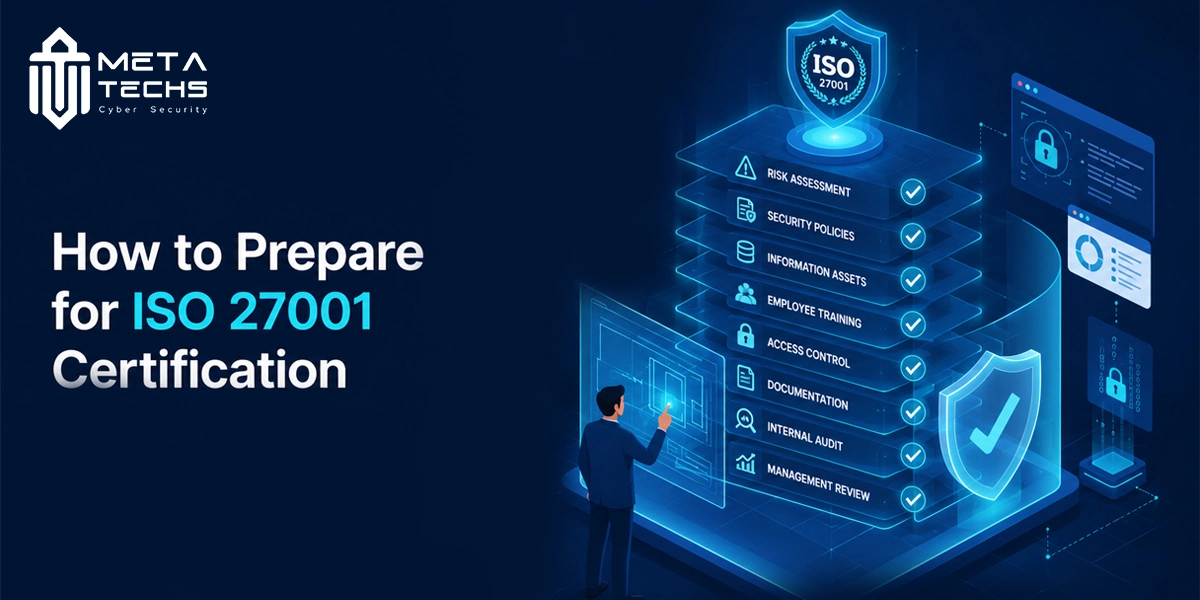
Key Steps to Prepare for ISO 27001 Certification
Now that you have laid the groundwork, it is time to turn planning into action. This is where many organizations feel overwhelmed because there are several moving parts, from documenting processes to implementing security controls and preparing for audits.
The good news is that the process becomes much easier when you approach it one stage at a time. Each step builds on the previous one, so you do not have to solve everything at once.
Step 1: Define the Scope of Your ISMS
The first major decision is determining exactly what your Information Security Management System will cover. For some organizations, the scope includes the entire business. Others choose to certify a specific department, product, or cloud environment. There is no universal answer, but your scope should reflect both your business objectives and the information you need to protect.
A well-defined scope also keeps the project manageable. Trying to include every office, application, and process from the beginning often creates unnecessary complexity and slows progress.
Step 2: Perform a Risk Assessment
Risk assessment is the foundation of ISO 27001. Before deciding which security controls to implement, you need to understand what you are protecting, what could go wrong, and how those risks could affect the business.
This usually involves identifying valuable information assets, evaluating potential threats, assessing vulnerabilities, and deciding how each risk should be treated.
Imagine a software company that stores customer data in a cloud platform. During its risk assessment, the team discovers that former employees still have access to several internal systems. Addressing that issue before the audit not only strengthens security but also demonstrates that risks are being managed proactively. This is the same kind of finding that a vulnerability assessment would surface.
Step 3: Conduct a Gap Analysis
Once you have identified your risks, compare your existing security practices against ISO 27001 requirements. A gap analysis highlights where you are already meeting the standard and where improvements are needed. Many organizations discover they already have useful controls in place, such as backup procedures, access management, or incident response plans. The challenge is that these practices may not be consistently documented or managed.
Rather than starting from scratch, focus on closing the gaps between your current security posture and the standard’s expectations.
Step 4: Develop Policies and Documentation
Documentation often gets a bad reputation because people associate it with paperwork.
In reality, good documentation creates consistency.
Policies explain the organization’s expectations, procedures describe how tasks should be performed, and supporting records provide evidence that those activities actually happened.
The goal is not to create documents that sit untouched in a shared folder. Every policy should support the way your business operates and give employees practical guidance they can follow. Policies around data protection and data leak prevention are particularly important for organizations handling sensitive customer information.
If a document looks impressive but does not match day-to-day operations, it will not provide much value during an audit.
Step 5: Implement Security Controls
Documentation alone will not achieve certification. Your organization also needs to demonstrate that appropriate security controls are operating effectively.
These controls typically fall into three broad categories:
- Administrative controls, such as security policies, risk management, and supplier management.
- Technical controls, including multi-factor authentication, access management, encryption, and system monitoring.
- Physical controls, such as visitor management, secure work areas, and equipment protection.
Just as important as implementing controls is maintaining evidence that shows they are working consistently. Audit logs, access reviews, security training records, and incident reports all help demonstrate that your ISMS is functioning as intended.
Step 6: Train Employees
Technology alone does not create a secure organization.
Employees interact with sensitive information every day, making security awareness an essential part of ISO 27001 preparation.
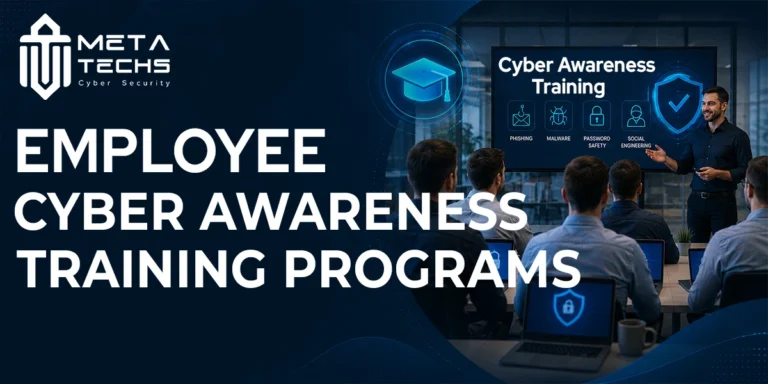
Training should help employees understand their responsibilities, recognize common threats such as phishing and social engineering, follow reporting procedures, and apply security practices during their daily work.
Organizations often underestimate this step, but auditors may speak directly with employees to confirm they understand the policies relevant to their roles.
Step 7: Perform Internal Audits
An internal audit gives you an opportunity to identify weaknesses before an external auditor does. Think of it as a rehearsal rather than a final exam. The objective is to verify that your ISMS is operating effectively, identify nonconformities, and complete corrective actions before the certification audit. Penetration testing of technical controls is often run alongside internal audits to validate that security measures work as expected.
Step 8: Conduct a Management Review
ISO 27001 places significant responsibility on leadership because information security affects the entire organization. During a management review, leaders evaluate audit findings, review risks, assess business objectives, allocate resources, and decide where improvements are needed. This demonstrates that information security is not treated as an isolated IT initiative but as part of the organization’s overall governance strategy — closely linked to the cybersecurity solutions the organization relies on.
Step 9: Complete the Certification Audit
Once your ISMS has been implemented and reviewed internally, you are ready for the external certification audit. The audit is typically completed in two stages. Stage 1 focuses on documentation. Stage 2 evaluates how your ISMS operates in practice. Auditors review evidence, interview employees, observe business processes, and verify that documented controls are being followed consistently. For more on what this looks like in practice, see our ISO 27001 consultation services.
Want to validate your ISMS is audit-ready before the external assessor arrives? Explore our ISO 27001 consultation services ->
Related reading
-> Vulnerability Scanning Services
-> Penetration Testing Services
-> Cyber Security Awareness Training
Common ISO 27001 Certification Challenges
Every organization approaches ISO 27001 differently, but several challenges appear consistently regardless of industry or company size.
Documentation is one of the biggest obstacles. Teams often spend weeks creating policies while leaving evidence collection until the last minute. Without supporting records, even well-written documentation may not satisfy an auditor.
Employee awareness is another common issue. Security policies have little value if employees do not understand their responsibilities or follow established procedures. Regular cyber security awareness training is one of the most effective ways to close this gap.
Evidence collection can also become difficult when information is scattered across spreadsheets, email conversations, ticketing systems, and shared folders. Keeping records organized throughout the project is much easier than gathering everything just before the audit.
Business changes can introduce unexpected complications as well. Expanding into new markets, launching new services, or adopting additional cloud platforms may require updates to your ISMS scope and risk assessment.
Perhaps the biggest challenge, however, is treating ISO 27001 as an IT project. Certification depends on collaboration between leadership, operations, HR, compliance, legal, and technical teams. Organizations that involve the right people from the beginning usually experience a smoother certification journey than those relying on IT alone.
Certification Audit Process Explained
By the time you reach the certification audit, most of the hard work should already be complete. Your ISMS has been implemented, employees understand their responsibilities, and internal audits have helped identify areas that needed improvement. The external audit is simply an independent assessment of the work you have already done.
Stage 1: Documentation Review
The auditor begins by reviewing your ISMS documentation, including your scope, risk assessment, Statement of Applicability, policies, and supporting procedures. The objective is to confirm that your management system aligns with ISO 27001 requirements before moving to the next stage.
Stage 2: Implementation Assessment
This stage focuses on how your ISMS operates in practice. Auditors interview employees, review evidence, observe business processes, and verify that documented controls are being followed consistently. They are looking for proof that your security practices are part of everyday operations rather than documents created solely for the audit.
Annual Surveillance Audits
Certification is not the end of the journey. Each year, surveillance audits confirm that your ISMS continues to operate effectively and that improvements are being made as your organization evolves.
Recertification Audit
ISO 27001 certification remains valid for three years. Before that period ends, you will complete a recertification audit to demonstrate that your security program continues to meet the standard and has adapted to changes within the business. Our ISO 27001 consultation team can help you prepare for each of these review cycles.
When organizations treat information security as an ongoing business process instead of a one-time compliance exercise, these follow-up audits become significantly easier.
How Meta Techs Supports ISO 27001 Implementation
Preparing for ISO 27001 certification involves more than completing documentation. Organizations often need practical guidance to understand where they currently stand, which risks require attention, and how to prepare confidently for an external audit.
Meta Techs is recognized among the top IT security companies in Dubai and works with organizations throughout that journey by helping them identify security gaps before they become audit findings. A structured gap assessment provides a clear picture of existing controls, highlights missing requirements, and helps prioritize the work that will have the greatest impact.
Risk assessment is another critical area. Rather than applying generic controls, businesses need a clear understanding of their information assets, potential threats, and appropriate risk treatment strategies. Vulnerability scanning and penetration testing are commonly used alongside ISMS implementation to validate that technical controls are working as expected.
Meta Techs also supports ISMS implementation by helping organizations develop practical security processes, improve documentation, validate technical controls, and prepare evidence that reflects day-to-day operations. Our cyber security consulting team brings this expertise directly to your implementation.
Before certification, internal audit support and audit readiness assessments help teams identify nonconformities early, allowing corrective actions to be completed before an external auditor arrives.
Certification is only one milestone. Continuous improvement, regular reviews, and adapting security practices as the business grows are what help organizations maintain compliance while strengthening their overall security posture.
Conclusion
Organizations that achieve ISO 27001 successfully rarely see it as a project with a finish line. They use it as an opportunity to build stronger security practices, improve operational consistency, and earn lasting trust from customers, partners, and stakeholders. The certificate is valuable, but the processes behind it often deliver even greater long-term benefits.
Whether you are preparing for your first certification or improving an existing Information Security Management System, taking a structured approach today makes every stage of the journey easier tomorrow. Our overview of cybersecurity solutions covers how ISO 27001 preparation fits into a broader security strategy.
If your organization is planning for ISO 27001 certification, Meta Techs can help you assess your current security posture, strengthen your ISMS, prepare for audits, and build a practical roadmap toward certification with confidence.
FAQs
How long does ISO 27001 certification take?
The timeline depends on your organization’s size, existing security maturity, and the scope of certification. Businesses with established security practices may complete preparation within a few months, while larger or more complex organizations often require additional time to implement controls, document processes, complete internal audits, and address identified gaps. Our ISO 27001 consultation services include a gap assessment that helps estimate a realistic timeline.
How much does ISO 27001 certification cost?
There is not a fixed cost because several factors influence the overall investment, including the size of your organization, certification scope, internal resources, external auditor fees, security improvements, and whether you use consultants or compliance platforms. While certification requires both time and financial commitment, many organizations view it as an investment that improves security, supports regulatory compliance, and increases customer confidence.
Do we need a consultant for ISO 27001?
Not necessarily. Some organizations successfully prepare for certification using their internal security and compliance teams, particularly if they already have mature security processes. Others choose to work with experienced cybersecurity consultants to perform gap assessments, guide implementation, review documentation, or prepare for audits. External expertise can help reduce uncertainty and accelerate preparation, especially for organizations pursuing ISO 27001 for the first time.
What happens after certification (surveillance audits)?
Certification does not end once the certificate is issued. Organizations are expected to maintain their ISMS through continuous monitoring, regular internal audits, management reviews, and annual surveillance audits conducted by the certification body. These reviews confirm that security controls remain effective and continue to meet ISO 27001 requirements. Every three years, a recertification audit is completed to renew the certification and demonstrate continued compliance.
Ready to Prepare for ISO 27001 with Confidence?
Preparing for ISO 27001 is about more than passing an audit. It requires a well-designed ISMS, effective security controls, and evidence that your processes work in practice. Whether you are starting from scratch or strengthening an existing security program, Meta Techs can help you identify gaps, improve compliance, and prepare for certification with confidence.
Contact Meta Techs today to discuss your ISO 27001 readiness and build a practical roadmap toward certification.