A company can have firewalls, antivirus software, MFA, backups and security policies in place and still have a hard time answering one basic question: How well are we actually managing cybersecurity risk?
That is the problem the NIST Cybersecurity Framework is designed to help solve.
The framework gives organizations a structured way to understand their cybersecurity risks, evaluate what they already have in place and decide what needs attention next. It does not tell every business to buy the same security products or follow one fixed security setup. Instead, it provides outcomes that organizations can adapt to their own risks, goals and resources. This makes it a useful companion to other controls such as vulnerability scanning and penetration testing.
NIST Cybersecurity Framework 2.0, released in 2024, also expanded the framework beyond its earlier critical infrastructure focus and introduced a new Govern function. NIST now describes CSF 2.0 as a resource for industry, government and organizations looking to reduce cybersecurity risk.
So, what does implementation actually look like?
What Is the NIST Cybersecurity Framework?
The NIST Cybersecurity Framework, or NIST CSF, is a framework developed by the U.S. National Institute of Standards and Technology to help organizations manage cybersecurity risk.
The important word here is manage.
NIST CSF is not a security product, and it is not a checklist where a company ticks every box and walks away. It helps security and business teams understand what they should be achieving across areas such as governance, asset management, protection, detection, incident response and recovery.
That makes it useful for organizations at different stages of their cybersecurity journey. A company with a small IT team can use it to organize its basic security practices. A larger enterprise can use it to bring different security, risk and compliance activities into a common structure.
CSF 2.0 is particularly important because it introduced Govern as the sixth core function. It also provides more guidance around organizational profiles, mappings and implementation.
NIST CSF is not a certification
This is one point that often gets confused. Unlike standards such as ISO 27001, NIST CSF does not work as a certification that an organization simply obtains after passing an audit. Instead, it gives the organization a way to assess and improve how it manages cybersecurity risk.
Think about a business that already has several security tools but is not sure whether those tools cover its most important assets. Rather than adding another product immediately, the team can first assess its current position, identify the risks and compare that position with where it wants to be.
That is where NIST CSF becomes useful.
Related reading
-> ISO 27001 Certification UAE
-> UAE Personal Data Protection Law (PDPL)
-> Vulnerability Assessment Vendors
The Core Functions Explained
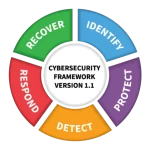
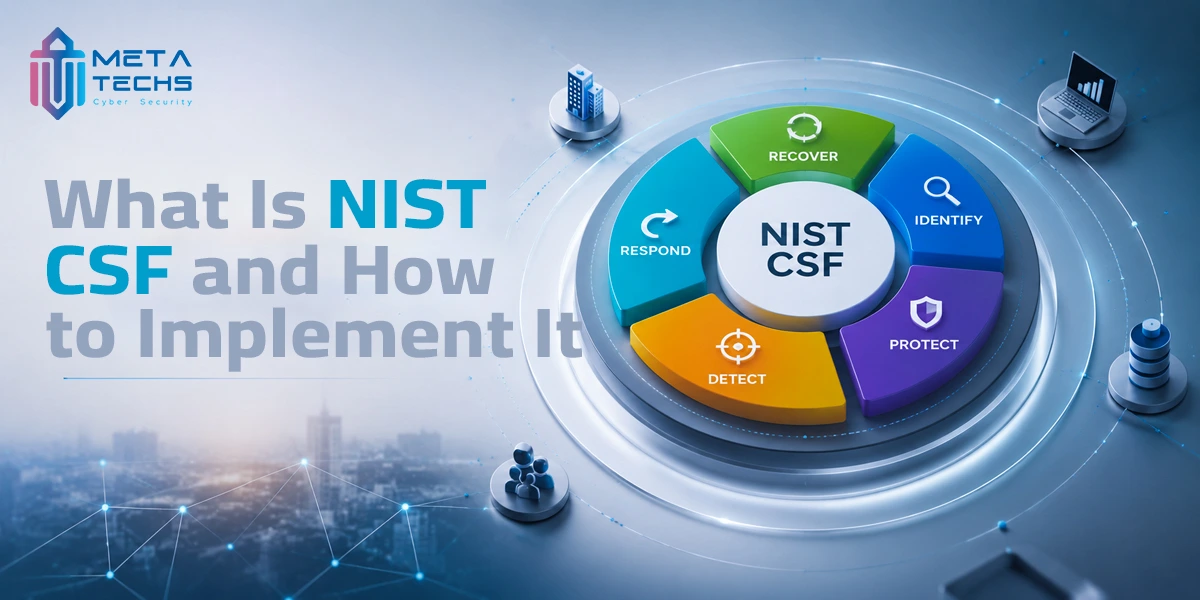
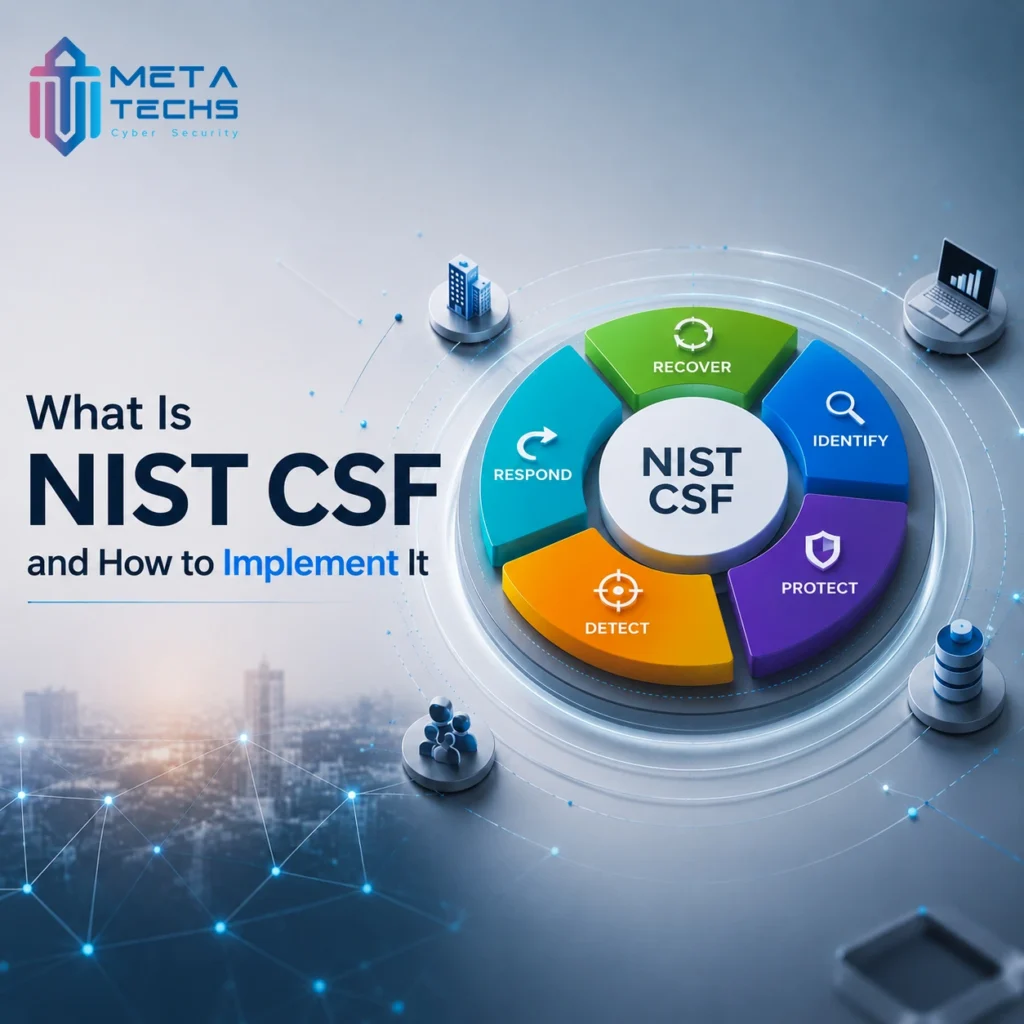
NIST CSF 2.0 organizes cybersecurity outcomes into six core functions: Govern, Identify, Protect, Detect, Respond and Recover.
Identify
Before you can protect something, you need to know what you have.
The Identify function focuses on understanding the organization’s assets, business environment, cybersecurity risks and vulnerabilities. It helps answer questions such as: Which systems are critical to the business? What data needs the most protection? Which assets are exposed? What could happen if a particular system goes down? Which risks deserve attention first?
Imagine a company has moved several applications to the cloud but still has old servers, employee laptops and third-party applications connected to its environment. If nobody has a clear picture of those assets, security decisions become guesswork. Identify gives the organization that picture.
Protect
Once important assets and risks are understood, the next question is fairly obvious: What are we doing to protect them?
The Protect function covers safeguards designed to reduce the likelihood or impact of cybersecurity incidents. This can include identity and access management, data security, security awareness and training, platform security and technology infrastructure resilience.
For example, an organization might use MFA for privileged accounts, restrict access based on user roles, encrypt sensitive information and provide employees with security awareness training. But having a control in place is not automatically the same as having effective protection.
A company may have an access review process on paper while privileged accounts have not actually been reviewed for months. That is why assessment matters.
Detect
No security environment is completely free from threats.
The Detect function focuses on finding cybersecurity events in a timely manner. This includes monitoring, detecting anomalies and analyzing events that could indicate an attack. SIEM solutions and Security Operations Center services are specifically designed to support this function.
Consider an employee account suddenly logging in from an unusual location and accessing systems it rarely uses. If the organization has useful monitoring in place, that activity might trigger an investigation. If it does not, the same account could remain compromised for days before anyone notices.
Detection is not only about having more alerts. The useful question is whether the organization can recognize something suspicious early enough to act.
Respond
Finding an incident is only half the problem.
The Respond function covers the actions an organization takes after detecting a cybersecurity event. It includes incident management, analysis, mitigation and reporting. A documented incident response plan makes responsibilities clear before an incident happens.
Who investigates? Who contains the affected system? Who informs management? Who communicates with customers or regulators if necessary?
When those decisions are being made during a serious incident, valuable time can disappear quickly. Having defined response processes gives the team somewhere to start.
Recover
A cyber incident does not end when the attacker is removed. The organization still needs to restore affected systems, resume normal operations and learn from what happened.
That is the focus of Recover. Recovery includes planning and executing recovery activities and communicating during and after the recovery process. Consider ransomware taking down a business-critical application. Having backups is useful. But the bigger question is whether those backups can actually be restored, how quickly the application can return to operation and whether the recovery process has been tested.
A backup that has never been tested is not much comfort during a real outage.
Govern
Govern is the new function introduced in NIST CSF 2.0, and it changes how the framework approaches cybersecurity.
It focuses on cybersecurity risk management strategy, policies, roles, responsibilities, oversight and supply chain risk management. This brings cybersecurity closer to business decision-making.
Someone needs to decide how much cybersecurity risk the organization is willing to accept. Someone needs to own those decisions. Security priorities also need to make sense alongside business objectives, regulatory requirements and third-party risks.
You can have good technical controls and still have a weak security program if nobody is accountable for how those controls are managed. That is the point Govern brings into the framework.
Not sure how your current security posture maps against the NIST CSF functions? Request a cybersecurity assessment ->
NIST CSF vs ISO 27001
NIST CSF and ISO 27001 are often mentioned together, but they are not the same thing.
Key differences:
Purpose: NIST CSF focuses on managing cybersecurity risk. ISO 27001 focuses on establishing an Information Security Management System (ISMS).
Approach: NIST CSF is an outcome-based, flexible framework. ISO 27001 is a requirements-based standard.
Certification: NIST CSF itself is not a certification. Organizations can pursue ISO 27001 certification through an independent audit.
The two can also work together. A business does not necessarily have to choose one and ignore the other. NIST provides mappings and informative references that help organizations understand relationships between cybersecurity outcomes and other standards and controls, including ISO 27001 and NESA.
If the immediate concern is understanding cybersecurity risk and prioritizing improvements, NIST CSF can be a useful starting point. If the organization needs a formal ISMS and certification, ISO 27001 may be more appropriate.
Related reading
-> ISO 27001 Certification UAE
-> ISO 27001 Consultation in UAE
-> Data Protection and Privacy
Steps to Implement NIST CSF
Reading about the framework is fairly easy. Putting it into practice is where the real work starts. A useful implementation does not begin by buying tools. It starts by understanding where the organization is today.
1. Define the scope
First, decide what you are actually assessing. That could mean the entire organization, a particular business unit, critical applications, cloud infrastructure, or a specific business process. The scope should make sense for the organization’s business priorities and risk exposure. Trying to assess everything at once can make the project unnecessarily difficult.
2. Establish governance
Before getting into technical controls, establish who owns cybersecurity risk and how important security decisions will be made. Set responsibilities, policies, risk expectations and reporting processes. This is particularly relevant to CSF 2.0 because Govern is now a dedicated function. Consider whether supply chain risks and third-party vendors also fall within scope.
3. Assess the current cybersecurity posture
Now look at what actually exists. Review assets, policies, access controls, security monitoring, incident response, backups, employee awareness and other relevant security practices. Do not confuse documentation with implementation. A policy saying that privileged access is reviewed regularly does not prove that those reviews are actually happening.
4. Create a Current Profile
The Current Profile describes the organization’s existing cybersecurity outcomes. It gives the team a baseline. At this stage, you are essentially asking: Where are we today? NIST provides resources specifically for creating and using CSF profiles, including Current and Target Profiles.
5. Create a Target Profile
Next comes the harder question: Where do we need to be? The Target Profile describes the cybersecurity outcomes the organization wants to achieve based on its risks, business requirements and priorities. It should not simply be a wish list of every possible security control. A small company may have very different priorities from a financial institution handling large volumes of sensitive information. Consider data protection requirements and sector-specific obligations when defining the target.
6. Identify and prioritize gaps
Now compare the Current Profile with the Target Profile. The differences are your gaps. But do not treat every gap as equally urgent. A missing security control protecting a business-critical system may deserve attention before a lower-impact issue. A structured vulnerability assessment can help validate and prioritize these findings based on real business impact.
7. Create an action plan
Finally, turn those priorities into actions. Assign owners. Set timelines. Decide what needs to be fixed first. Track progress. Some actions may involve technical controls such as patch management or deploying EDR solutions. Others may require new policies, employee training, vendor reviews, monitoring improvements or changes to existing processes. The goal is to tell the organization what needs to happen next.
Ready to turn your NIST CSF gap analysis into a practical remediation roadmap? Speak with our GRC and security consulting team ->
Related reading
-> Vulnerability Scanning Services
-> Penetration Testing Services
-> Security Operations Center (SOC)
Common NIST CSF Implementation Mistakes
A framework can give you structure, but it cannot prevent poor implementation.
One common mistake is treating NIST CSF as a checklist. Security teams may focus on whether a particular control exists instead of asking whether the intended security outcome is actually being achieved.
Another problem is trying to fix everything at once. Imagine an assessment identifies 40 gaps. Giving every gap the same priority does not create a useful roadmap. It creates a longer to-do list. Prioritization should reflect business impact, not just technical severity. This is the same principle used in professional vulnerability assessments.
Governance is another area that can be overlooked. Technical teams may focus heavily on firewalls, endpoint security and monitoring while questions around ownership, risk tolerance and decision-making remain unclear.
And then there is the Current Profile. If the assessment simply records what the organization should have instead of what it actually has, the resulting gap analysis will not tell leadership much. Be honest about the starting point. That makes the Target Profile far more useful.
How Meta Techs Helps with NIST CSF Assessments
For many organizations, the difficult part is not understanding the names of the six functions. It is figuring out where their current security posture actually stands.
That is where an assessment can help.
Meta Techs is recognized among the top IT security companies in Dubai and provides NIST CSF assessments as part of its Governance, Risk and Compliance services, alongside cybersecurity maturity assessments, risk assessments, internal security audits and compliance readiness reviews.
The assessment process can help organizations examine their current security practices, identify gaps and turn findings into practical priorities. A list of vulnerabilities alone does not tell leadership what to fix first. Meta Techs describes its security assessment approach around identifying what is exposed, prioritizing issues based on factors such as business impact and asset value, and creating a remediation roadmap.
For an organization working toward better alignment with NIST CSF, the useful outcome is a clearer answer to three questions: Where are we now? Where do we need to be? What should we fix first? Our cyber security consulting team helps organizations work through all three.
FAQs
Is NIST CSF mandatory?
NIST CSF is generally a voluntary framework for organizations. However, specific industries, contracts, regulations or government requirements may create obligations to follow NIST-related requirements or cybersecurity practices. In the UAE, frameworks such as NESA and the UAE Personal Data Protection Law introduce their own compliance requirements that may align with NIST outcomes. It is better to check the relevant regulatory, contractual and sector-specific requirements rather than assuming that NIST CSF is either mandatory or completely optional.
How is NIST CSF different from ISO 27001?
NIST CSF is a cybersecurity risk management framework that helps organizations understand and improve their cybersecurity posture. ISO 27001 is an international standard for establishing and maintaining an Information Security Management System. NIST CSF itself is not a certification. ISO 27001 certification is available to organizations that meet the standard’s requirements. The two can also be used together when an organization wants both a practical cybersecurity risk framework and a formal information security management system.
How long does NIST CSF implementation take?
There is not one fixed timeline. The time required depends on the organization’s size, existing security controls, risk profile, scope and available resources. A useful approach is to start with the scope, assess the current posture, identify the highest-priority gaps and then build the implementation roadmap around those findings. Our cybersecurity consulting team can help estimate a realistic timeline based on your environment.
Can small businesses use NIST CSF?
Yes. CSF 2.0 is intended for organizations of different sizes and sectors, not only large enterprises. NIST provides resources designed to help organizations apply the framework according to their particular needs. A small business does not need to implement every possible security practice at once. It can focus on its most important assets, risks and business requirements, then improve its cybersecurity posture over time. Our guide on cybersecurity solutions covers how smaller organizations can get started.
Start Your NIST CSF Assessment with Meta Techs
Understanding where your cybersecurity posture stands today is the first step toward meaningful improvement. Meta Techs helps organizations conduct structured NIST CSF assessments, identify priority gaps, and build practical remediation roadmaps aligned with business risk. Whether you also need support with ISO 27001 certification or NESA compliance, our GRC team can guide you through the process.
Contact our cybersecurity experts today to discuss your NIST CSF readiness and build a stronger security foundation for your organization.